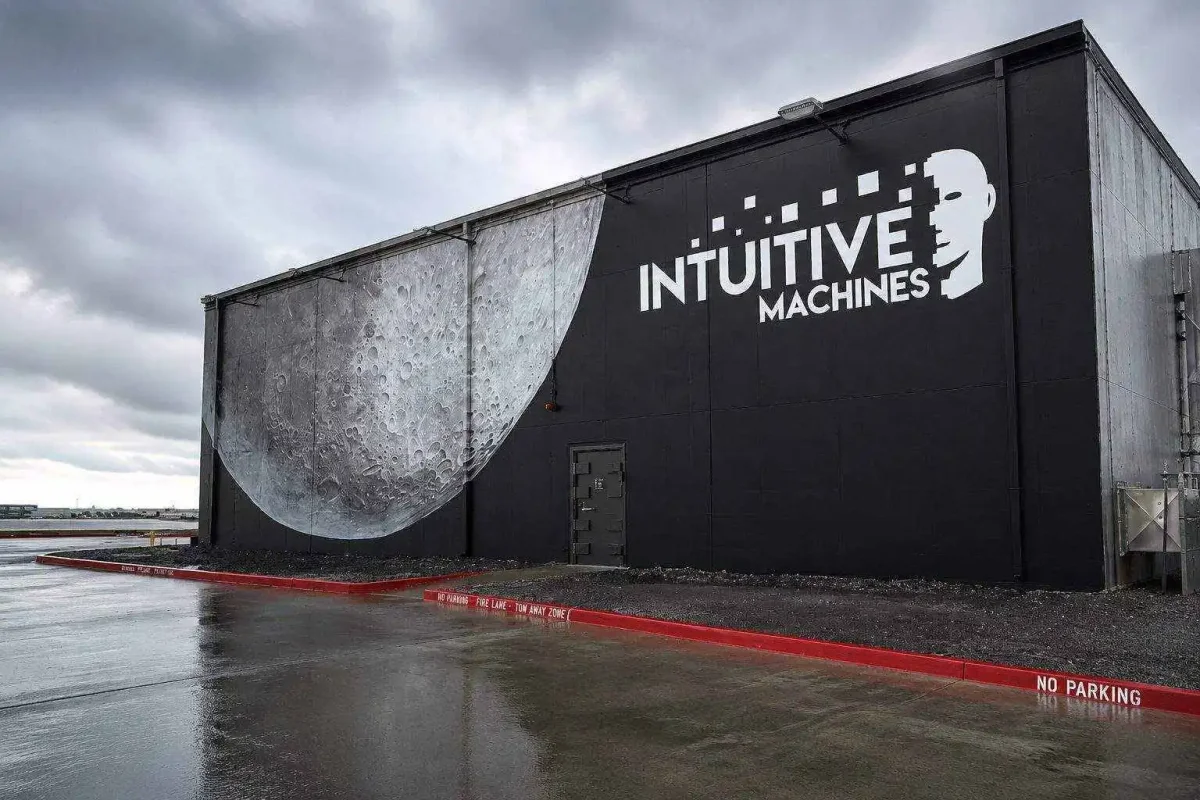
Intuitive Machines (LUNR) saw its stock climb 8.35% in premarket trading on Wednesday, reaching $34.77, after the company announced its selection for the U.S. Space Force's Andromeda contract. The contract, which has a raised ceiling of more than $6.2 billion, positions the company to compete for future task orders in space domain awareness, a critical area for national security. This news pushed LUNR above its previous 52-week high of $33.64, signaling strong investor confidence ahead of the company's first-quarter earnings report scheduled for Thursday before the market opens.
The Andromeda contract is a significant opportunity for Intuitive Machines, as it allows the company to bid on projects involving the design and deployment of Space Domain Awareness (SDA) systems. These systems are designed to detect, track, and analyze objects in geosynchronous orbit, a region heavily populated by defense and telecommunications satellites. The Space Force's decision to raise the program's ceiling from $1.8 billion to over $6.2 billion reflects an escalating threat environment and growing demand for reconnaissance and surveillance capabilities through 2030 and beyond. However, it's important to note that the IDIQ (Indefinite Delivery/Indefinite Quantity) contract sets a maximum value, and actual revenue will depend on the task orders awarded.
This contract win marks a pivotal moment for Intuitive Machines, which is expanding beyond its lunar lander roots into broader space infrastructure. The company now faces competition from established industry players such as L3Harris, Lockheed Martin, Northrop Grumman, BAE Systems, Anduril, and Astranis, all of whom are also on the Space Force's preliminary roster. CEO Steve Altemus has been vocal about the company's transformation, calling 2025 "a transformational year" and highlighting the second lunar mission, a push into national security space, and strategic deals with KinetX and Lanteris Space Systems. The Lanteris 1300-series platform, in particular, is expected to open up growth opportunities in geostationary orbit, the Moon, and even Mars.
The timing of the contract announcement is crucial, as it comes just a day before Intuitive Machines reports its Q1 2026 earnings. Analysts tracked by MarketBeat are projecting a loss of $0.07 per share on revenue of $202.95 million. The company has guided for 2026 revenue between $900 million and $1 billion, along with positive adjusted EBITDA, and reported a backlog of approximately $943 million in February. These figures provide a solid foundation for bullish sentiment, but the upcoming earnings report will be a key test of whether the company can translate contract wins into tangible financial results.
Analyst reactions have been mixed but leaning positive. Roth Capital's Suji Desilva raised his price target to $35 from $25, maintaining a Buy rating, citing increased lunar-related spending and the potential for Lanteris to boost growth and expand the company's national-security footprint. KeyBanc's Michael Leshock, meanwhile, set a target of $27, referencing rising NASA lunar demand. The bullish case for Intuitive Machines hinges on its ability to evolve from a lander business into a diversified space prime, with Lanteris, NASA, and Andromeda all contributing to revenue growth.
However, the bear thesis focuses on execution risks. The company posted $44.8 million in revenue in Q4 2025, alongside a $33.1 million operating loss and projected free cash flow usage of $56 million for 2025, despite some improvement in gross margins. Intuitive Machines is juggling rapid scaling, integrating acquisitions, chasing defense contracts, and maintaining NASA projects simultaneously. Past lunar program setbacks, such as the Athena lander tipping over in 2025, have also raised concerns about reliability and power supply issues.
Despite these challenges, NASA continues to be a strong counterbalance. In March, Reuters reported that NASA awarded Intuitive Machines a $180.4 million CLPS contract for a mission to deliver seven science and technology payloads to the Moon's south pole, its fifth such assignment. This positions LUNR at the intersection of two major themes: government-backed lunar operations and defense-focused orbital surveillance and satellite infrastructure. Today's premarket bounce reflects investor optimism that the company can successfully navigate these dual tracks, but the pressure is on for Thursday's earnings report to show real scale hitting the income statement, not just fresh contract headlines.