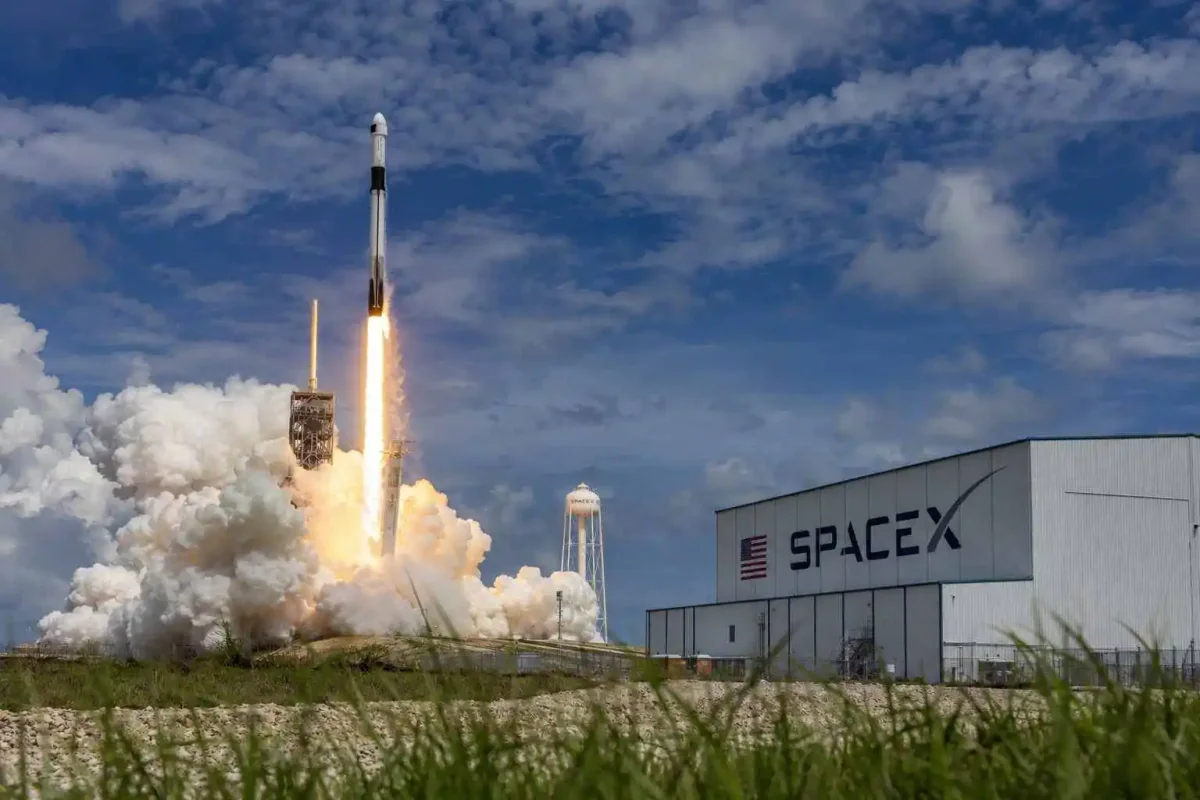
SpaceX CFO Bret Johnsen has joined the billionaire club following the company's historic initial public offering, which raised approximately $75 billion and marked the largest IPO ever. The space exploration and satellite communications firm, trading under the ticker SPCX on the Nasdaq, saw its shares close at $160.95 on Friday, a 19% gain from the IPO price of $135. The stock reached an intraday high of $176.45, pushing SpaceX's market capitalization above $2 trillion.
Johnsen's Stake and Role
According to data from the company's S-1 filing and the debut share price, Johnsen's stake in SpaceX is valued at roughly $1.4 billion, making him one of the most prominent individual beneficiaries of the IPO. Johnsen, who has served as CFO since 2011, has been described by Fortune as the quiet architect behind the largest IPO in history. His newfound wealth highlights the immense financial rewards tied to the company's public market debut, even as CEO Elon Musk remains the primary face of the business.
IPO Details and Market Reaction
SpaceX sold 555,555,555 Class A shares at $135 each, with underwriters having a 30-day option to purchase up to an additional 83,333,333 shares at the same price. The offering was oversubscribed, reflecting strong investor demand for a company that has disrupted both the space launch and satellite broadband markets. The stock opened at $150 and climbed to a session peak of $176.45 before settling at $160.95, giving the company a market value that places it among the most valuable publicly traded companies globally.
Business Outlook and Investor Pitch
During the IPO roadshow, Johnsen pitched investors on SpaceX's competitive advantages, particularly its assured access to space through the Starship and Falcon rocket programs. In a recorded interview with investor Gavin Baker, filed with the SEC, Johnsen emphasized the difficulty for any space company lacking reliable launch capabilities, calling Starship's rapid reusability 'the holy grail of rocketry.' He outlined growth plans for Starlink, the company's satellite internet service, which has surpassed 10 million customers across more than 160 countries, with over 10,000 satellites launched. Johnsen also detailed upcoming initiatives, including the first flights of direct-to-cell satellites next year, with commercial service targeted for 2028. Additionally, he mentioned that orbital compute capacity could become operational by 2029 if development timelines hold.
Valuation Concerns and Financials
Despite the IPO's success, valuation remains a critical issue for new SpaceX shareholders. The company reported $18.7 billion in revenue for 2025 but posted a net loss of approximately $5 billion, translating to a price-to-revenue multiple of about 94 times at the IPO price. Morningstar analysts previously estimated fair value closer to $780 billion, significantly below the current market cap. Nancy Tengler, CEO and CIO of Laffer Tengler Investments, told Reuters, 'This is not a name you're buying based on fundamentals,' underscoring the speculative nature of the investment.
Challenges for the CFO
Johnsen faces a unique set of challenges as he transitions SpaceX from a private to a public company. Unlike most IPO CFOs, who typically focus on cleaning up accounting, tightening controls, and telling the company's story, Johnsen must also convince investors to accept a controlled company structure at what Columbia Business School professor Shivaram Rajgopal called an 'astronomical valuation,' as reported by Fortune. His responsibilities now include articulating a business model that spans satellite launches, broadband services, defense contracts, artificial intelligence infrastructure, and deep-space exploration plans.
Market Context and Implications
SpaceX's IPO comes at a time when the broader market is grappling with high valuations in growth and technology sectors. The company's debut, while spectacular, raises questions about whether its financial performance can justify its market cap. With a loss of $5 billion on $18.7 billion in revenue, SpaceX is still in an investment phase, spending heavily on Starship development, satellite deployment, and new service rollouts. The success of the IPO, however, demonstrates strong investor appetite for companies with disruptive potential, even when near-term profitability is elusive.
As SpaceX begins its life as a public company, all eyes will be on Johnsen and his ability to manage investor expectations while continuing to execute on ambitious growth plans. The company's future will depend on its capacity to scale Starlink, launch direct-to-cell services, and achieve operational milestones in orbital computing, all while navigating the complexities of public market scrutiny.
