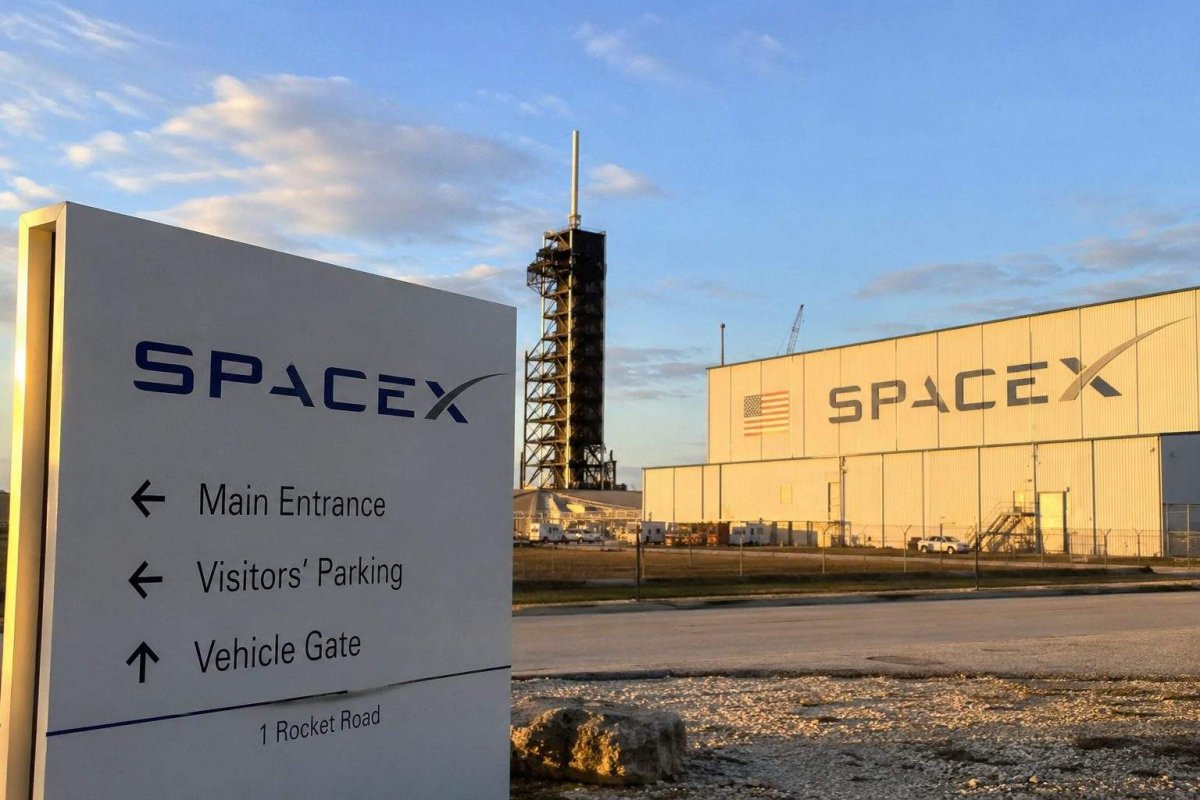
New York, June 12, 2026 – SpaceX, the aerospace company founded by Elon Musk, began trading on the Nasdaq Global Select Market and Nasdaq Texas under the ticker SPCX on Friday after pricing its initial public offering at $135 per share. The company sold 555,555,555 Class A shares, raising $75 billion and achieving a valuation of approximately $1.77 trillion, according to Reuters.
Despite the headline-grabbing valuation, SpaceX reported a net loss of nearly $5 billion in 2025 on revenue of $18.67 billion. This translates to a price-to-sales multiple of about 95 times trailing revenue, a level that many analysts consider stretched by conventional public-market standards. The IPO price is not the price retail investors will pay; the first Nasdaq auction will set the opening trade price, which could differ significantly.
Key Considerations for Investors
One of the most immediate risks is the limited free float. Only about 7% of SpaceX's listed shares are freely tradable, which could amplify price swings. However, MSCI's early-inclusion rules and the potential for fast-track Nasdaq 100 inclusion within a month could create additional demand from passive funds. The low float can work both ways, increasing volatility on both the buy and sell sides.
The bull case for SpaceX rests on its diverse revenue streams. Starlink, its satellite internet service, remains the primary revenue driver, but the company's space operations have accounted for more than 80% of mass launched into orbit over the past three years. SpaceX's total addressable market is estimated at $28.5 trillion, and the company plans to use IPO proceeds to fund AI compute infrastructure, launch systems, and satellite constellation capacity. Investors are effectively buying a mix of Starlink, launch dominance, and long-term AI optionality.
Wall Street Divided
Analyst opinions are sharply split. Oppenheimer initiated coverage with an outperform rating and a $190 price target, with analyst Timothy Horan calling SpaceX the “only vertically integrated AI company with the required capital, data, LLMs, hardware, manufacturing and engineering talent.” In contrast, Morningstar values SpaceX at $63 per share, a 53% discount to the IPO price, arguing that only its most optimistic scenario justifies the offering price.
Governance and Selling Pressure Risks
Governance is a significant concern. Elon Musk will retain 82% of voting power after the IPO, and UK retail-offer disclosures have flagged risks including governance and voting control, key-person risk, financing risk, regulatory risk, and AI/data/cyber risk. The lock-up period for Musk is 366 days, while other holders face staggered release schedules that could add supply after future earnings dates.
For the immediate future, the stock appears risky. The first Nasdaq print and closing price will be key catalysts, and index-inclusion demand could support the first few weeks of trading. However, the bear case is equally compelling: a record valuation, recent losses, concentrated voting control, heavy execution risk, and a volatile first day. As Adam Sarhan of 50 Park Investments noted, “The real test will be how the market digests the IPO over the next several weeks, not just one day.”
