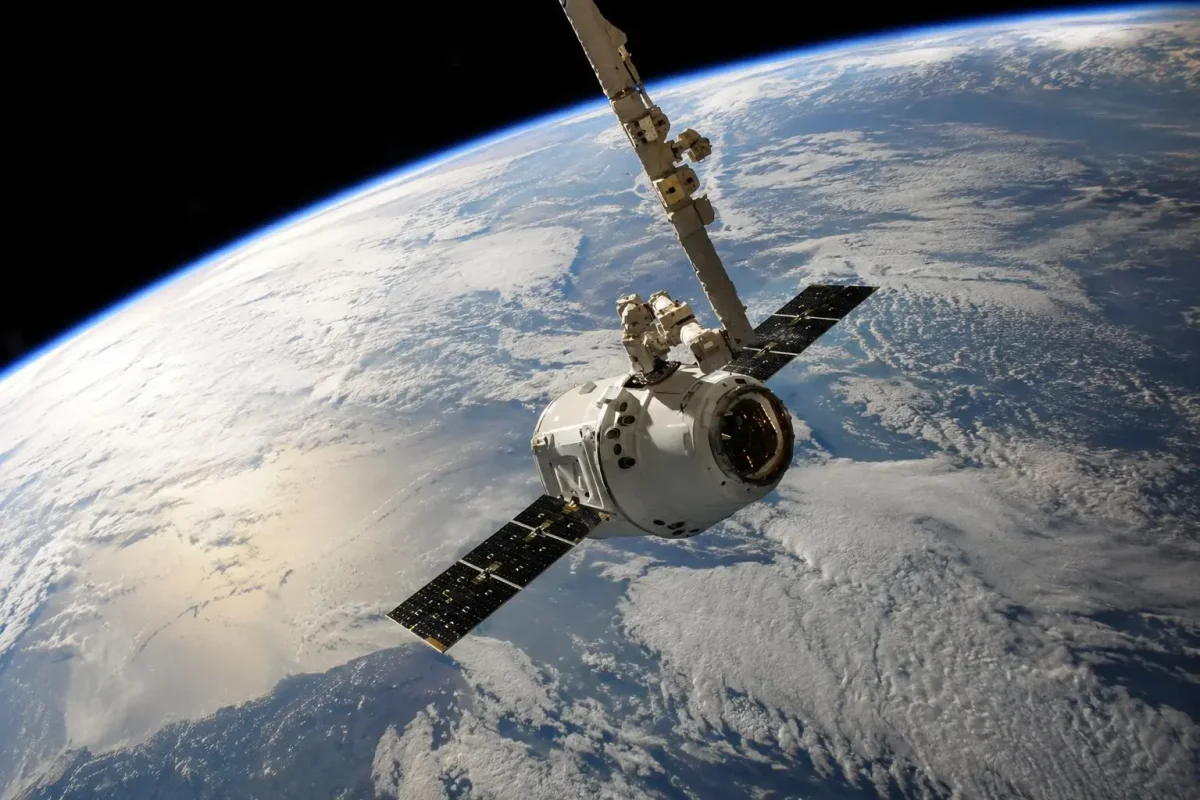
SpaceX (NASDAQ:SPCX) achieved a significant operational milestone early Tuesday morning, successfully reusing the Falcon 9 booster that launched on its market debut just 32 days earlier. The mission, which lifted off from Cape Canaveral, Florida, carried 29 Starlink satellites and marked the 600th flight of a previously flown first stage for the company. The booster, designated B1080, landed on a drone ship at sea, completing its 28th mission.
The rapid turnaround—from June 12, when the same booster launched 29 Starlink satellites just before trading began, to July 14—underscores SpaceX's ability to cycle hardware faster than its valuation story. This operational efficiency is critical as the stock trades near its IPO price. On Monday, shares closed at $139.14, down 4.2% and just 3.1% above the $135 offer price. The stock remains 38.3% below its post-listing high of $225.64, reflecting market skepticism about translating launch cadence into sustainable cash generation.
Chief Operating Officer Gwynne Shotwell highlighted the symbolism of the IPO-day launch, noting, "What company would do such a thing on the day they open in the public market?" The repeat mission now provides measurable follow-through on that statement. B1080's 28 missions are heavily weighted toward Starlink: 21 of them, or 75%, have served the satellite network. This integration allows SpaceX to use recovered assets to continually expand its constellation, a key internal capital-efficiency lever.
The financial stakes are substantial. Starlink generated $11.387 billion in revenue in 2025, representing about 61% of group revenue, with an adjusted EBITDA of $7.168 billion—a 63% segment margin. However, the broader company still posted a net loss of approximately $4.9 billion in 2025, even as connectivity operations earned $4.423 billion. First-quarter 2026 capital spending totaled about $10.1 billion, including $7.723 billion in the AI segment, highlighting the cash-intensive nature of SpaceX's ambitions.
The rapid turnaround is not just an engineering feat; it has market implications. Bernstein analyst Laurent Yoon on Monday cut price targets for AT&T (NYSE:T), T-Mobile US (NASDAQ:TMUS), and Verizon Communications (NYSE:VZ), arguing that Starlink poses a greater near-term threat in broadband than in wireless. Faster internal launches add capacity to the market these carriers defend, intensifying competitive pressure.
Tuesday's mission also raised SpaceX's cumulative booster landings to 638, leaving a gap of just 38 between landings and flights using recovered stages. While some boosters are retired or awaiting reuse, the narrowing gap demonstrates that recovery is feeding repeat use at an industrial scale. This cadence is a key signal for investors watching for proof that operational speed translates into financial returns.
However, Falcon reuse has inherent limits. The rocket recovers only its first stage; the upper stage is expended. SpaceX's longer-term growth depends on scaling the fully reusable Starship. The Federal Aviation Administration on Monday closed its review of a May 22 booster failure, during which five of 33 engines failed to restart, causing the vehicle to crash into the Gulf of Mexico. Flight 13 is targeted for Thursday, indicating that risk has shifted but not vanished.
Investors still lack granular data on refurbishment costs, days out of service, and the share of Starlink investment absorbed by launch operations. B1080's 32-day return offers clean operating evidence, but Monday's close near the offer price shows the market still demands a clearer translation into cash generation. Timing, as always, is critical.