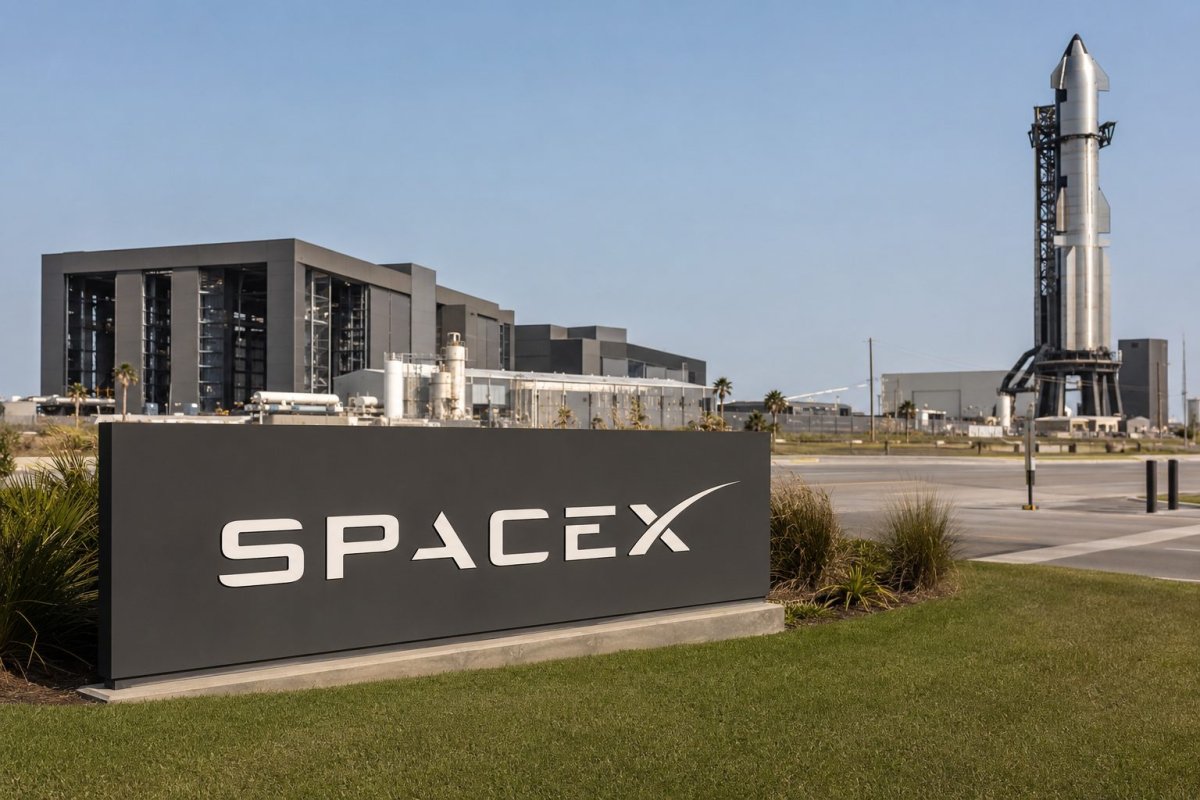
Space Exploration Technologies Corp. (NASDAQ:SPCX) faced a significant liquidity test this week as a lockup expiration released 319 million shares into the market, equivalent to 2.68 times Thursday's trading volume. The stock closed Friday at $136.97, just 1.5% above its initial public offering price of $135, after a volatile session that saw a 4.05% drop on Thursday followed by a 2.22% recovery on Friday.
The unlock, which took effect on August 20, represented a notional value of approximately $43.7 billion at Friday's close, based on calculations from MarketWatch and S&P Global data. This massive supply overhang raised concerns about market depth, with investors closely watching whether the stock could maintain its footing around the IPO price.
During the two-day period, SPCX fell a combined 1.9%, though it still ended the week 2.1% higher than the previous Friday's close. The session low on Thursday was $130.39, but Friday's close finished $6.58 above that level. Trading volume dropped 34% on Friday compared to Thursday, suggesting that forced selling did not intensify into the weekend.
Analyst Views Diverge Sharply
Wall Street remains deeply divided on SpaceX's valuation. Morgan Stanley's Adam Jonas maintained a Buy rating with a $300 price target on Thursday, while DZ Bank's Markus Leistner issued a Sell recommendation the same day. The consensus among 35 analysts is a Buy with an average price target of $213.50, but forecasts range from $75 to $450, highlighting exceptional uncertainty.
The stock is still trading 39% below its intraday peak from June 16, shortly after its public debut on June 12. This wide valuation gap reflects the challenges of pricing a company with ambitious growth plans across multiple sectors.
Strong Fundamentals Underpin Resilience
Despite the market turbulence, SpaceX's balance sheet provides substantial support. Second-quarter revenue surged 92% year-over-year to $7.81 billion, while the operating loss narrowed dramatically to $143 million from $970 million in the prior-year period. Following the IPO, the company holds $100.0 billion in cash and marketable securities, against $39.4 billion in total debt and finance leases.
Chief Financial Officer Bret Johnsen emphasized that this cash position gives SpaceX "substantial capacity to invest" in its Starship program, Starlink connectivity, and artificial intelligence initiatives. The company also disclosed a backlog of $47.5 billion, which is particularly notable given that capital expenditures reached $18.37 billion in the second quarter.
Segment Performance Highlights Growth Drivers
SpaceX's connectivity segment remains the primary earnings engine, with Starlink subscribers doubling to 12.0 million. However, average monthly revenue per user declined from $85 to $66, reflecting increased adoption of lower-priced tiers. The AI division posted the highest growth rate at 247% year-over-year, but it also accounted for 86% of total capital expenditure, underscoring the execution challenges ahead.
The space segment generated $962 million in revenue, up 29%, though it posted an operating loss of $542 million. Connectivity delivered $4.29 billion in revenue with a $1.66 billion operating profit, while AI contributed $2.56 billion in revenue but recorded a $1.26 billion operating loss.
Market Implications and Risks
Investors are now focused on whether sellers will take advantage of Friday's recovery to exit positions. The eligibility to sell does not confirm that all shares have changed hands, and no public filing indicates the actual volume sold from the tranche. Additional lockup expirations could further increase the available float, potentially outpacing demand.
Key risks include delays in the Starship program, pricing pressure on Starlink services, concentration of AI customers, and the heavy infrastructure investment required. The stock's ability to hold above $135 next week will be a critical indicator. If turnover remains robust and the price holds, it would suggest the market is absorbing supply. Conversely, a drop below Thursday's low of $130.39 would signal continued selling pressure.
For now, SpaceX has cleared its initial liquidity hurdle, but the process is far from complete. The coming sessions will determine whether the unlock represents a temporary overhang or a lasting challenge to the stock's valuation.