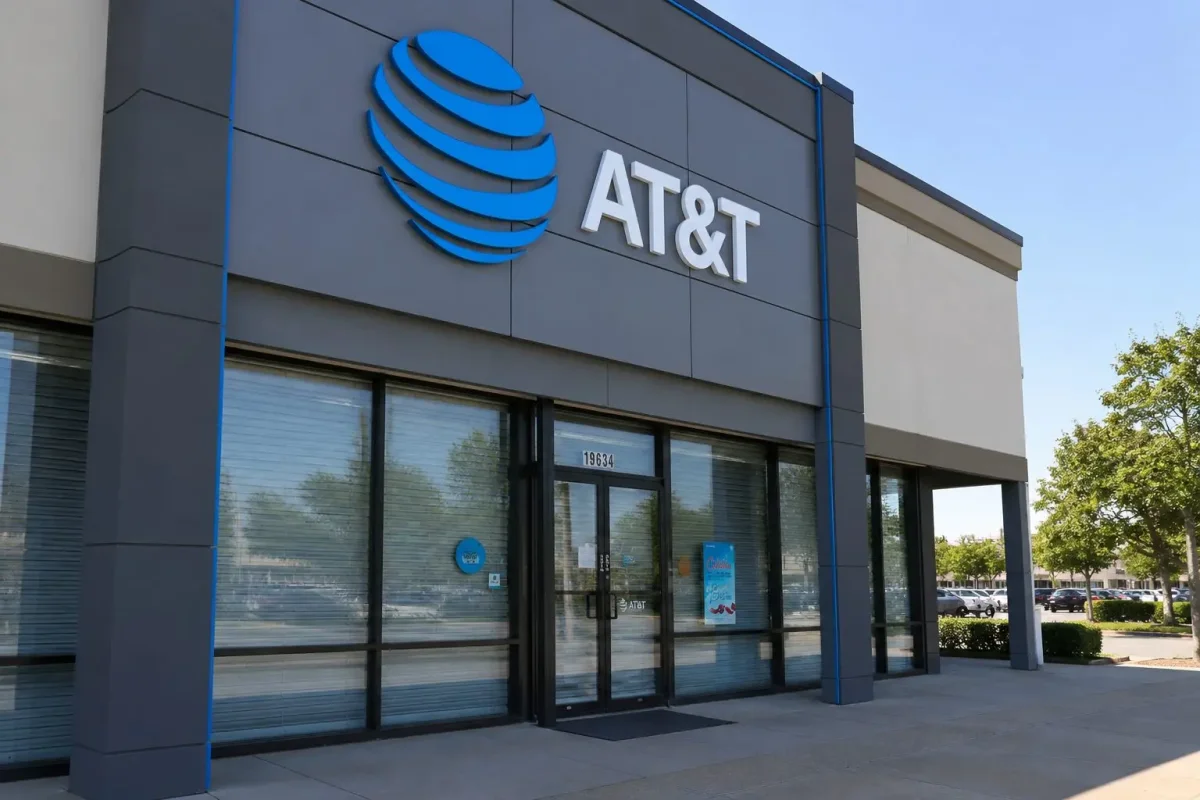
AT&T Inc. shares experienced a sharp decline of 4.4% on Wednesday, closing at $23.55, following a downgrade by Oppenheimer that highlighted growing competitive pressures from SpaceX's Starlink satellite internet service. The analyst action triggered a broader sell-off in the telecom sector, with Verizon Communications and T-Mobile US also seeing their stocks drop by 2.5% and 3.9%, respectively.
Oppenheimer's Downgrade and Starlink Threat
Oppenheimer analyst Timothy Horan downgraded AT&T from Outperform to Perform and removed the previous $32 price target. In a research note, Horan expressed concerns that next-generation low-Earth-orbit satellite networks, particularly SpaceX's Starlink, could pose a significant long-term risk to AT&T's broadband subscriber growth and eventually its mobile business. These new satellites offer faster speeds and lower latency compared to older satellite technologies, making them a more viable competitor in the $1.6 trillion U.S. communications market.
The timing of the downgrade coincides with SpaceX's preparations for an initial public offering, which is expected to increase the visibility and capital available for Starlink's expansion. Oppenheimer warned that as Starlink scales, it could accelerate subscriber losses and revenue erosion for traditional telecom operators like AT&T, Verizon, and T-Mobile.
AT&T's Fiber Strategy and Market Response
Despite the negative sentiment, AT&T has been actively repositioning itself as a combined wireless and fiber operator to move beyond its legacy phone business. The company reported 584,000 net additions for its Advanced Connectivity internet service in the first quarter, split roughly evenly between fiber and fixed wireless. AT&T remains committed to its goal of reaching more than 30 million fiber locations by 2030.
On Wednesday, AT&T attempted to bolster its consumer message by announcing new fiber speed options starting June 7, with bundled wireless and home-internet packages offering potential savings of up to $420 per year. Jenifer Robertson, executive vice president and general manager of AT&T Consumer, described the plans as "straightforward" and "packed with value." However, these efforts were overshadowed by the broader market concerns.
The broader market also faced headwinds, with the Dow Jones Industrial Average falling 1.21%, the S&P 500 dropping 0.74%, and the Nasdaq Composite declining 0.89%. Investors cited rising oil prices and heightened geopolitical tensions in the Middle East as contributing factors to the overall market weakness.
Capital Expenditure and Competitive Dynamics
AT&T has responded to the competitive landscape by ramping up its capital spending. In March, the company announced plans to invest more than $250 billion over five years in U.S. connectivity, focusing on fiber and wireless network expansion. This capital-intensive strategy provides AT&T with greater scale but also exposes it to risks if broadband pricing softens or if Starlink gains traction.
However, the risks are not one-sided. Morningstar analyst Nicolas Owens has noted that Starlink faces real technological challenges, including capacity constraints and pricing pressures. He also suggested that SpaceX's valuation appears inflated relative to its IPO targets. If Starlink fails to deliver on its promises, AT&T's fiber investments could prove more resilient than the downgrade implies.
Looking Ahead
Investors will get a clearer picture of AT&T's performance when the company reports its second-quarter results before the New York Stock Exchange opens on July 22. Key metrics to watch include fiber demand, wireless churn rates, and free cash flow after capital expenditures. The earnings report will be a critical test of whether AT&T's strategy can withstand the emerging competitive threats.
For now, Wall Street has begun to price in the potential disruption from Starlink, leaving AT&T shares under pressure. The company has a plan, but the market's focus has shifted to the countdown of how quickly satellite internet could reshape the telecom landscape.