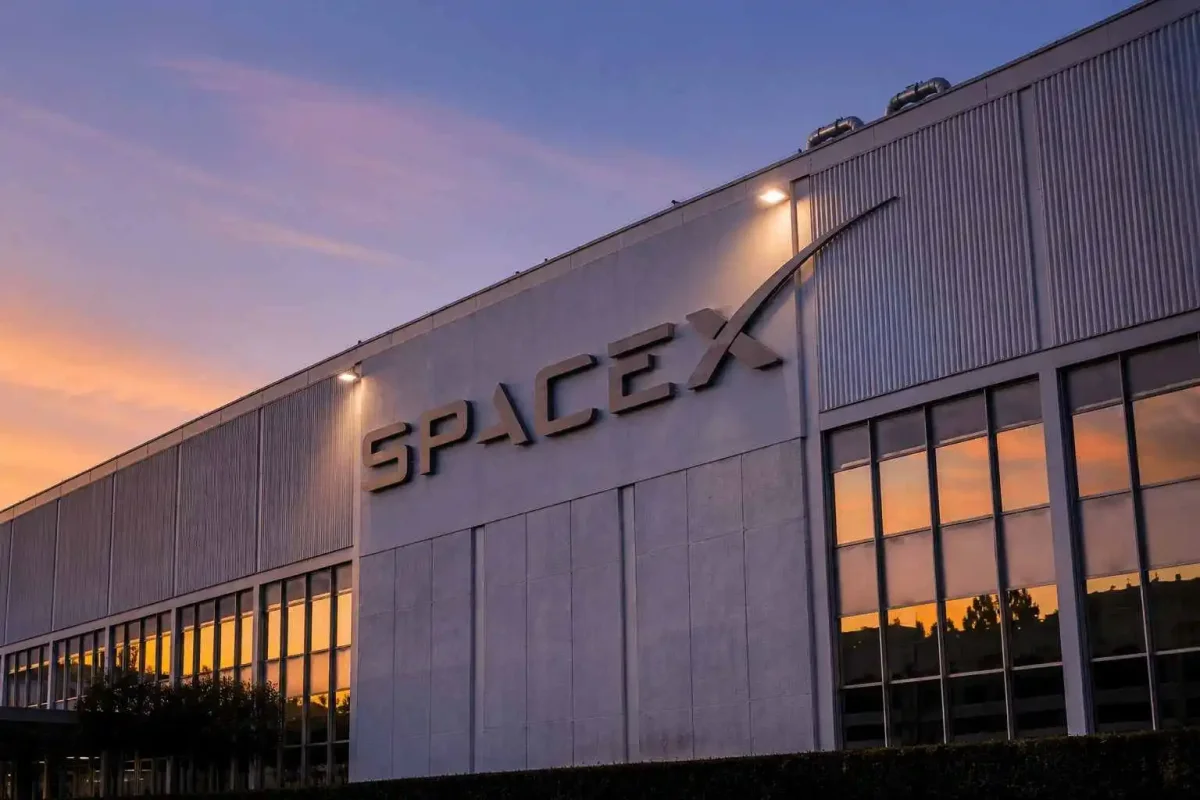
Space Exploration Technologies Corp. (NASDAQ:SPCX) concluded Friday's trading session with a 3.4% decline, closing at $108.37, as the company continued its aggressive Starlink deployment schedule. The drop brings shares near their post-IPO low, underscoring investor concerns ahead of the company's first quarterly earnings report since its June debut.
The latest mission, which lifted off from Vandenberg Space Force Base at 8:08 p.m. PDT, delivered 24 additional Starlink satellites into low Earth orbit. The satellites separated from the Falcon 9's second stage approximately 61.5 minutes after launch, marking another successful deployment for the rapidly expanding constellation. Booster B1081 completed its 26th flight and landing, contributing to SpaceX's 643rd successful orbital-class booster recovery.
This launch represents the 89th Falcon 9 mission of 2026 and the 69th dedicated to Starlink, meaning a staggering 77.5% of all Falcon 9 flights this year have been for SpaceX's own broadband network. The company is currently averaging a Falcon 9 launch every 2.4 days, putting it on track for approximately 153 launches by year-end. In the past week alone, SpaceX completed two Starlink missions plus a classified payload for the U.S. government.
The dominance of Starlink missions is a critical data point for investors. With four out of every five launches devoted to internal network expansion, launch cadence now serves as a proxy for Starlink growth rather than external customer demand. This shift in focus comes as SpaceX prepares to report its second-quarter financial results on Tuesday after the market close.
Analysts project preliminary revenue of approximately $6.9 billion for the quarter, with particular attention on the performance of the Connectivity segment. In the first quarter, Connectivity was the only division to post an operating profit, generating $1.188 billion in operating income on $3.257 billion in revenue, a margin of roughly 36.5%. Early estimates from Visible Alpha suggest the second-quarter margin could slip slightly to 35.9%.
Meanwhile, the company's Space division continues to burn cash, reporting an operating loss of $662 million in Q1 on $619 million in revenue. The AI segment remains the most capital-intensive, with $7.723 billion in capital spending during the first quarter and an operating loss of $2.469 billion. These figures highlight the significant investment required to support SpaceX's ambitions across its three business lines.
External demand for launch services remains robust, as evidenced by a recent U.S. Space Force contract award. The military branch granted SpaceX an 18-launch contract from Vandenberg valued at $1.6 billion, with missions scheduled through the end of 2027. That translates to roughly $88.9 million per launch, a price point that underscores the competitive landscape. Colonel Eric Zarybnisky of the U.S. Space Force emphasized the need for speed, stating the accelerated procurement process reflects "the speed our warfighter demands more than ever before."
Despite the positive news flow, SpaceX shares have struggled. The stock is down 5.8% for the week ending July 31, while the Nasdaq composite gained 1.6% and the S&P 500 rose 1.0%. At Friday's close, SpaceX traded 19.7% below its $135 IPO price and approximately 52% off its all-time high of $225.64. The company went public less than two months ago.
Investors are now looking ahead to Tuesday's earnings release, which will be the first quarterly update since the IPO. Key areas of focus include Connectivity margins, capital expenditure trends, and Starship development costs. While the launch schedule remains impressive, the market is demanding evidence that the company can translate its operational success into sustainable profitability. Any Falcon malfunction, Starship budget overrun, or declining Connectivity margin could further pressure the stock, which has yet to establish a clear valuation floor.