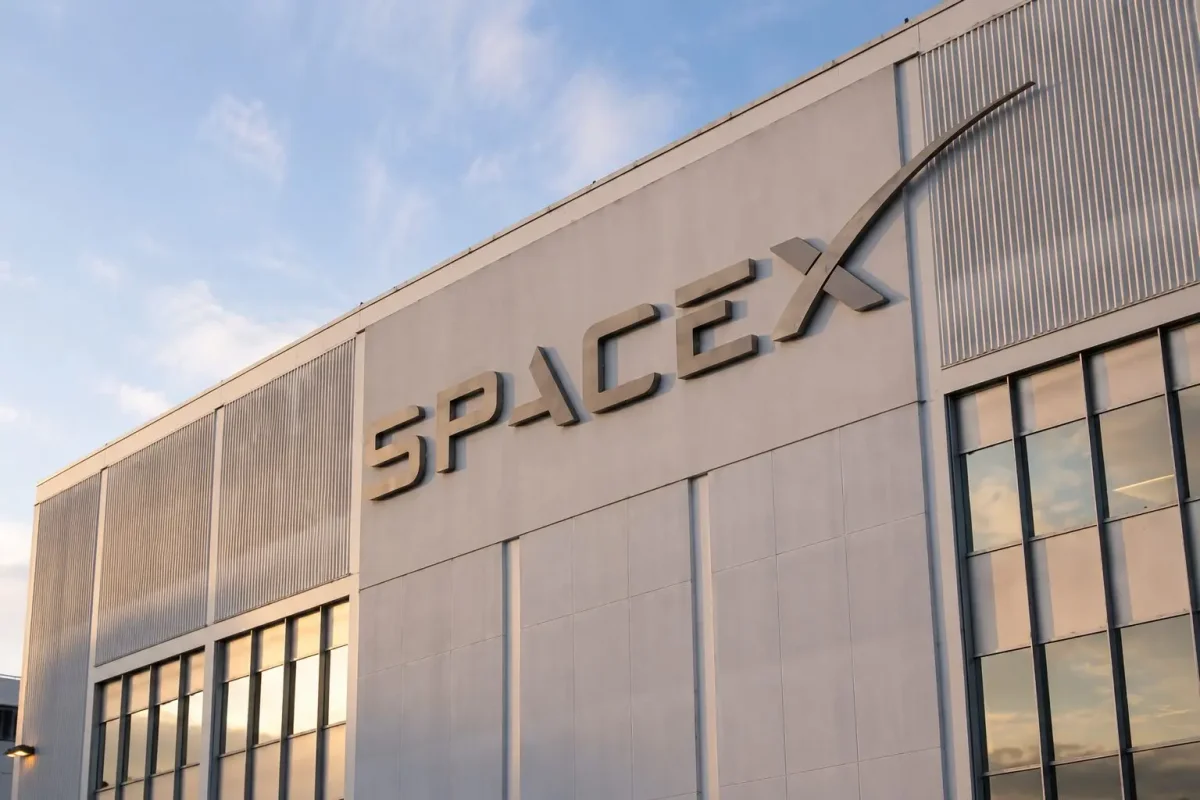
Space Exploration Technologies Corp. (SpaceX) Class A shares are holding steady near $160.95 in their first full week of trading on the Nasdaq Global Select Market and Nasdaq Texas under the ticker SPCX. The stock opened at $160.95, representing a 19% premium over the $135 IPO price set for the 555,555,555-share offering. Investors are now grappling with the company's lofty valuation against a backdrop of significant financial losses and ambitious growth projections from CEO Elon Musk.
Musk's Trillion Revenue Target Under Scrutiny
In a recent post on X, Musk stated he would be surprised if SpaceX's revenue does not exceed $1 trillion by 2031. This bold forecast has become a cornerstone of the bull case, suggesting a potential market capitalization above $2 trillion. However, the company's 2025 financial results tell a different story. Revenue climbed to $18.67 billion from $14.02 billion in 2024, but net losses swung sharply to $4.94 billion from a profit of $791 million the prior year. Analysts at Goldman Sachs project 2030 revenue of over $470 billion, while Morgan Stanley estimates nearly $330 billion—both far short of Musk's target.
Market Structure Catalysts: Options and Index Inclusion
The next potential drivers for SpaceX's stock are options trading and index inclusion. Cboe Global Markets has confirmed that options on SPCX are expected to begin trading as soon as Tuesday. Ophir Gottlieb, CEO of Capital Market Laboratories, anticipates "explosive demand," which could lead to significant short-term volatility. Additionally, MSCI has indicated it may apply early-inclusion rules for large IPOs, potentially adding SpaceX to its indexes within 10 trading days. Inclusion in the MSCI or Nasdaq 100 would trigger forced buying by passive funds, boosting demand. However, S&P Global has stated that SpaceX does not meet the profitability requirement for S&P 500 inclusion.
Strategic Investor Demand
Demand for the IPO was strong, with Australia's richest person, Gina Rinehart, investing over $1 billion. Hancock Prospecting CEO Garry Korte highlighted potential supply deals for critical minerals as SpaceX expands. This strategic investment underscores the view that SpaceX is more than a rocket company, with potential in Starlink, launch services, AI, and space infrastructure.
Bear Case: Valuation and Governance Risks
Critics argue the stock's valuation is "extremely speculative," as Morningstar's Michael Field told The Guardian, citing untested technologies and uncertainty around the AI business. Furthermore, Musk's Class B shares grant him 82.4% voting power, leaving public Class A holders with little influence over strategy or governance. The company's lack of profitability and short public track record add to the bearish narrative.
Outlook
For now, SPCX trades at a level that appears risky rather than attractively valued. Bulls point to SpaceX's irreplaceable launch assets, Starlink's growth, and AI exposure, along with potential passive fund flows. Bears highlight the stretched valuation, recent losses, and high expectations already priced in. The stock's next move will likely hinge on whether SpaceX can translate Musk's trillion-dollar vision into tangible business progress.
