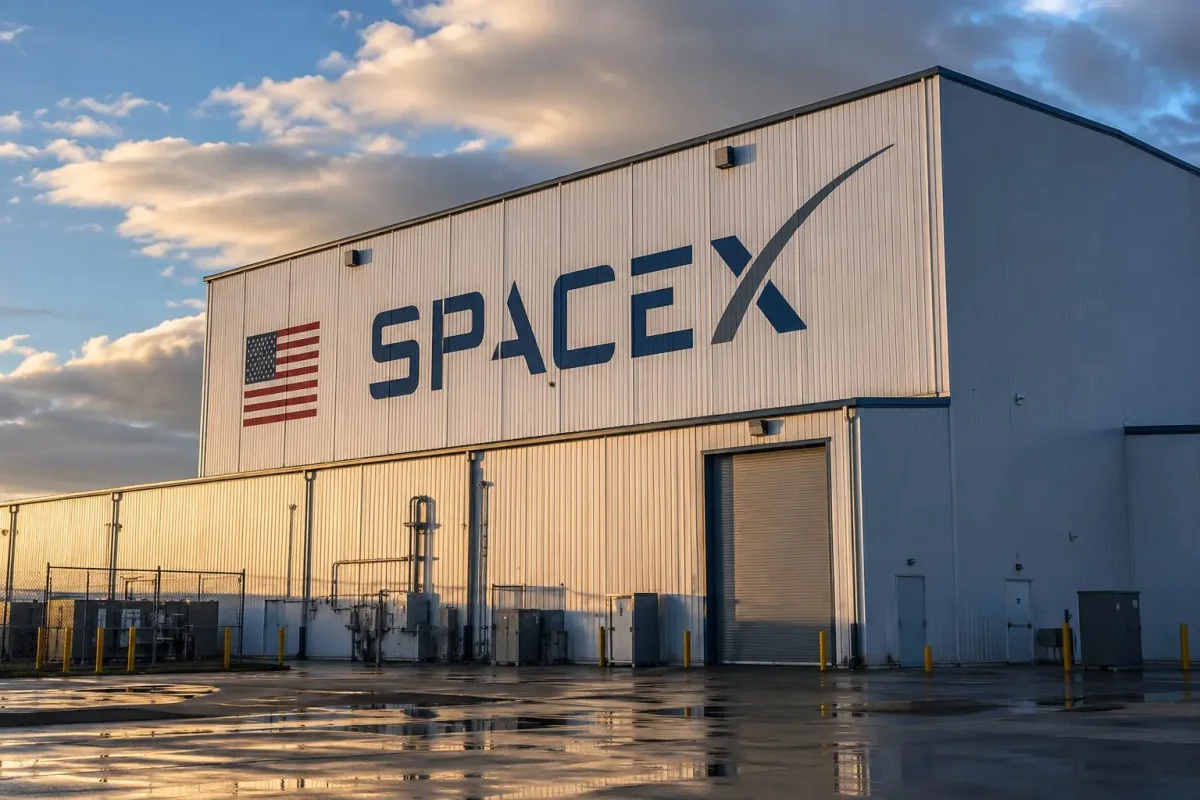
SpaceX's stock traded just below its Nasdaq opening price on Thursday, as a wave of bullish research from Wall Street failed to provide a significant boost. Shares were last at $148.89, up 0.4% for the day, still under the June 12 open of $150 but above the $135 IPO price.
The timing is crucial. SpaceX's quiet period ended just as the stock entered the Nasdaq 100, forcing index funds to buy shares. This has placed SpaceX in millions of passive portfolios, even as active traders debate its true value.
Analyst calls have been overwhelmingly bullish. Morgan Stanley's Adam Jonas initiated coverage with an Overweight rating and a $300 target. Raymond James analyst Brian Gesuale assigned a Strong Buy and an $800 target. Citi's John Godyn set a Buy rating with a $200 target, calling it a step “along the path to $900+” if engineering progress materializes at scale.
According to Barron's, the average analyst target is about $240, which would value SpaceX at roughly $3.2 trillion, surpassing Microsoft, Amazon, or Tesla. This highlights the tension: Wall Street projects future cash flows, but the market prices in today's risks.
Deutsche Bank's Edison Yu described SpaceX as “the apex of civilizational ambition” in a note quoted by MarketWatch, rating the stock a Buy with a $255 target. Such language reflects the buzz around SpaceX rather than current trading dynamics.
Investors now view SpaceX as more than a launch company. Reuters describes its operations as a mix of space, connectivity, and AI. Starlink has about 9,600 satellites in low-Earth orbit, serving 164 countries, with reduced signal delay due to closer proximity to Earth.
Morgan Stanley expects around $200 billion in global Starlink investment over five years, potentially challenging U.S. telecoms like Verizon. In the launch sector, Blue Origin and Rocket Lab remain the closest comparisons. William Blair raised its SpaceX launch-services valuation after Blue Origin's new funding, while Morgan Stanley sees Rocket Lab building a scaled-down SpaceX-like platform.
However, risks persist. Shares may already factor in engineering, regulatory, and demand outcomes that are not yet certain. Julie Zhu at MoffettNathanson holds a Neutral rating with a $131 target, telling Business Insider, “It’s tough to say with conviction today.” Starship remains in testing, and orbital data center technology is not yet a reality.
SpaceX is not behaving like a typical IPO. Trading reflects a test of what investors will pay for unfinished infrastructure. Morningstar's bull case highlights SpaceX's cost advantage and lead, but the bear case warns that the valuation may require decades of profits to justify.
