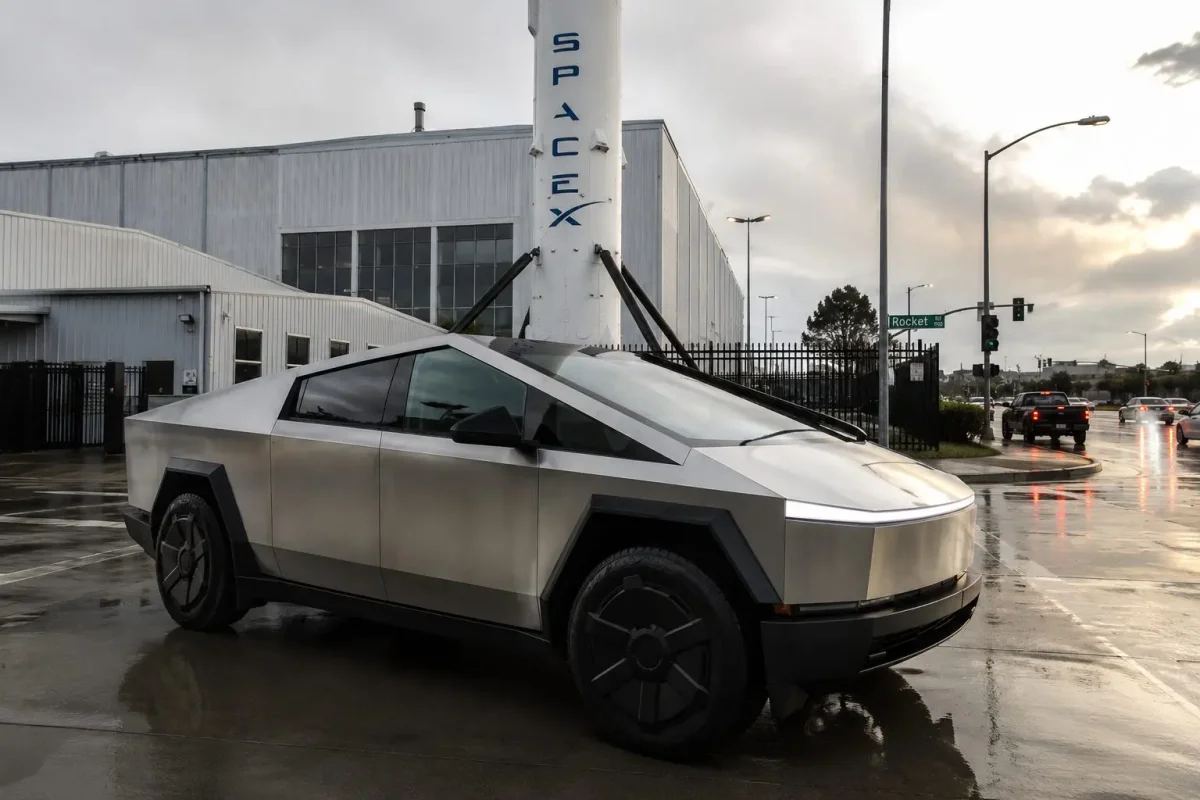
New York, July 9, 2026 – Tesla shares moved higher in morning trading Thursday after RBC Capital Markets boosted its price target to $500, explicitly tying the valuation to a possible merger with SpaceX. The revised target incorporates a 25% to 30% premium for a deal that remains unconfirmed but is increasingly being priced into analyst models.
RBC analyst Tom Narayan stated the new target reflects the potential combination, even as he acknowledged the merger remains speculative. The move comes as SpaceX trades publicly, giving investors a concrete benchmark to assess a tie-up. At 11:05 a.m. EDT, Tesla was up $2.19 to $396.25, while SpaceX rose $1.48 to $149.78.
Merger Premiums and Market Mechanics
With SpaceX now a publicly traded stock, merger speculation has shifted from theoretical to actionable. Investors can now model deal scenarios, but must navigate issues around voting control, index fund flows, and valuation of two companies heavily dependent on artificial intelligence and autonomous technologies. The $500 target embeds a premium that reflects these uncertainties.
Operational Synergies and Strategic Overlap
Bulls argue that Tesla and SpaceX already share significant technological overlap in artificial intelligence, chips, batteries, robotics, and self-driving systems. MarketWatch noted the companies have collaborated for years. In March, Elon Musk revealed they began building a factory targeting a terawatt of compute hardware output annually, underscoring their joint push into AI infrastructure.
Wedbush analyst Dan Ives has been among the most vocal proponents, predicting a merger by 2027. He described a potential tie-up as the "holy grail" for linking Tesla and SpaceX under Musk’s vision for a unified AI ecosystem. SpaceX’s own prospectus mentioned the two firms had laid the "early foundation" of a commercial partnership.
SpaceX President Gwynne Shotwell, in a CNBC interview, did not rule out a merger, saying it "might make Elon’s life a little easier," though she added she was "not focused on that part of the future." SpaceX raised $75 billion in its IPO at a $1.75 trillion valuation, according to Business Insider.
Key Considerations and Risks
Analysts debate the structure of a potential deal. Some suggest an all-stock merger could avoid cash outlays, but valuing two AI-dependent companies remains complex. Control questions—including voting rights, board approvals, and minority shareholder treatment—could face intense scrutiny. Operational synergies are clear: Tesla brings manufacturing scale, battery technology, and robotaxi plans; SpaceX offers launch capabilities, satellite networks, and AI capacity. However, SpaceX’s military contracts and Tesla’s China ties could complicate regulatory approvals.
The bear case remains significant. BNP Paribas analyst James Picariello, as reported by Barron’s, does not believe a deal is imminent. He cited cash burn at both companies, regulatory hurdles for SpaceX’s defense business, and the need for shareholder votes. SpaceX also requires capital for satellite AI, while Tesla is investing heavily in robotaxis and Optimus robots.
Broader Market Context
Beyond merger speculation, Tesla reported Q2 deliveries of 480,126 vehicles and production of 451,758, along with 13.5 gigawatt-hours of energy storage deployed. Full Q2 results are due after the close on July 22. Meanwhile, the robotaxi landscape is heating up: Reuters reported Tesla launched its robotaxi service in Miami, while Waymo is expanding to San Diego, Las Vegas, Denver, and Tampa, according to Investor’s Business Daily.
For investors, the current trade encapsulates two narratives: a bet on Tesla’s operational rebound and a wager on whether Musk will consolidate more of his ventures. New delivery figures support the former, but the latter remains a deal with no formal offer on the table.