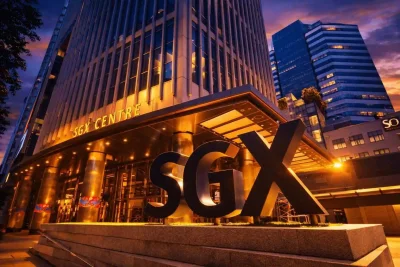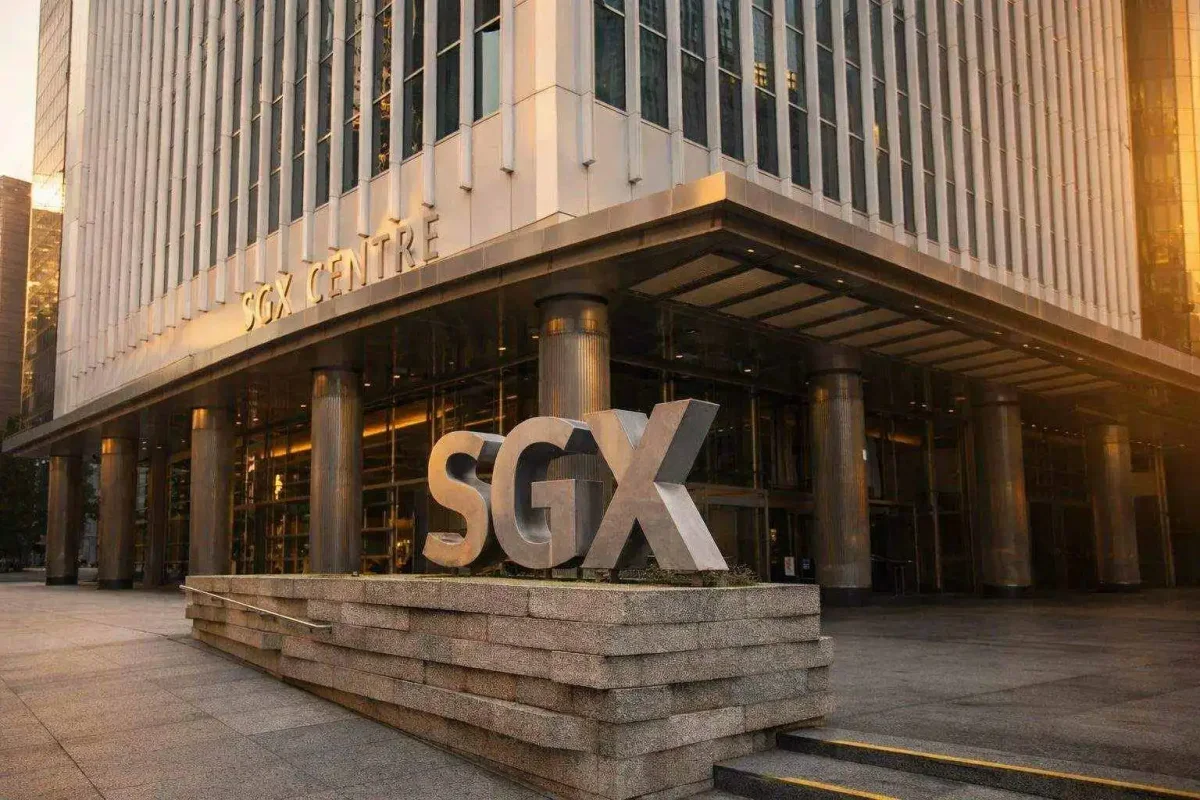
Singapore's benchmark equity index closed lower on Thursday, diverging from a broader rally across Asian markets. The Straits Times Index (STI) shed 13.37 points, or 0.27%, to finish at 5,007.83. The decline was primarily driven by weakness in the city-state's major banking institutions and telecommunications giant Singtel.
Banking Sector Leads Declines
The market-cap weighted index took its direction from the financial sector. DBS Group Holdings saw its shares fall 0.69% to S$57.30. Oversea-Chinese Banking Corporation declined 0.96% to S$22.66, while United Overseas Bank dipped 0.19% to S$37.52. Singtel contributed to the downward pressure, dropping 1.83% to S$4.83.
Despite the overall market softness, the STI managed to hold above the psychologically significant 5,000-point level, which it had reclaimed during the previous trading session. The benchmark remains approximately 0.7% below its record high of 5,041.33 reached in February, keeping traders attentive but not yet signaling a decisive breakout.
Olam Surges on Regulatory Milestone
In a standout performance, Olam Group shares surged nearly 8% following a key regulatory development. The company secured the final approval required for the sale of its Olam Agri business unit. Olam has announced plans to divest its remaining 64.57% stake in Olam Agri to the Saudi Agricultural & Livestock Investment Company (SALIC).
Other notable movers included modest gains for ST Engineering, Keppel Corporation, and Singapore Exchange, providing some offset to the broader market weakness.
Singapore Lags Regional Peers
The local market's performance contrasted sharply with advances across Asia. Japan's Nikkei 225 index climbed 2.38% to 59,518.34, while Hong Kong's Hang Seng Index added 1.72% to 26,394.26. This regional strength followed record closes for both the S&P 500 and Nasdaq Composite indices overnight, as easing geopolitical concerns and corporate earnings optimism bolstered global risk appetite.
Singapore's underperformance highlights the economy's ongoing sensitivity to external pressures. The nation continues to balance improved global sentiment against domestic vulnerabilities, including elevated import costs and persistent supply chain disruptions.
Monetary Policy and Economic Backdrop
The Monetary Authority of Singapore (MAS), which manages policy through the exchange rate rather than short-term interest rates, slightly tightened its settings earlier in the week. The central bank also raised its inflation forecast for 2026 to a range of 1.5% to 2.5%, citing higher import costs stemming from geopolitical tensions, even as advance estimates showed the economy grew 4.6% year-over-year in the first quarter.
Economists offered contrasting views on the policy path. Maybank's Chua Hak Bin suggested the MAS move left room for further action in July and could not rule out another tightening step at that meeting. Standard Chartered's Edward Lee noted future policy would depend on whether inflation expectations become a sustained concern.
Sector Views and Market Outlook
Not all analysts have turned cautious on Singapore's equity sectors. RHB equity research head Shekhar Jaiswal identified construction as a clear domestic growth story, suggesting a structural demand floor should support the sector through at least 2029. This view aligned with Thursday's trading, where ST Engineering shares rose 0.53% despite the index's decline.
The market currently appears to have limited tolerance for surprises. While oil prices have cooled to approximately $95 per barrel from recent highs near $120 as traders anticipate diplomatic resolutions, global markets remain sensitive to geopolitical headlines. The MAS has already warned of considerable risks to both inflation and growth trajectories.
Thursday's modest decline appears more characteristic of consolidation than a strategic retreat. The STI remains up 1.46% over the past month and has gained 34.61% from its level one year ago. However, its failure to participate in the regional advance demonstrates how quickly Singapore's more defensive market composition can cause it to lag behind its regional counterparts when risk appetite improves.