U.S. equity markets staged a significant recovery during Tuesday's trading session, propelled by indications that the Trump administration might be reconsidering its military approach toward Iran, even if the critical Strait of Hormuz remains obstructed. The shift in tone, reported by the Wall Street Journal, provided a much-needed respite for investors who have been grappling with war-related anxieties throughout March.
By late morning Eastern Time, the Dow Jones Industrial Average had surged 555 points, representing a gain of 1.2%. The broader S&P 500 index advanced 1.6%, while the technology-heavy Nasdaq Composite outperformed with a 2.1% increase. This rally followed a highly volatile session on Monday, underscoring the fragile sentiment dominating financial markets.
The primary catalyst for the upward move was a perceived reduction in geopolitical risk. The Cboe Volatility Index (VIX), a key gauge of market fear, retreated by nearly three points to 27.68, dipping back below the psychologically significant 30 level. Analysts noted that investor focus has narrowed to avoiding exposure to a broader regional conflict. "The move in markets is reflecting what traders want to see," observed Mark Malek, Chief Investment Officer at Siebert Financial.
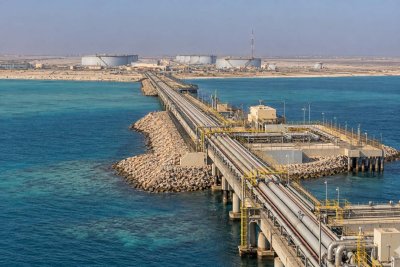
Despite the equity rally, energy markets told a more cautious story. Brent crude, the international benchmark, remained highly volatile, trading near $107 per barrel. The Strait of Hormuz is a vital maritime chokepoint, facilitating approximately one-fifth of global seaborne oil and liquefied natural gas shipments. Its continued closure, coupled with a new attack on a Kuwaiti tanker near Dubai, maintains a tangible threat to global energy supplies.
Sector performance highlighted the day's narrative. Technology shares led the advance. Marvell Technology (MRVL) gained following a significant $2 billion investment from Nvidia (NVDA). Coreweave also surged on news of an $8.5 billion loan to expand its artificial intelligence infrastructure. Airlines and cruise operators, including Delta Air Lines (DAL) and Norwegian Cruise Line, benefited from a slight pullback in oil prices from recent peaks. Remarkably, the energy sector was the only group within the S&P 500 poised to finish the month of March with gains.
The broader quarterly context, however, remains bleak. The first quarter ended deep in negative territory, with the S&P 500 losing roughly 7%. The Dow and Nasdaq concluded last week more than 10% below their record highs, meeting the technical definition of a market correction. Analysts attributed the quarter's weakness to a toxic mix of oil price volatility, concerns over excessive AI-related capital expenditure, and turbulence in private credit markets.
Global markets offered a mixed picture. Saudi Arabia's Tadawul All Share Index rose 0.7%, and Qatar's index climbed 0.9%. In contrast, Dubai's market edged down 0.2% following the nearby tanker incident. London's FTSE 100 jumped 1.6%, while Asian equities had traded lower earlier in the session.
The relief rally faces substantial headwinds. The strait remains closed, and the risk to shipping is persistent. A Reuters survey of 38 economists and analysts now projects an average Brent crude price of $82.85 per barrel for 2026, a sharp upward revision from the $63.85 forecast in February. John Paisie, President of Stratas Advisors, warned that prices could spike to $190 per barrel if the closure persists for another month.
Consumers are already feeling the pinch. The U.S. national average price for a gallon of gasoline surpassed $4 on Monday, a threshold not seen since August 2022. Raymond James analyst Pavel Molchanov anticipates some cooling at the pump in the coming weeks but cautioned that any renewed spike in crude oil could quickly reverse that trend.
Confusion resurfaced later Tuesday when President Trump suggested that nations dependent on Gulf oil should "just TAKE it," with Defense Secretary Pete Hegseth calling for international assistance to reopen the strait. The underlying dynamic for Wall Street remains unchanged: while stocks may enjoy brief rallies on de-escalation hopes, the trajectory of oil prices continues to dictate the market's fundamental anxiety.