The U.S. Department of Education has set a July 1, 2026, deadline for borrowers enrolled in the Saving on a Valuable Education (SAVE) plan to select a new repayment option, marking a significant shift in the federal student loan system. Loan servicers will begin notifying affected borrowers on that date, giving them at least 90 days to choose an alternative plan. Borrowers who fail to act will be automatically placed into either a standard repayment plan or a tiered standard plan.
Impact on Borrowers
The change affects a vast portfolio: as of December 2025, Federal Student Aid reported 42.8 million borrowers holding $1.7 trillion in federal student loans. Over 6.5 million borrowers were in SAVE forbearance, and 7.7 million were in default. The SAVE plan, created under President Joe Biden to lower payments and offer faster forgiveness for small balances, is being phased out due to a court settlement and policy changes under the Trump administration.
New Repayment Options
The replacement, called the Repayment Assistance Plan (RAP), ties monthly payments to 1% to 10% of a borrower's income, with a $50 monthly deduction per dependent. Loan forgiveness under RAP requires 360 on-time payments. Alternatively, the tiered standard plan offers fixed repayment terms of 10, 15, 20, or 25 years, depending on the loan amount. Borrowers with older loans who do not take out new loans after July 1 can still access existing income-driven plans like Income-Based Repayment (IBR), Pay As You Earn (PAYE), and Income-Contingent Repayment (ICR), though PAYE and ICR are set to end by July 2028.
Servicing Challenges
Borrower advocates warn of technical glitches as the transition approaches. Issues reported include difficulty accessing PAYE, incorrect IBR calculations, and misleading consolidation advice that could affect forgiveness timelines. Rich Williams, a former deputy assistant secretary at the Education Department, noted that the department faces tight deadlines for complex changes. The Government Accountability Office (GAO) in March flagged that Federal Student Aid had reduced reviews of loan servicer accuracy and call quality after staff cuts, raising the risk of billing errors and incorrect repayment statuses.
Market and Policy Context
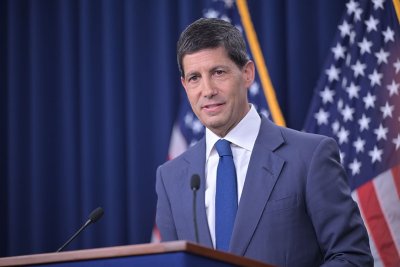
The overhaul comes amid broader policy churn. Education Department Under-Secretary Nicholas Kent stated, "If you take out a loan, you must pay it back," emphasizing the need for a simpler, more sustainable system. However, borrower groups express widespread confusion. Natalia Abrams, president of the Student Debt Crisis Center, told The Guardian, "Every single student loan borrower is confused. I have never seen it this bad." For public-service workers, the choice of plan is critical: RAP qualifies for Public Service Loan Forgiveness, while standard plans do not.
Graduate and professional borrowers face unique trade-offs. Andrew Paulson, columnist at White Coat Investor, noted that RAP caps unpaid interest and offers principal reduction, but it uses adjusted gross income (AGI) and lacks the poverty protection found in older plans, with a $10 minimum payment and forgiveness after 30 years. Consolidation after July 1 may also lock borrowers out of older IDR plans.
The key risk remains execution—notice mailings, online calculators, and servicer tools must function smoothly. Borrowers who delay may end up in a plan that is not the most affordable or forgiveness-friendly. The Education Department aims to launch the new system by July 1, but the GAO's warnings underscore the potential for disruption.