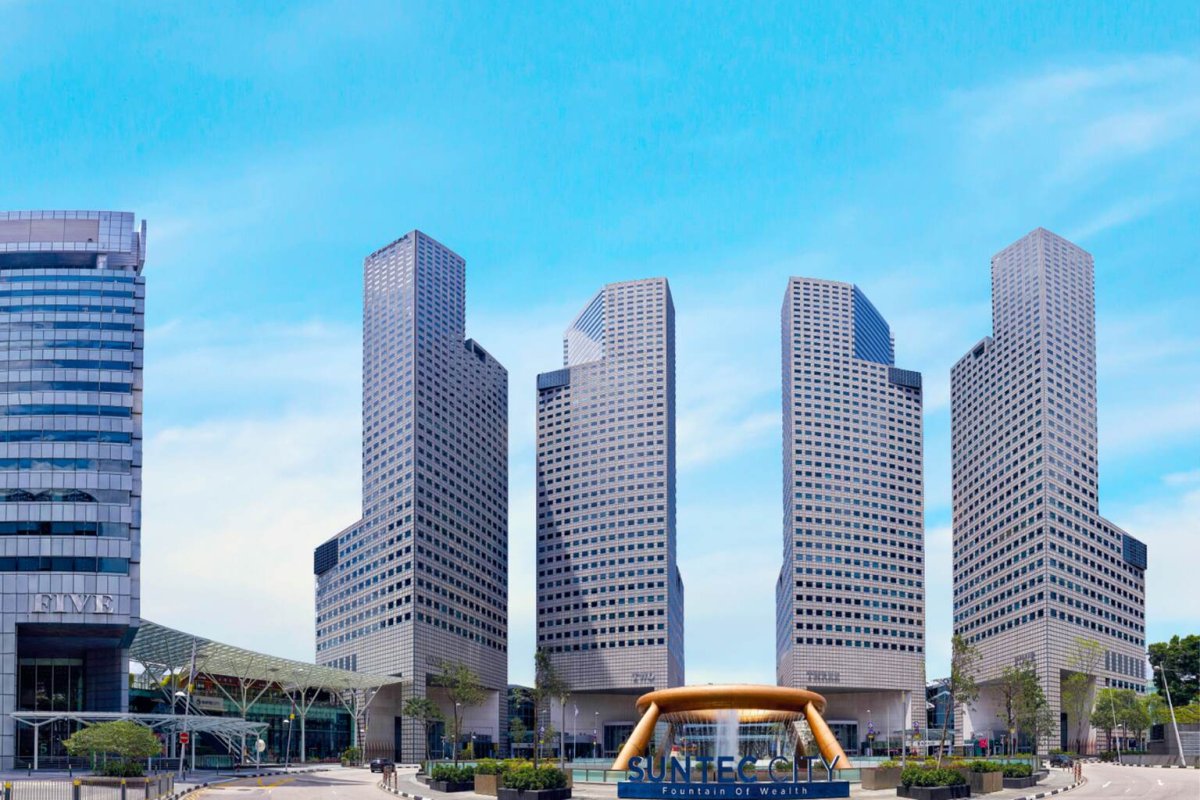
Suntec Real Estate Investment Trust (SGX:T82U) saw its units decline 0.7% on Monday after the manager initiated sale campaigns for three Australian office properties. The units traded at S$1.37 by 11:51 a.m. Singapore time, compared with Friday's close of S$1.38. This modest drop reflects investor caution over the trade-off between debt reduction and potential income loss.
Sale Details and Rationale
The three properties—177 Pacific Highway and 21 Harris Street in Sydney, and Olderfleet at 477 Collins Street in Melbourne—have a combined stated value of approximately S$1.04 billion. They are fully occupied and contributed around S$30 million in annual net property income as of June 30. The manager believes successful sales could lower aggregate leverage from 43% to below 40% and improve interest coverage.
Chief Executive Chong Kee Hiong emphasized the deleveraging benefits, but investors are weighing the loss of stable income. JPMorgan estimates proceeds of S$1.1 billion at book value, with a blended capitalization rate of 6.4%, potentially bringing gearing down to about 37%. However, the broker expects distribution per unit to be diluted, as the sold assets were generating consistent cash flow.
Market Reaction and Analyst Views
The muted response is understandable: while debt relief is positive, the three buildings are fully leased, making them attractive income generators. Analysts had been optimistic prior to the announcement, with DBS Group Research rating the stock a Buy with a S$1.70 target, and Phillip Securities recommending Accumulate with a S$1.69 target. The consensus target stands at S$1.625, implying an 18.6% upside from the current price.
First-half 2026 distributions were already recovering, with distributable income up 25.5% to S$116.5 million, although revenue growth was only 1.9%. The gap was driven by lower finance costs and stronger Singapore operations. The key question now is how the manager will redeploy the proceeds—whether to retire debt, acquire new assets, or return capital to unitholders.
Portfolio Impact and Risks
The targeted assets represent 74.1% of Suntec's Australian portfolio value and generated 93.2% of its Australian net property income. Selling them would significantly reduce exposure to the Australian market but also strip away high-occupancy assets. If the sale prices come in below the stated S$1.04 billion, the deleveraging impact would be weaker; a premium could fund a larger capital return.
Risks include a weak bid crystallizing a valuation loss, or a slow process leaving leverage elevated amid refinancing uncertainties. Even a quick sale near book value could hurt distributions if replacement income is delayed. Investors will be watching for binding bids to gauge the actual pricing and the manager's capital allocation strategy.
The next key catalyst is any binding agreement for one of the properties, which would allow investors to compare the price against the S$1.04 billion valuation and verify whether leverage indeed falls below 40%.
