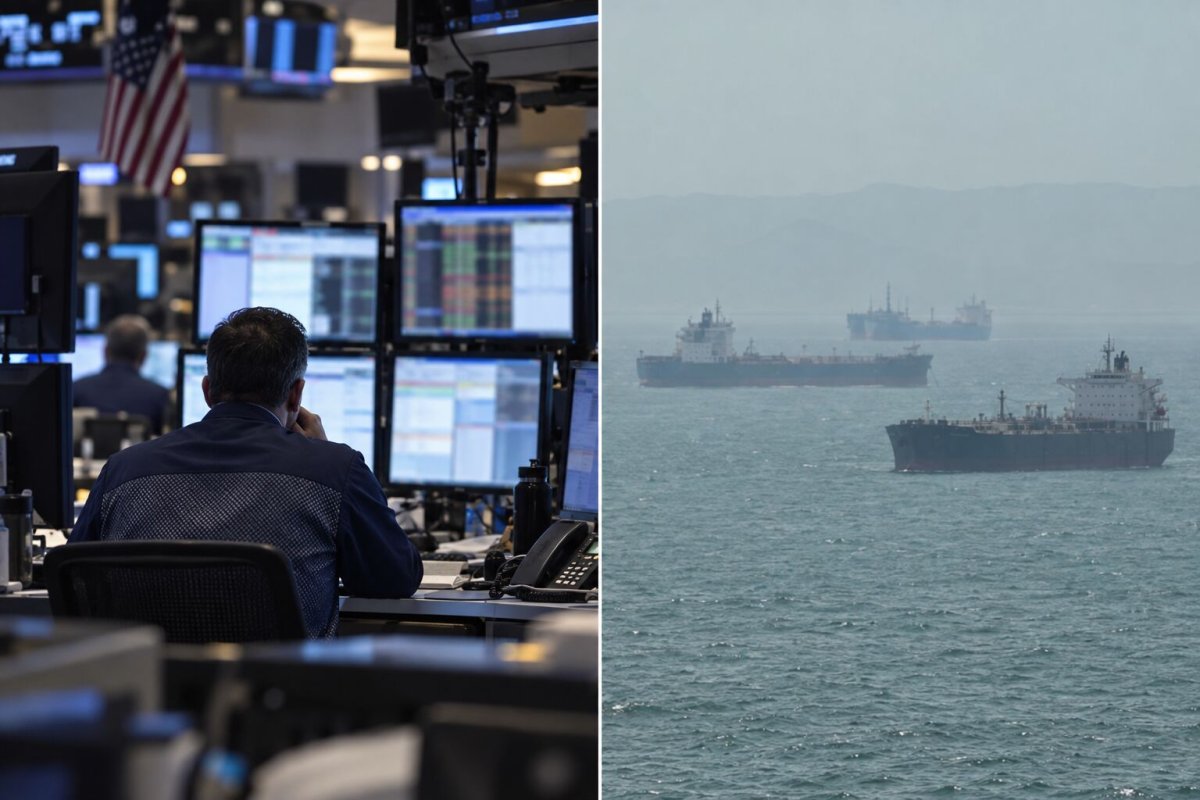
Nasdaq-100 futures were effectively unchanged in early trading on Wednesday, even as Brent crude oil climbed to within 51 cents of the $100 mark. The front-month Nasdaq contract hovered near 29,534, up just 0.1%, while S&P 500 futures edged higher and Dow futures slipped slightly. This muted reaction, however, may be more telling than it appears at first glance.
Technology shares are absorbing the oil shock better than the broader market, but the next major move for equities will depend less on the price of crude itself and more on what rising energy costs do to inflation expectations and bond yields ahead of Friday's U.S. consumer-price report.
Overnight Market Snapshot
According to a Reuters report via Euronext, Brent crude futures had gained $1.57 to reach $99.49 a barrel by 04:26 GMT, their highest level since late June. West Texas Intermediate rose $1.60 to $94.63. The same report indicated S&P 500 futures were up 0.1%. These are time-stamped overnight readings, not necessarily indicative of where the cash market will open.
Tuesday's cash session provided a weak foundation. The S&P 500 fell 0.58% to 7,673.52, the Dow dropped 1.18% to 52,786.07, and the Nasdaq Composite slipped 0.32% to 26,421.41, according to the Associated Press. However, the Philadelphia semiconductor index managed to rise 1.3%, underscoring the strength in chip stocks that is helping to keep Nasdaq futures calm.
Why 0 Oil Matters for Tech
Most large software and semiconductor companies do not purchase enough fuel for a $1 move in Brent to directly impact their earnings. The transmission mechanism runs through the discount rate. Higher energy prices can raise transportation and production costs across the economy, slowing the pace of disinflation and prompting investors to demand higher yields for holding long-duration assets. Growth stocks, whose valuations rely heavily on profits expected years into the future, are particularly sensitive to this repricing.
The 10-year Treasury yield ended Tuesday at 4.79%, up slightly from 4.78% and near its highest level since 2023. Meanwhile, the market is nearly evenly split between a quarter-point Federal Reserve rate increase and no change at the September 16 meeting, according to the latest Reuters snapshot. Nasdaq's relative resilience is therefore based on a narrow bargain: investors are still willing to pay for AI and chip growth, provided the oil shock does not force another leg higher in real and nominal yields.
Friday's CPI is the Real Test
The latest official CPI report showed July prices rising 0.1% from June and 3.4% from a year earlier. Core CPI increased 0.2% month-over-month and 2.5% on a 12-month basis. The Bureau of Labor Statistics will release August CPI at 8:30 a.m. ET on Friday, September 11, following wholesale inflation data on Thursday.
Consensus estimates create an awkward setup. Economists surveyed by the Associated Press expect headline CPI to ease to 3.3% from 3.4%, but producer-price inflation is forecast to accelerate to 5.4% from 4.7%. A benign consumer reading could validate the Nasdaq's overnight stability. A hot wholesale number followed by sticky CPI would instead make $99-plus Brent look like the beginning of a renewed inflation impulse, not just a temporary geopolitical premium.
What Could Change the Outlook
The constructive case for tech requires three things: oil to stop advancing, the 10-year yield to hold near or below Tuesday's 4.79%, and semiconductor leadership to persist beyond a handful of names. That combination would allow earnings growth, rather than the discount rate, to dominate the Nasdaq trade.
The bearish case does not require an immediate selloff. A sustained break above $100 in Brent, another rise in yields, and a hotter-than-expected inflation sequence would be enough to compress growth-stock multiples even if corporate forecasts remain intact. The counterargument is that a geopolitical oil spike can reverse quickly; investors who treat every move above $100 as permanent risk selling after the inflation premium is already priced.
For Wednesday, "flat" should not be read as "safe." Nasdaq futures are holding because chip momentum is offsetting a macro shock. The CPI report will decide which side of that balance has the stronger claim.