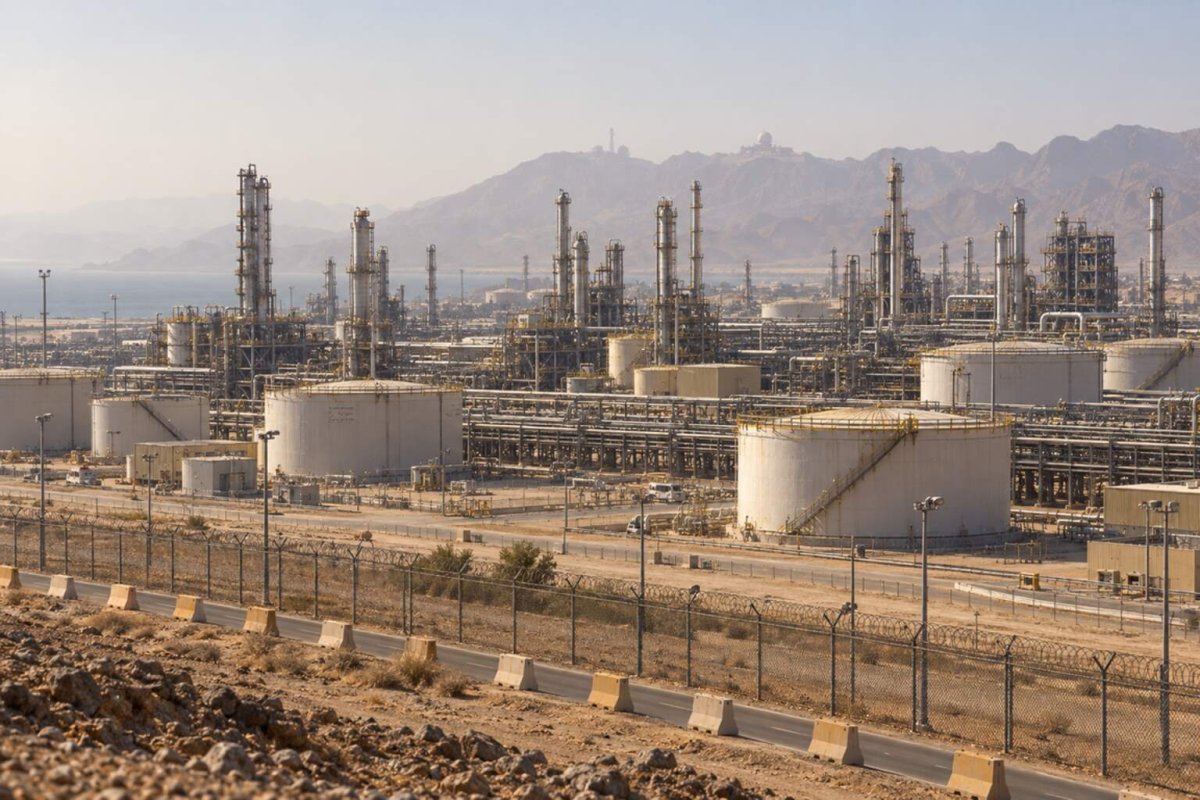
Oil prices spiked sharply on Tuesday as attacks on Saudi Arabian energy infrastructure stoked supply concerns, sending Brent crude to a session high of $99.45 per barrel. The move, while easing slightly by early morning trading, underscored the fragile state of global energy markets already strained by geopolitical tensions.
By 6:45 a.m. Eastern, Brent was trading at $98.63, up 2.44% from its previous close, while U.S. benchmark West Texas Intermediate (WTI) climbed 2.67% to $93.92, after touching an intraday high of $94.73. These live futures readings, however, can fluctuate rapidly before the U.S. cash market opens.
What the Saudi Attacks Did—and Did Not—Confirm
Saudi officials reported that a barrage of Houthi missile and drone strikes wounded 73 people and ignited fires at multiple oil and utility facilities in the kingdom's southern region. The Energy Ministry confirmed that operations at affected sites were temporarily suspended, with targets including Jazan, Abha, Najran, and Khamis Mushait, according to the Saudi-led coalition and the Houthis' military spokesman.
A separate Reuters report corroborated the operational disruption, noting that some activities had ceased and that damage at Aramco's Jazan facilities was under assessment. While this cross-check establishes a real operational impact, it does not yet clarify how many barrels of crude or refined products are offline, how much inventory can buffer the outage, or how long the suspension might last.
That distinction is crucial. Jazan's refinery has a capacity of roughly 400,000 barrels per day, but capacity is not synonymous with confirmed lost output. Applying the full figure to Tuesday's event without an operator or ministry estimate would overstate what is actually known.
Why 0 Brent Is a Threshold, Not a Verdict
The session high left Brent only 55 cents shy of the $100 mark. The round number holds psychological significance, as it can alter hedging behavior, headline narratives, and inflation expectations. However, a single intraday print does not prove a lasting supply shock. The duration of the disruption is the key variable investors must monitor.
If the affected facilities resume operations quickly and Brent retreats below Monday's reference close of $96.28, Tuesday's rally may be viewed as a temporary risk-premium spike. Conversely, if outages persist, Red Sea shipping remains constrained, and Brent begins to settle above $100, the repricing could cascade into diesel, jet fuel, freight costs, and eventually consumer prices.
The futures market serves as the appropriate first read because it trades through the U.S. premarket. CME describes NYMEX WTI as the world's most liquid crude contract, noting that geopolitical events can influence oil policy and costs. Tuesday's quote thus reflects the market's immediate insurance premium, not a direct measurement of physical barrels lost.
Dow Futures Absorb More of the Oil Shock
U.S. equity futures responded unevenly to the oil surge. Dow futures traded at 53,050 at 6:45 a.m. ET, down 390 points, or 0.73%, from Friday's reference close. S&P 500 futures slipped 0.25% to 7,702.75, while Nasdaq-100 futures were nearly flat, up 0.09% at 29,590.50.
This divergence is economically coherent. A crude spike has a more direct cost impact on transport, industrial, and consumer-facing businesses that are heavily weighted in the Dow. Large technology companies are less directly exposed to fuel costs, though they are not insulated if higher oil lifts bond yields and reduces the present value of long-duration earnings.
Energy shares are the obvious relative beneficiaries, but even that trade requires nuance. Producers with unaffected assets gain from higher realized oil prices, while refiners, airlines, and logistics companies face different combinations of feedstock costs, product spreads, and hedging positions. A broad sector label can obscure these distinctions.
The Inflation Calendar Makes the Timing Worse
Oil is arriving as a market catalyst just before the most important U.S. inflation releases of the week. The Bureau of Labor Statistics schedules August producer prices for Thursday and consumer prices for Friday, both at 8:30 a.m. ET. The Federal Reserve's next policy meeting is set for September 15–16.
Tuesday's oil move will not rewrite August CPI, whose collection period largely predates it. It can, however, affect the market's interpretation of that report. A hot inflation print followed by sustained $100 oil would be harder to dismiss as backward-looking; a softer report and a rapid Saudi restart would weaken the case that the shock changes the Fed's path.
Core CPI excludes direct energy costs, but investors should not treat that exclusion as immunity. Fuel feeds transport and production expenses with lags, while highly visible gasoline prices can influence household expectations. The relevant question for rates is whether the shock broadens and persists, not whether one futures contract crosses a round number for a few minutes.
Three Signals That Can Confirm or Unwind the Move
Physical supply: an official estimate of affected output, inventory cover, and a restart timeline. Without it, the market is pricing uncertainty rather than a measured shortage.
Closing prices: Brent settling above $100 would carry more information than Tuesday's $99.45 intraday high; a break below $96.28 would erase the day's gain.
Cross-asset confirmation: rising Treasury yields alongside weaker transports and consumer shares would show inflation transmission. Stable yields and a narrowing Dow-Nasdaq gap would suggest the shock is being contained.
For now, the market has received enough evidence to charge a larger supply-risk premium, but not enough to calculate the outage. That is why Brent can touch $99.45 and retreat while Dow futures remain under pressure: investors know the direction of the new risk, not yet its duration or size.