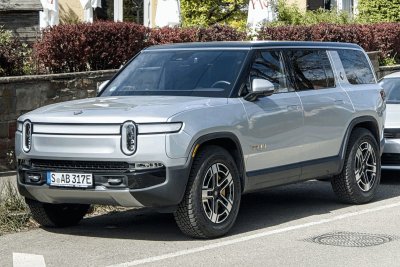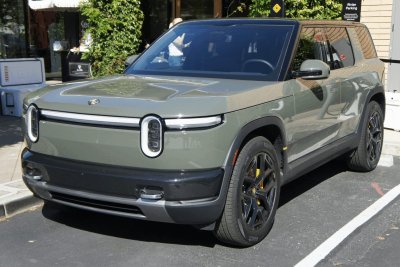
Rivian Automotive (NASDAQ: RIVN) unveiled its most comprehensive software overhaul to date for first-generation R1 vehicles, a move that could streamline operations and enhance the ownership experience. However, as of Tuesday's premarket trading, the stock hovered around $15.72, signaling that investors remain focused on the company's substantial cash burn rather than the immediate benefits of the new operating system.
The share price reflects the market's cautious stance. Rivian closed Friday at $15.74, a 2% decline, and traded near $15.72 early Monday. This is just 1.4% above the $15.50 per-share price from the company's July stock offering, despite the start of external R2 deliveries and a profitable software-and-services segment. The market is clearly waiting for more tangible financial progress.
What RivianOS 2 Brings
On September 4, Rivian announced that its 2026.31 over-the-air update would bring RivianOS 2 to both generations of R1 vehicles. This software platform was originally designed for the R2, and its deployment to R1 unifies the company's software architecture across its entire lineup. This consolidation is intended to reduce duplicated engineering efforts and create a single feature pipeline.
Owners will see a redesigned interface, context-aware controls, universal search, cloud-assisted voice functions, and new route alerts powered by Google Maps. Connect+ subscribers gain access to a dedicated weather app and the ability to manage live trips from the Rivian mobile app. However, Rivian clarifies that "one platform" does not mean identical capabilities. R2 and second-generation R1 vehicles have the compute power for more local AI processing and Unreal Engine 5 graphics, while first-generation R1 retains Unreal Engine 4 to maintain responsiveness. This sensible product support also highlights the hardware fragmentation that software convergence cannot fully erase.
The Software Profit Puzzle
Rivian's recent earnings suggest a strong software story at first glance. In the second quarter, software-and-services revenue jumped 37% year-over-year to $515 million, generating $215 million in gross profit at a 42% margin. This segment actually produced more gross profit than the entire company, as automotive operations posted a $36 million gross loss.
Yet, a closer look reveals that $308 million, or 60%, of that software-and-services revenue came from the joint venture with Volkswagen Group. The rest includes repair and maintenance, remarketing, and paid products like Autonomy+, but Rivian does not disclose a clean owner-subscription revenue or gross-profit figure. This makes RivianOS 2 an important test. Features reserved for Connect+ could increase subscription usefulness, and a common platform should allow one engineering effort to benefit more vehicles. But these benefits are not yet measurable. Research and development expenses rose 14% year-over-year to $466 million in Q2.
There's also a timing issue. The company's 10-Q indicates that software-and-services gross profit should continue to grow in the short term but expects a reduction in 2028 when the Volkswagen joint venture's performance obligation is satisfied. Investors should not capitalize today's 42% margin as a permanent consumer-software stream.
Vehicle Economics Still Matter
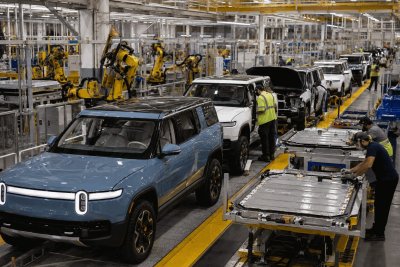
Rivian delivered 12,194 vehicles in the second quarter and began external R2 deliveries. Automotive revenue reached $1.143 billion, but the $36 million gross loss came despite $106 million in regulatory-credit revenue. The R2 ramp added about $100 million in incremental cost of revenue versus normalized production, according to the company.
These facts leave room for optimism: early manufacturing inefficiency should ease as R2 volume rises, and the automotive gross loss improved by $299 million from a year earlier. However, the improvement was partly aided by regulatory credits and temporary tariff-refund accounting, so recurring vehicle margin still needs proof. Full-year guidance calls for 65,000 to 70,000 deliveries, an adjusted EBITDA loss of $1.8 billion to $2.0 billion, and capital spending of $1.7 billion to $1.8 billion. A unified software stack may improve long-run efficiency, but it cannot substitute for an R2 ramp that converts deliveries into positive automotive gross profit.
The 9 Million Cash-Flow Test
Rivian used $849 million of free cash flow in Q2, comprising $487 million of operating cash outflow and $362 million of capital expenditure. This improved from Q1's $1.075 billion burn but was more than double the $398 million used a year earlier. Inventory purchases for R2 contributed to the first-half working-capital drain.
The balance sheet offers some cushion, though shareholders paid for it. Rivian ended June with $5.31 billion in cash, equivalents, and short-term investments. In July, it sold 86.25 million shares for about $1.317 billion in net proceeds. It had already issued roughly 63 million shares to Volkswagen and 20 million to Uber during Q2.
Using the 1.362 billion common shares outstanding at June 30 plus the July offering gives a rough pro-forma count of 1.448 billion shares. At $15.72, that implies an equity value of around $22.8 billion before options, restricted stock units, and convertible-note effects. This calculation is illustrative, but it explains why per-share progress can lag operating progress when fresh capital expands the denominator.
What Would Make the Update Matter to RIVN Stock?
- Owner monetization: Disclosure of Connect+ and Autonomy+ subscriber counts, attach rates, revenue per vehicle, or churn.
- Platform leverage: Slower growth in software-development spending as one code base serves R1, R2, and Volkswagen-joint-venture programs.
- Vehicle proof: Improving automotive gross margin as R2's roughly $100 million of quarterly ramp inefficiency declines.
RivianOS 2 is a credible foundation for all three. It gives older vehicles more utility, gives paid subscriptions more places to demonstrate value, and gives engineers a broader installed base for each release. The stock, sitting almost exactly where Rivian raised July capital, is withholding credit until the company proves it can convert software and vehicle progress into sustainable profitability.