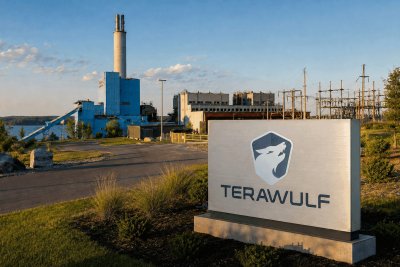
TeraWulf Inc. (NASDAQ: WULF) experienced a turbulent week, closing at $25.83 on Friday, a 10.9% decline that significantly underperformed the broader market. The stock had touched a 52-week high of $29.84 on Monday before reversing course, highlighting the intense pressure from short sellers and the ongoing reassessment of the AI infrastructure trade.
Volume and Short Interest Dynamics
Friday's trading volume surged to 66.3 million shares, more than double the 65-day average of approximately 30.2 million shares, according to WSJ data. Despite the elevated activity, the volume represented only about 61% of the reported short interest of 108.65 million shares, which remains substantial at 25.8% of the float. This imbalance leaves WULF vulnerable to either a short squeeze if buying momentum builds or further downside if selling pressure continues.
Short sale flow remained heavy throughout the week. Data from FINRA off-exchange trades, as compiled by Fintel, showed 4.68 million WULF shares sold short on Friday alone, with short volume accounting for 45.77% of tracked off-exchange trades. This ratio consistently stayed in the 44% to 48% range each day last week, indicating persistent bearish bets against the stock.
Market Context and Russell Reconstitution
The stock's decline was steeper than the Nasdaq Composite's 4.6% weekly slide, as the broader tech sector faced a pullback. Chip stocks dropped 5.3% on Friday and were on track for a 7.7% weekly loss, according to Reuters. Mark Hackett, chief market strategist at Nationwide, described the tech pullback as "a needed and healthy period of consolidation" after a significant rally.
Friday's high volume was partly driven by the Russell index reconstitution, which saw total trading volume across the market reach approximately $150 billion, per Reuters. Stephens analyst Melissa Roberts called Friday a "key liquidity day," while Jefferies' Steven DeSanctis described the expected volume as "really massive." The reconstitution's effects are now in place, and Monday's trading will reflect the updated index composition.
TeraWulf's Business Transformation
TeraWulf, originally a bitcoin miner, is pivoting toward high-performance computing (HPC) and AI data center operations. The company reported first-quarter revenue of $34.0 million, with $21.0 million coming from HPC lease revenue, and held approximately $3.1 billion in cash and restricted cash at quarter-end. CEO Paul Prager emphasized execution in Q1, while CFO Patrick Fleury highlighted the growing contribution of recurring, contracted revenue.
The company's May 26 announcement regarding the Muskie Data Campus in eastern Kentucky is a key driver of investor interest. The site is expected to support over 1 GW of data-center load, with 500 MW coming online in the second half of 2028 and another 500 MW phase targeted for late 2030. Prager described TeraWulf as "fundamentally a power infrastructure company that builds digital infrastructure."
Timing and Risks
Investors are betting on future power capacity that will take years to materialize. While Core42 had 60 MW of operational critical IT HPC capacity at Lake Mariner as of March 31, other projects still require construction, buyers, financing, and power connections. Meanwhile, bitcoin traded near $60,000 over the weekend, well below its 2026 starting level, adding pressure on miners with crypto holdings.
With Nasdaq trading hours from 9:30 a.m. to 4 p.m. Eastern, the market will close early on July 3 for Independence Day, leaving WULF with four full trading sessions next week before the long weekend. The stock's high short interest and elevated volume suggest that any catalyst could trigger significant price movement.