Tesla shares edged higher in midday trading Tuesday, rising 79 cents to $396.35, following official U.S. government confirmation of a major battery supply agreement. The electric vehicle maker and LG Energy Solution have finalized a $4.3 billion deal to construct a lithium iron phosphate (LFP) battery-cell manufacturing facility in Lansing, Michigan, with production operations expected to commence in 2027.
Strategic Battery Expansion
The newly announced facility represents a significant strategic investment in Tesla's energy storage business. Batteries produced at the Michigan plant will be dedicated to supplying Tesla's Megapack 3 systems, particularly those destined for Houston installations. This move strengthens a business segment that has gained increasing investor attention as Tesla's core automotive sales face softening demand. The LFP chemistry selected for this plant currently has limited U.S. manufacturing presence, with the supply chain still predominantly controlled by Chinese producers.
Tesla's energy generation and storage division has demonstrated robust growth, with the latest annual report showing a 25% year-over-year revenue increase. The segment reached $3.84 billion in the fourth quarter, while storage deployments totaled 46.7 gigawatt-hours for the full year 2025. This expansion comes as the company faces challenges in its primary automotive market.
Competitive Landscape and Market Pressures
Tesla is not alone in pursuing energy storage opportunities. On Tuesday, General Motors and LG revealed plans to reconfigure a Tennessee battery facility for stationary-storage production. GM battery chief Kurt Kelty noted that demand in this sector "tremendously" outpaces supply, a disparity he expects to persist for several years.
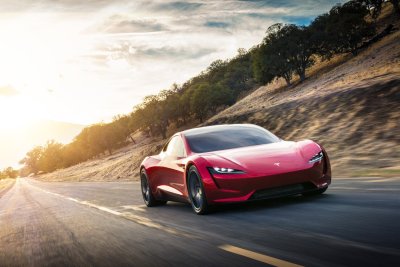
Meanwhile, Tesla's automotive segment continues to face headwinds. Morningstar analyst Seth Goldstein observed earlier this month, "If I look at two of the three largest markets, I'm seeing a decline," projecting a third consecutive year of shrinking deliveries in 2026. Analysts currently forecast approximately $5.19 billion in negative free cash flow for the coming year, representing money flowing out after investments. Tesla has already relinquished its position as global EV leader to Chinese manufacturer BYD.
Capital Investment and Strategic Shifts
The battery plant announcement follows Tesla's January projection that capital expenditures would exceed $20 billion this year. Thomas Monteiro, a senior analyst at Investing.com, characterized this period as a "transition phase" for Tesla, with investors effectively funding upfront investments in initiatives like robotaxis and software development. The bet is that these ventures will yield returns before automotive sales recover.
CEO Elon Musk recently informed investors that the company's Terafab initiative, focused on artificial intelligence chip production, would launch within seven days. This announcement fueled speculation that Tesla's valuation remains heavily dependent on its AI and autonomous driving ambitions rather than solely on vehicle deliveries. Musk has argued that external chip suppliers cannot adequately meet Tesla's anticipated future demand.
Supply Chain Considerations
Despite the positive news surrounding the new U.S. facility, Tesla continues to navigate supply chain complexities. On Monday, Syrah Resources and Tesla extended their deadline to resolve a claimed default related to their graphite supply agreement, now targeting June 1 for settlement. This development underscores ongoing challenges within Tesla's battery materials pipeline, even as market attention focuses on the Michigan plant announcement.
Tesla shares gained 1.1% on Monday, finding support after the previous trading session. The stock's movement reflects investor balancing of near-term automotive challenges against long-term strategic initiatives in energy storage and artificial intelligence.