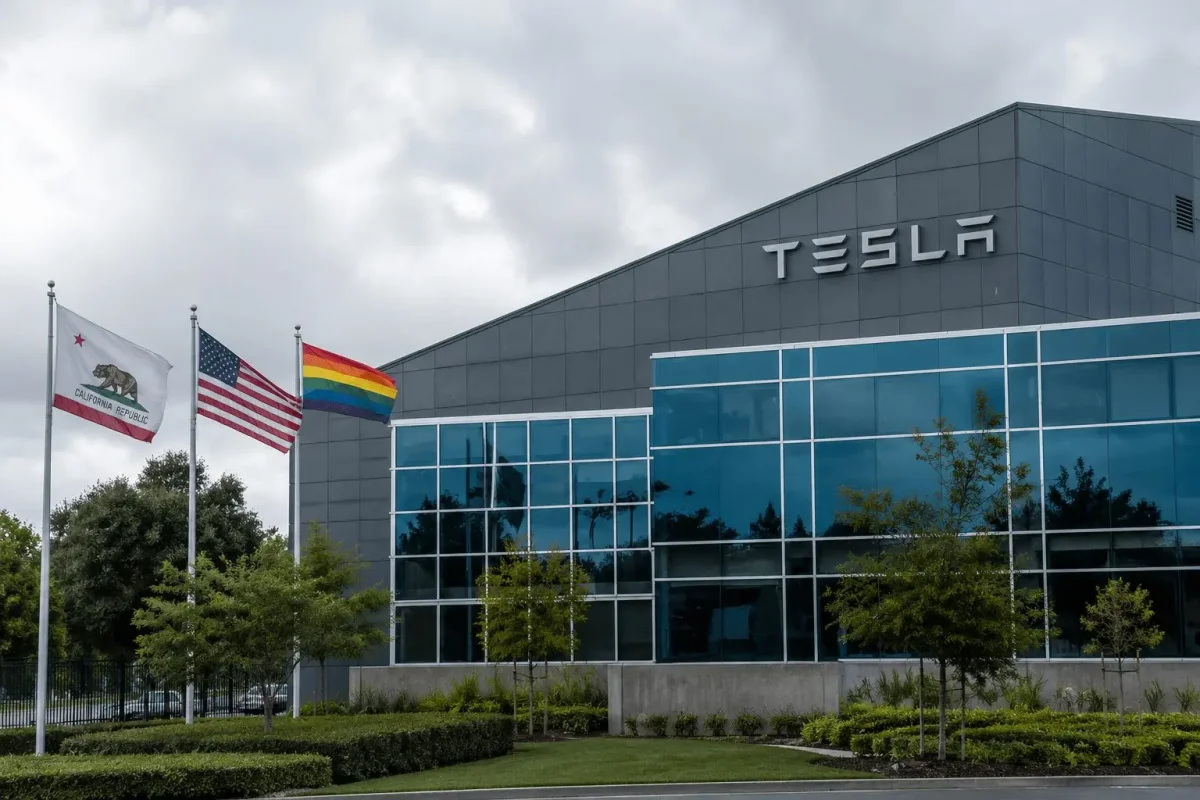
Tesla Inc. (NASDAQ: TSLA) saw its stock climb 2.8% to $440.18 on Monday, defying a 9.66% decline in its April retail sales in China, which totaled 25,956 vehicles. The divergence highlights a shifting demand landscape as exports from Tesla's Shanghai plant surged 80.04% to 53,522 units, according to data from the China Passenger Car Association (CPCA).
The broader Chinese auto market continued to struggle, with overall passenger-car sales falling 21.6% year-on-year in April, marking the seventh consecutive monthly decline. CPCA Secretary-General Cui Dongshu pointed to sluggish demand for lower-priced models as a key bottleneck hindering recovery. Tesla's retail sales in China, which exclude exports, gave it a roughly 3.1% share of the local new-energy vehicle (NEV) market, trailing behind BYD (OTC: BYDDY) with 182,025 NEVs and Xiaomi (OTC: XIACF) with 36,702 units.
Investors appeared to look past these domestic headwinds, focusing instead on Tesla's broader narrative around software, artificial intelligence, and robotics. Piper Sandler analyst Alexander Potter maintained an Overweight rating on Tesla with a $500 price target, noting that his base model—covering 17 product lines—values the stock at around $400 before factoring in the Optimus humanoid robot initiative. 'At $400/share, we think investors can buy Optimus for free,' Potter wrote.
A key catalyst for the stock's rise may be linked to geopolitical developments. Bloomberg News reported that the White House has asked Elon Musk and Apple CEO Tim Cook to join President Donald Trump on a trip to China this week, according to a White House official. Tesla has not responded to requests for comment. Such a visit could accelerate regulatory approvals for Tesla's Full Self-Driving (FSD) system in China, which CFO Vaibhav Taneja said in April is now targeted for the third quarter, pushed back from an earlier first-quarter timeline.
The bear case remains plausible, however. Continued weakness in Chinese retail demand could pressure margins, especially as competitors like BYD and emerging brands maintain aggressive pricing and feature upgrades. Tesla's premium valuation leaves little room for error on FSD, robotaxi, or Optimus deadlines.
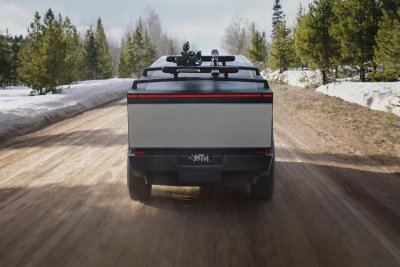
On the safety front, Tesla announced two recalls. The first involves 173 Cybertrucks from the 2024-2026 model years equipped with 18-inch steel wheels, where rotor cracking could cause a wheel stud to detach from the hub. The second recall covers over 200,000 other Tesla vehicles due to a rearview-camera software issue. The company stated it has no reports of crashes, injuries, or fatalities linked to either recall.
In summary, Tesla's April sales data underscore a critical question: can surging exports and eventual software revenue offset weakening domestic demand in the world's largest auto market? Investors seem to be betting on the former, but the risk of a slowdown remains real.