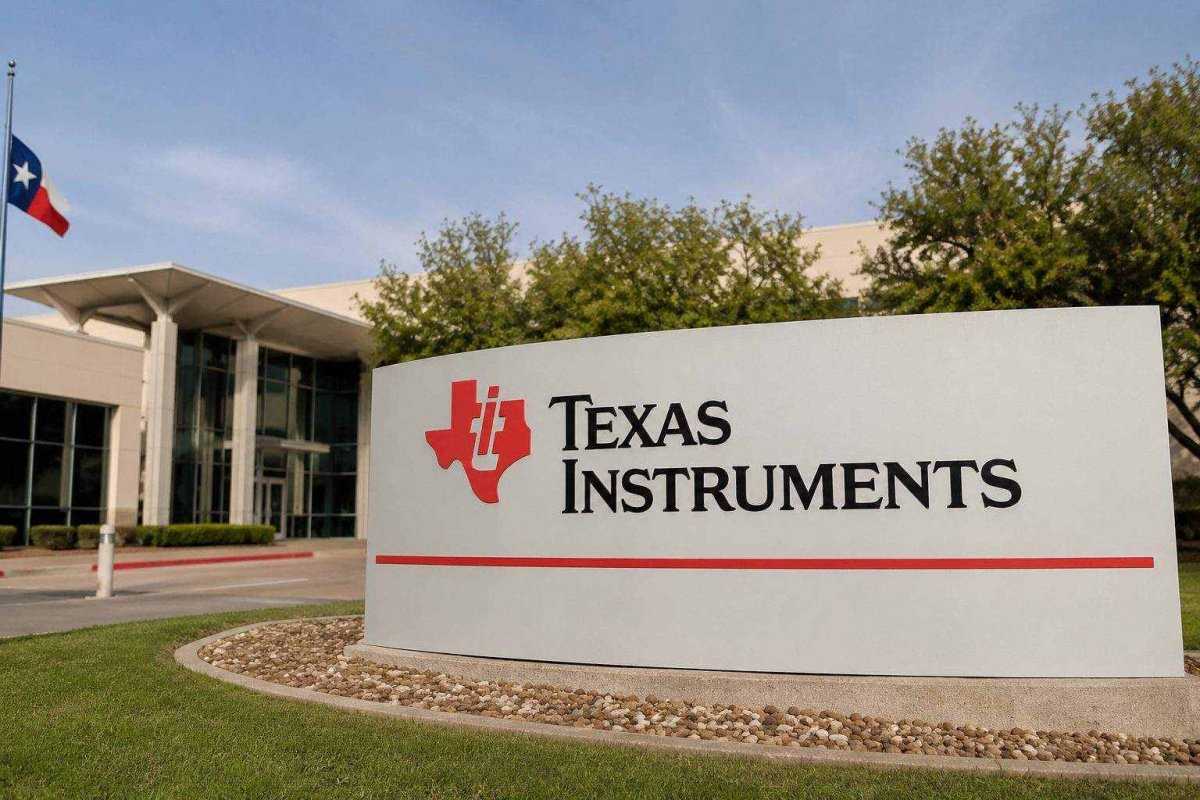
Texas Instruments (TXN) wrapped up a strong week on Friday, with shares closing at $302.73, a decline of 1.77% on the session. Despite the daily drop, the stock posted a weekly gain of approximately 5.2% from its May 8 close. During Thursday's trading, the shares touched an intraday high of $310.29, according to Refinitiv data.
The broader market ended the week on a down note, with the S&P 500 falling 1.24% and the Nasdaq Composite dropping 1.54%. Rising oil prices and bond yields reignited inflation concerns, weighing on equities. Chip-related exchange-traded funds were hit particularly hard: the iShares Semiconductor ETF (SOXX) slid 3.92%, while the VanEck Semiconductor ETF (SMH) lost 3.86%.
Analyst sentiment toward Texas Instruments turned more bullish following the company's investor relations meetings. Stifel analyst Tore Svanberg raised the price target on TXN to $340 from $290, citing a shift from "patient cycle-waiting" to "active recovery validation." The team highlighted a broad industrial upturn and a data-center segment running at roughly a $2 billion annualized rate as key catalysts.
Texas Instruments specializes in analog chips that manage power, temperature, and sound, as well as embedded processors used in factory machinery, automobiles, data centers, and consumer electronics. This makes the stock a barometer not only for artificial intelligence trends but also for industrial activity, auto demand, and inventory management by customers.
The recent rally was fueled by stronger-than-expected first-quarter results. TI reported Q1 revenue of $4.83 billion and net income of $1.55 billion, translating to earnings per share of $1.68. For the second quarter, the company guided revenue in the range of $5.00 billion to $5.40 billion and EPS between $1.77 and $2.05.
On the earnings call, CEO Haviv Ilan noted that industrial revenue saw sequential growth across sectors and geographies. He expects industrial and data-center segments to drive Q2 growth but cautioned that it is "too soon to call" on auto demand. Bank of America analyst Vivek Arya upgraded the stock to Buy and raised his price target to $320 from $235, stating that the guidance exceeded even his most bullish scenarios.
Free cash flow, defined as cash from operations minus capital expenditures plus CHIPS Act incentives, reached $4.35 billion over the trailing twelve months. CFO Rafael Lizardi attributed the improvement to a return of growth and moderating capital spending on plants and equipment.
Among chip peers, Monolithic Power Systems fell 3.96%, Analog Devices dropped 2.18%, and NXP Semiconductors lost 0.91%, placing Texas Instruments' 1.77% decline in the middle of the pack. Insider filings released Friday showed CFO Rafael Lizardi exercised 47,734 options and sold the shares on May 14 at weighted averages near $308. Senior Vice President Ahmad Bahai also exercised and sold 5,000 shares.
Looking ahead, Texas Instruments will pay a quarterly dividend of $1.42 on Tuesday, May 19, to shareholders of record as of May 5. CEO Haviv Ilan is scheduled to speak at the Bernstein conference in New York on May 28.
Despite the positive momentum, risks remain. If the industrial rebound is primarily driven by inventory restocking rather than genuine demand, or if data-center orders slow, the stock may struggle to maintain its position above $300. TI has flagged potential headwinds including demand fluctuations, customer inventory changes, pricing pressure, and margin compression, which could cause actual results to differ from management's expectations.