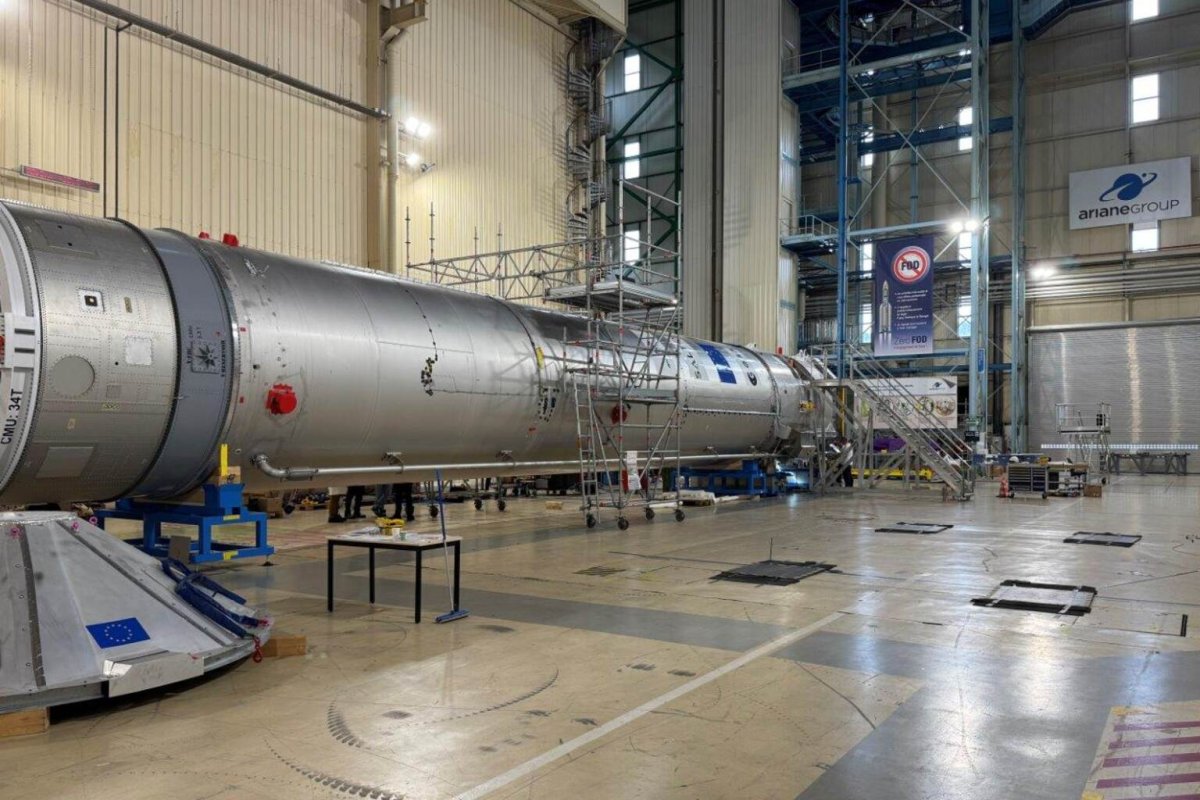
The European Space Agency's Themis reusable rocket demonstrator is facing a potential setback as winter conditions in northern Sweden threaten its first flight this year. According to a report by European Spaceflight on October 23, ESA will decide by the end of November whether to proceed with the test campaign at the Esrange Space Center. The decision carries significant implications for the two-flight reuse demonstration under the European Commission's SALTO project.
Themis, standing 30 meters tall with landing legs, is designed for low-altitude hops to validate propulsion and landing technologies. The initial flight is planned to reach up to 100 meters, with a landing target of 20 by 20 meters (a 400-square-meter touchdown box). ESA's technical outline describes the engine running while thrust varies during the hop, with engine shutdown and restart reserved for later, higher-altitude campaigns still under definition.
The program has conducted ground rehearsals using liquid nitrogen instead of the methane and oxygen propellants required for powered flight. ESA reported on October 7 that a September 29 rehearsal cooled nitrogen to approximately -200°C, testing tank behavior, pressure systems, and countdown procedures. These rehearsals also exercised automated ground handling, including robotic connections for draining residual fuel and oxidizer after landing—a critical step for reuse.
However, flight remains a separate milestone. Géraldine Naja, ESA's director of space transportation, expressed uncertainty about a 2026 flight, as reported by European Spaceflight. The outlet also sought clarification on a schedule reference before June 2027, but ESA did not specify whether it covered one hop or both.
The SALTO project, funded with a €39 million EU contribution out of €42.81 million total costs (91.1% EU share), is recorded with an end date of December 31, 2026, per the Commission's CORDIS database. This timeline adds pressure, as any delay could compress the two-flight campaign. The funding record is a project total, not a per-flight cost, and does not guarantee a launch clearance.
Risks include winter postponement, cryogenic fueling challenges, engine testing failures, and autonomous landing execution. The next dated decision is due by November's end, when ESA must assess whether Esrange can support an attempt before the winter shutdown. How that decision aligns with the SALTO end date remains unresolved, leaving the reuse demonstration's future uncertain.
Industry observers note that a successful landing alone would not complete the operational sequence; the vehicle must be recovered, inspected, serviced, and prepared for a second departure. The sources provide no specified turnaround interval between flights, adding to the uncertainty. The Themis program is a key step for Europe's ambitions in reusable rocketry, competing with private sector efforts like SpaceX's Falcon 9.
As the clock ticks, the space community watches closely. A delay could push the first hop into 2027, potentially affecting the SALTO project's funding timeline and Europe's broader space transportation strategy.
