QuantumScape (NASDAQ: QS) and Volkswagen's battery subsidiary PowerCo have amended their joint development agreement, removing $7 million in scheduled payments. The revision, disclosed in an October 23 regulatory filing, reduces the program's total funding ceiling by 9.3%, from $75.4 million to $68.4 million. This adjustment reflects a recalibration of the partnership's financial framework as both companies continue to work on solid-state battery technology for electric vehicles.
The amendment, signed on October 21, also introduces a temporary pause in milestone-based payments while the two parties negotiate new terms. Despite the funding freeze, QuantumScape is contractually obligated to continue pursuing existing milestones under Exhibit 10.2 until both sides agree on modifications. This ensures that technical development remains on track even as commercial terms are being redefined.
According to the filing, PowerCo had already contributed $18.5 million in the third quarter of 2026, bringing nine-month receipts to $28.9 million. These payments were recorded as capital contributions, with no new shares issued. The revised ceiling of $68.4 million includes all prior payments, providing a clearer picture of the remaining budget for the program.
The partnership, originally established in July 2024, replaced a planned manufacturing joint venture with a licensing model. Under this structure, PowerCo gains the right to manufacture QuantumScape's solid-state lithium-metal cells, which utilize a ceramic separator to enable a lithium-metal anode. The technology promises higher energy density and improved safety compared to conventional lithium-ion batteries, but scaling it to production requires overcoming significant manufacturing challenges.
Broader Ambitions and New Applications
Beyond automotive, QuantumScape is exploring applications in data centers and robotics. In its October 21 shareholder letter, the company outlined a vision to unify automotive customers on a common technology platform beyond its QSE-5 product. This expansion broadens the scope of the development program, potentially impacting the timeline and funding requirements for the original automotive cell initiative.
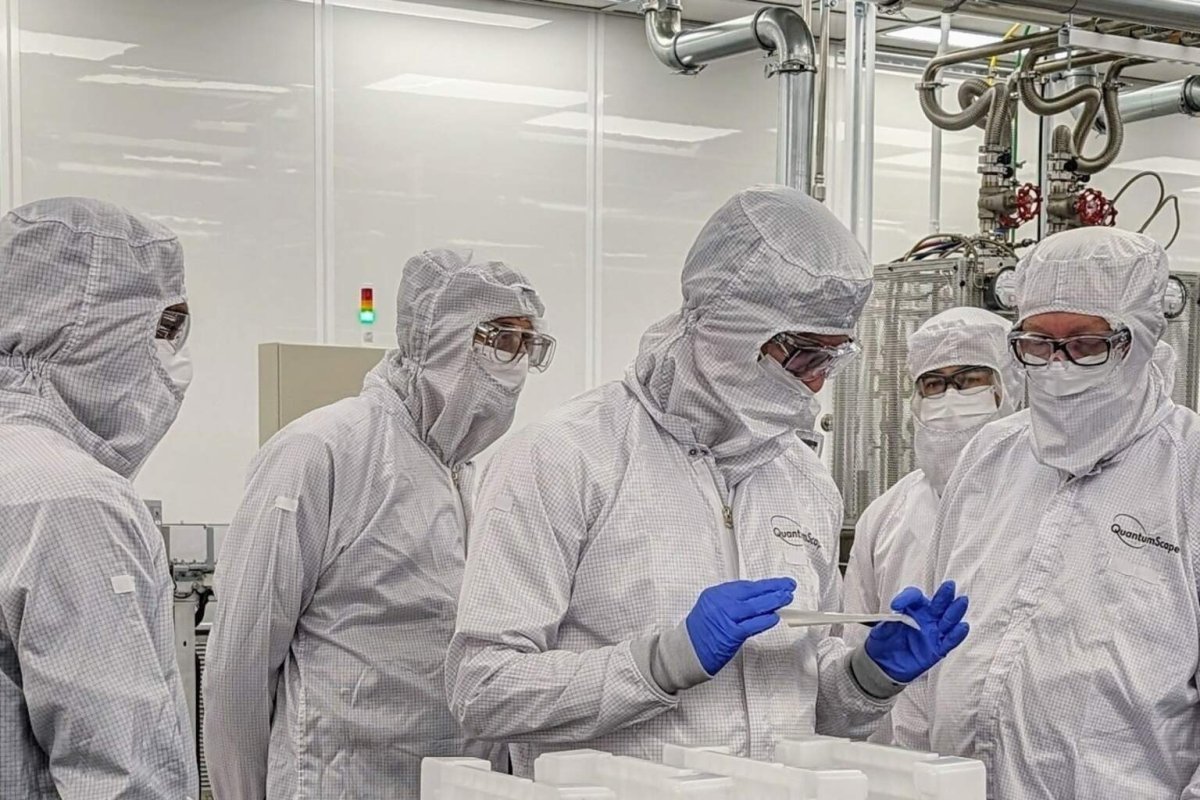
To support these goals, QuantumScape announced plans for a 100-megawatt-hour (0.1 GWh) cell production line, with a target start date of 2028. The company has selected Germany's Muehlbauer Group to supply cell assembly equipment, following the group's evaluation of QuantumScape's Eagle pilot line. The Eagle line, which began producing cells in February 2026, has demonstrated the viability of the technology at a pilot scale.
"The Eagle Line proved to us that QuantumScape's solid-state technology is ready to scale to the next level," said Josef Markus Mühlbauer, chief executive of Muehlbauer Group. This endorsement underscores the progress made in transitioning from laboratory prototypes to commercial-grade manufacturing.
Challenges and Uncertainties
Despite the positive developments, several risks remain. The new funding terms are still under negotiation, and some provisions of the amendment are redacted, leaving investors without full visibility into the agreement's details. The payment pause has no disclosed end date, which could create uncertainty for QuantumScape's cash flow planning.
Manufacturing throughput, cell consistency, and equipment delivery will be critical factors in meeting the 2028 production target. The company's ability to integrate its PowerBlock reference design with rack power electronics and battery management systems for data center applications will also be closely watched.
QuantumScape's next major technology disclosure is scheduled for November 11 in Kyoto, Japan, where it plans to present its next-generation platform and automotive collaboration model. Investors will be looking for clarity on replacement milestones and the conditions under which PowerCo payments might resume.
As the solid-state battery sector continues to attract attention, QuantumScape's partnership with PowerCo remains a key indicator of commercial viability. The reduction in funding, while modest, signals a more cautious approach as both companies navigate the complexities of scaling new technology. The market will likely react to these developments as more details emerge from the ongoing negotiations.