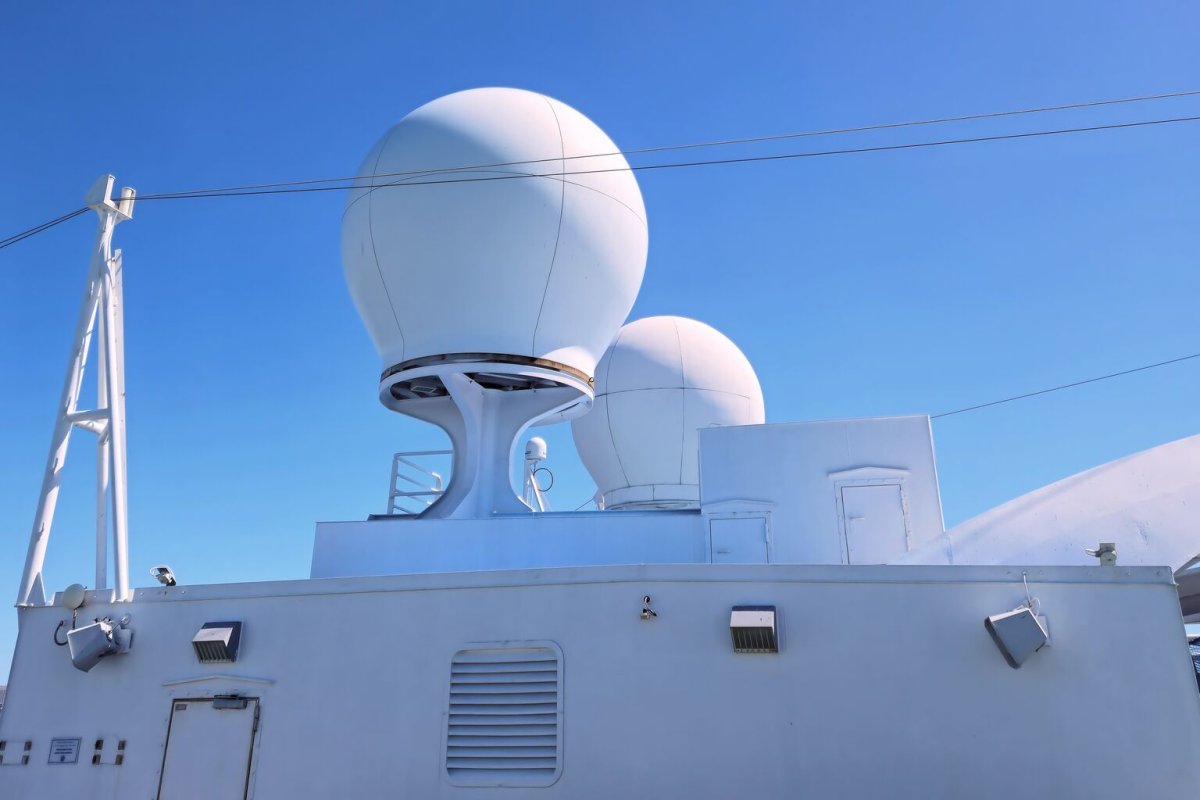
The UK's communications regulator, Ofcom, has given the green light to additional satellite uplink spectrum, a move that will significantly expand connectivity options for aircraft and ships. The decision, announced on October 23, opens up Ka-band frequencies for non-geostationary satellite orbit (NGSO) networks, a first for aircraft operations.
Under the new framework, aircraft operators will have access to 2,100 MHz of additional Ka-band spectrum, while ships in UK waters will see an increase of 244 MHz. This aviation allocation is approximately 8.6 times larger than the maritime addition, according to calculations based on Ofcom's published band plans. However, this disparity does not necessarily translate to faster passenger connections or reserved capacity for individual terminals; rather, it reflects the newly authorized spectrum for each application.
The decision introduces a previously unavailable class of Ka-band satellite links for aircraft, enabling more robust and reliable in-flight connectivity. Ship operators, on the other hand, receive a more modest domestic expansion, with broader permissions available for offshore operations. Updated licenses are expected to be issued in early 2027, with implementation work required before these frequencies can be utilized.
Specifically, the regulator's band list grants NGSO aircraft access to the 27.5–29.1 GHz and 29.5–30 GHz ranges. The intervening 400 MHz remains outside this aircraft permission. This aligns with the International Telecommunication Union's (ITU) Resolution 123 filing guidance, which identifies these uplink ranges. Aircraft filings must now specify minimum transmission elevation and fuselage attenuation, describing constraints on transmissions from moving aircraft.
For UK waters, the two new Ka-band slices each measure 122 MHz, bringing the total NGSO maritime spectrum to 1,434.5 MHz when combined with existing bands. This leaves a 665.5 MHz shortfall compared to the aircraft total, a 31.7% difference. Geography plays a significant role in this gap: Ofcom retains coastal separation requirements in specified frequencies, including 70 km in Ka-band and 158 km in Ku-band, and other coastal administrations must agree before affected ship terminals operate within their applicable separation distances.
Geostationary aircraft links are also receiving an expansion. A new Ku-band block at 12.75–13.25 GHz adds 500 MHz, and two new Ka-band slices add 1,272 MHz. This changes access for both orbital architectures under different frequency permissions. These bands carry transmissions from moving terminals toward satellites, supporting applications such as passenger access, crew communications, and ship engine diagnostics, as outlined in the ITU's ESIM backgrounder.
Terminal performance remains a critical factor. Fraunhofer IIS's Ku- and Ka-band test facility measures antenna tracking, off-axis emissions, and end-to-end link performance, using a motion emulator to reproduce platform movement. This separates engineering checks from the amount of spectrum regulators authorize.
The network licence changes also add Heathrow to the protected aerodrome list, retaining airport consent for operation within listed airfield perimeters. This coordination step is an additional operational requirement alongside expanded spectrum access. The public consultation on the network licence variation closes on December 14, 2026, with Ofcom expecting a decision in January 2027.