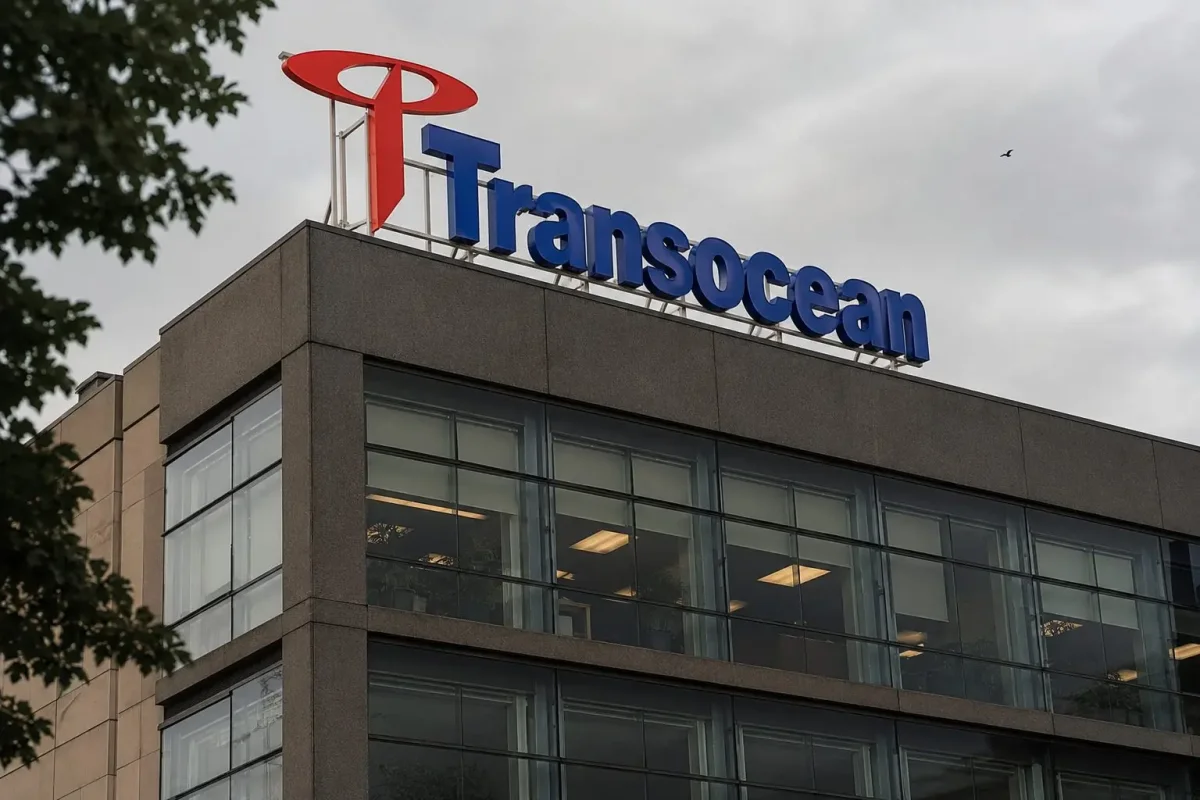
Transocean Ltd. (NYSE:RIG) experienced a 1.1% decline in its stock price on Tuesday, even as crude oil and oil-services shares rallied, causing the spread in its fixed-share acquisition of Valaris Limited (NYSE:VAL) to expand to 3.1%. This gap, valued at approximately $167 million across Valaris' outstanding shares, serves as a market gauge of regulatory, timing, and stock-price risk, redirecting investor attention to the deal's mechanics.
Under the terms of the agreement, each Valaris share will be exchanged for 15.235 Transocean shares. With Transocean closing at $5.31, the implied value of Valaris stands at $80.90 per share, compared to Valaris' market price of $78.49. Every 10-cent movement in RIG alters the implied payout by roughly $1.52, underscoring the sensitivity of the transaction to Transocean's stock performance.
Despite a 1.7% rise in Brent crude to $84.73 per barrel and a 1.5% gain in U.S. crude to $79.34—driven by renewed U.S.-Iran tensions threatening regional supply—Transocean and Valaris both underperformed. The VanEck Oil Services ETF (NYSEARCA:OIH) added 0.7%, while offshore-drilling peer Noble Corporation plc (NYSE:NE) slipped just 0.3%. The oil price rally failed to lift the deal's currency.
The merger spread increased from 2.82% on Monday to 3.07% on Tuesday. The implied Valaris consideration dropped about 91 cents as Transocean fell from $5.37, while Valaris declined from $79.57. Small moves in RIG compound significantly because it serves as the acquisition currency.
Illustrative closing point calculations show that if the earliest closing date of September 29 is achieved—based on the disclosed DOJ commitment—the gross spread annualizes to 14.5%. If closing extends to December 31, the annualized equivalent drops to 6.6%. These figures are illustrative, not forecasts, and exclude financing, stock-borrow costs, and fees.
Regulatory hurdles remain a key factor. The Committee on Foreign Investment in the United States approved the transaction on June 29, but the Justice Department issued a request for additional information. The companies have committed not to certify substantial compliance before July 31 or close until 60 days after both certifications, unless regulators end the waiting period early. This makes September 29 the earliest possible closing date, with no defined upper limit.
Transocean and Valaris continue to expect completion in the second half of 2026, pending shareholder approvals and other closing conditions, including a court-approved scheme of arrangement in Bermuda. The 3.1% discount compensates investors for these multiple uncertainties. Transocean CEO Keelan Adamson noted that the deal addresses the company's debt burden, which negatively impacts equity value. The companies project over $200 million in cost synergies and a combined contract backlog of roughly $10 billion.
However, the spread could widen if the Justice Department review extends, regulatory remedies reduce expected benefits, shareholder approvals slip, or Transocean shares fall. Conversely, earlier clearance or a Transocean rally would narrow the gap. Both companies are due to report second-quarter results on August 5 after the NYSE close, with Transocean also publishing an updated fleet-status report. Valaris has stated it will not hold future earnings calls or update guidance while the deal is pending, limiting standalone guidance.
Until the Justice Department timetable becomes clearer, Transocean's share price serves dual roles: valuing the driller and funding the acquisition. Tuesday's 3.1% spread indicates that investors are still pricing in significant risk for both.