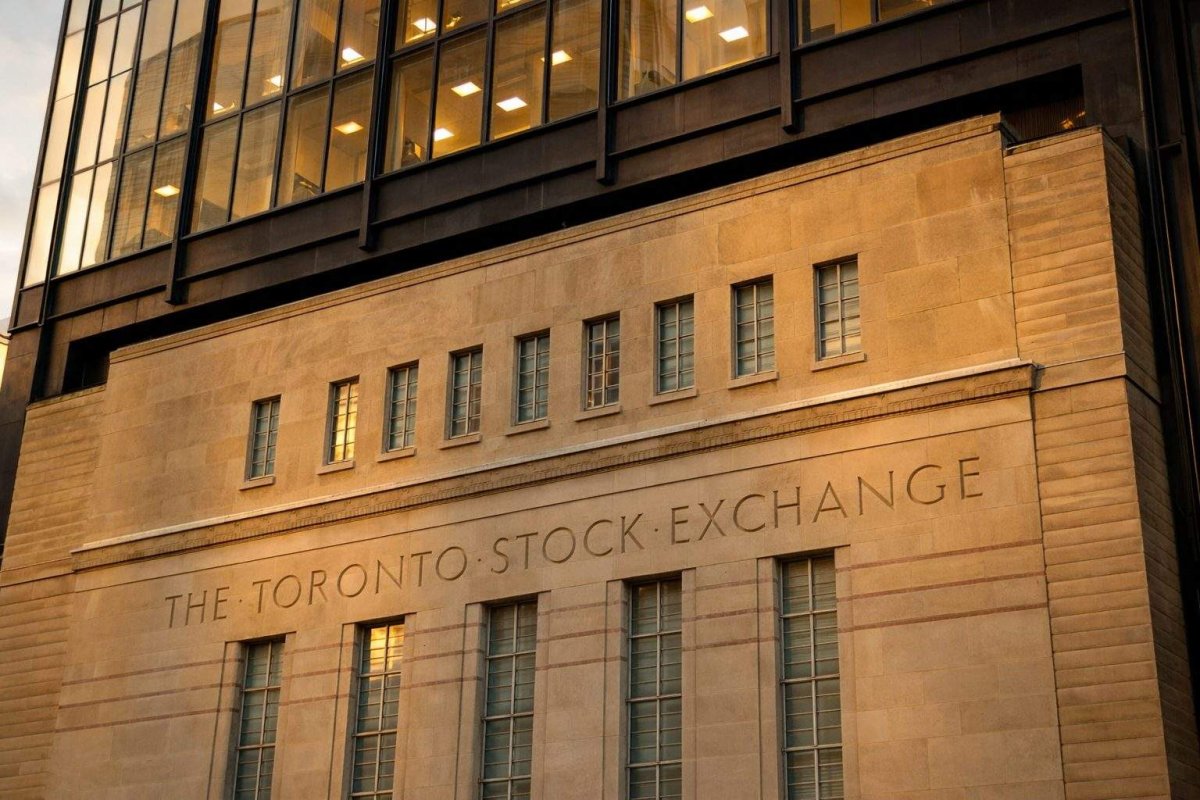
Bay Street enters a new trading month with geopolitical risk back on the radar, as fresh disruptions to tanker traffic near the critical Strait of Hormuz have injected a significant risk premium into global oil markets. The strait, a chokepoint for roughly one-fifth of the world's seaborne crude, saw movement affected over the weekend following reported strikes on Iran. This development immediately shifted investor focus to commodity-linked equities and the potential for sustained supply anxiety.
February's Strong Gains Meet Friday's Pullback
The S&P/TSX Composite Index concluded the previous week on a softer note, dipping 0.5% on Friday to close at 34,339.99. This retreat ended a three-day streak of record closes. However, the minor setback did little to overshadow a remarkably strong February performance. The benchmark Canadian index surged 7.6% over the month, marking its most robust monthly advance since November 2020.
Friday's session revealed a stark sectoral divide. The financials sector declined by 1.9%, while technology stocks fell 2.5%. Notable decliners included e-commerce giant Shopify, which dropped 4.3%, and apparel retailer Aritzia, which tumbled 7.8%. In contrast, the energy and materials sectors advanced, buoyed by a 2.8% rise in crude oil prices to $67.02 per barrel and a 1.4% gain in gold.
Leadership Questions and Macroeconomic Backdrop
This divergence in sector performance highlights questions about market leadership as the calendar flips to March. "Materials and energy are doing the heavy lifting for the TSX," observed Angelo Kourkafas, a senior global investment strategist at Edward Jones. He noted that investors are concurrently weighing the implications of artificial intelligence disruption and the state of private credit markets.
The domestic economic picture provided mixed signals. Statistics Canada reported that the economy contracted at an annualized rate of 0.6% in the fourth quarter, with full-year 2024 growth settling at 1.7%. Inventory drawdowns contributed to the quarterly weakness. Despite the headline number, Doug Porter, chief economist at BMO Capital Markets, suggested the underlying details were firmer than the top-line figure indicated.
Currency Moves and Corporate Highlights
The Canadian dollar strengthened on Friday, gaining 0.4% to settle at 1.3630 per U.S. dollar, reaching its highest level in eleven days. Analysts attributed the move to firmer gold prices and broad-based U.S. dollar weakness. In corporate news, TransAlta Corporation provided a strategic update, raising its common-share dividend by 8% to an annualized $0.28 and forecasting 2026 adjusted EBITDA between $950 million and $1.05 billion. The utility also announced a framework agreement with CPP Investments and Brookfield, beginning with a long-term power purchase agreement for approximately 230 megawatts.
The Week Ahead: Data and Event Risks
Market participants now turn their attention to a packed schedule of economic data and events. Canada will release fourth-quarter productivity numbers on Wednesday, March 4. The key U.S. February employment report follows on Friday, March 6, with Canada's own February jobs data due the following week. Central bank meetings are scheduled for later in the month.
Concurrently, the Prospectors & Developers Association of Canada (PDAC) convention runs in Toronto from March 1-4, an event historically associated with increased volatility and deal speculation within the mining sector. Algonquin Power & Utilities Corp. is set to report its fourth-quarter and full-year 2025 results before the market opens on Friday, March 6.
Analyst Outlook: Oil's Double-Edged Sword
The immediate catalyst remains the situation in the Middle East. Analysts warn that the oil price spike carries a dual impact. While it bolsters earnings for energy producers, it also rekindles inflation concerns, potentially pushing bond yields higher and pressuring rate-sensitive sectors like technology and financials. Helima Croft of RBC Capital Markets highlighted warnings from regional leaders, noting that "$100+/bbl oil was a clear and present danger," contingent on the conflict's escalation and shipping disruptions.
The path for the TSX in the near term appears heavily contingent on the longevity of the energy rally. Should tensions near the Hormuz Strait de-escalate rapidly, the support from oil and gas stocks could vanish, leaving a market that has already shown fragility in its banking and technology components. Monday's opening will provide the first test as traders fully price in the weekend's geopolitical surprises.