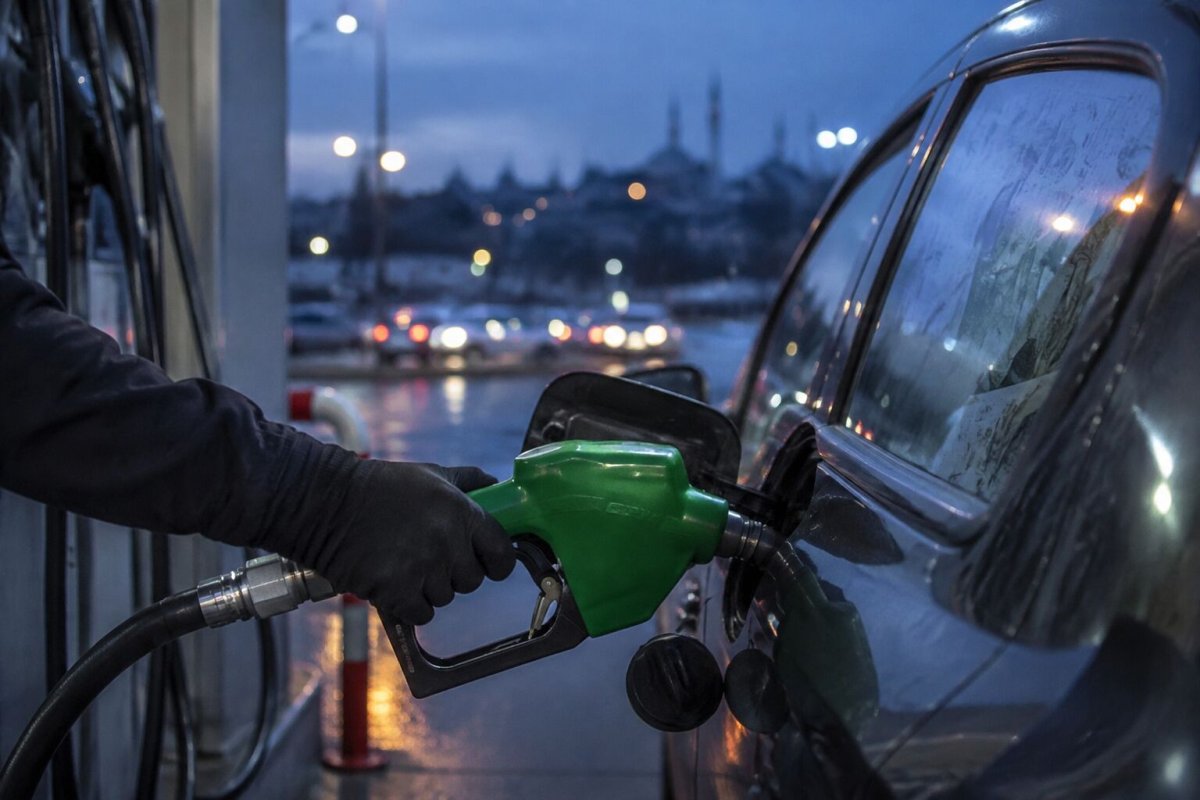
ISTANBUL — Turkey's diesel prices have surged past 90 lira per liter in many provinces, but the full impact of a scheduled tax hike is yet to be felt. A series of excise tax increases planned between September and January could add approximately 13.08 lira per liter, including VAT, to the price at the pump, according to calculations based on the official tax schedule.
The arithmetic is straightforward: if all other factors — crude oil prices, refining margins, the lira exchange rate, and distributor pricing — remain constant, the current Istanbul diesel price of 88.81 lira would climb to 101.89 lira under January's tax rate. However, these variables are unlikely to stay frozen, and the tax increases alone represent a significant inflation risk that falling oil prices may not fully offset.
Tax Staircase Adds to Pump Pain
The special consumption tax (SCT) on diesel is set to rise in monthly increments. Starting from a base of 3.00 lira per liter in September, the tax will increase to 6.00 lira in October (a 3.60 lira increase including VAT), 9.00 lira in November (7.20 lira including VAT), 12.00 lira in December (10.80 lira including VAT), and finally to 13.90 lira on January 1, 2027 (13.08 lira including VAT). These figures are based on Presidential Decision No. 11606, published in the Official Gazette on August 13.
Friday's pump price increase already delivered a shock: diesel rose by 7.76 lira per liter, while gasoline gained 2.47 lira. According to Independent Türkçe's ANKA news agency, diesel prices exceeded 90 lira in several provinces, with Bitlis at 91.65 lira, Antalya at 91.26 lira, and İzmir at 90.20 lira. Istanbul remained slightly lower at 88.81 lira, reflecting regional differences in freight and distribution costs.
Inflation Pressures Intensify
The fuel price increases come amid already elevated inflation. Official consumer prices rose 1.84% in August, bringing the annual rate to 31.51%. Transport prices climbed 4.82% during the month, the largest contributor to the monthly CPI increase. Economist Hakkı Hakan Yılmaz estimated that August's fuel price hikes added 0.33 percentage points to monthly inflation, and their direct contribution from January to August was 1.25 percentage points, as reported by Ekonomim.
These estimates predate Friday's price surge, and second-round effects could be more pronounced. Diesel is critical for freight, agriculture, and business fleets, meaning cost pass-through could spread beyond the transport sector. The timing and competitive dynamics will determine how quickly companies adjust prices.
Central Bank Faces Rate Decision Test
The central bank has maintained its policy rate at 37%, with the next decision due on September 10. The bank has stated it remains "highly attentive to upside risks on inflation." Before the latest pump price increase, BBVA Research had expected a 100-basis-point cut in October, while still forecasting 30% year-end inflation. The September meeting will be closely watched for any shift in tone.
The official USD/TRY buying rate stood at 48.2326 on September 4, according to the central bank. A weaker lira would further exacerbate fuel price pressures, as oil is priced in dollars.
Equities Absorb the Shock
Despite the fuel price surge, Turkish equities closed higher on Friday. The BIST 100 index rose 0.57% to 14,012.42, according to Bloomberg HT. The U.S.-listed iShares MSCI Turkey ETF (NYSEARCA: TUR) closed at $39.23, up 0.64% on the day, though it fell 2.73% over the week, dropping 4.0% over six sessions from $40.87 on August 28.
The ETF's performance reflects a combination of Turkish share prices, sector weights, and currency effects, making it an imperfect proxy for investor sentiment on diesel prices specifically. However, the weekly decline suggests the market entered the weekend with reduced cushion. Banks face uncertainty over the rate path, while retailers, airlines, and industrial groups are exposed to fuel costs and demand fluctuations.
January Number as a Stress Test
Several factors could soften the impact of the tax increases. Brent crude oil prices may retreat, refining margins could narrow, or the lira might strengthen. The government could also amend the tax schedule. Conversely, risks are tilted to the upside: another oil price spike, a weaker exchange rate, or diesel supply shortages would compound the tax hikes, potentially accelerating freight cost pass-through.
Investors should monitor the September 10 rate decision, September inflation data, and each monthly excise step. Together, these will reveal whether Turkey's disinflation strategy can withstand the diesel price staircase.