Consumer price inflation in the United Kingdom quickened in March, presenting a fresh challenge for monetary policymakers. The Office for National Statistics reported that the Consumer Price Index (CPI) rose to an annual rate of 3.3%, up from 3.0% in February. This increase marks the first official data point indicating that geopolitical tensions and associated energy price shocks are beginning to filter through to household expenses.
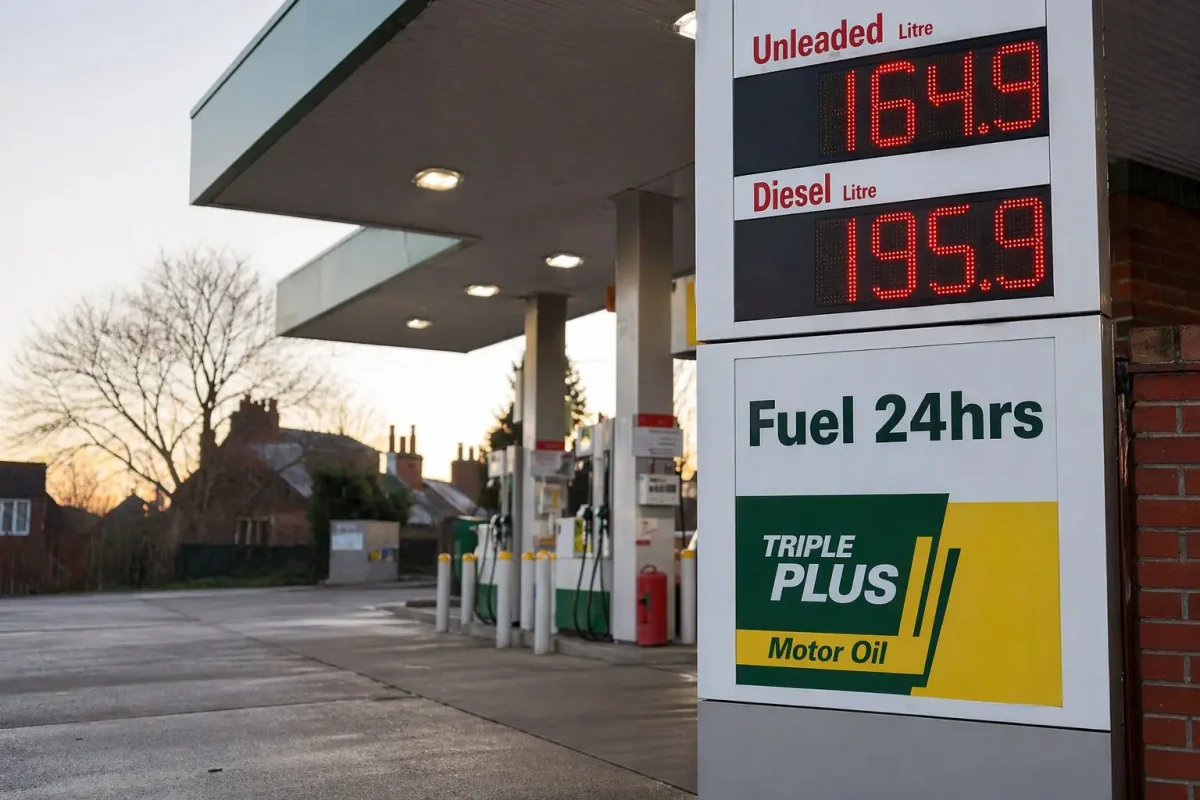
The primary driver behind the uptick was a sharp rise in transport costs. Petrol prices surged by 8.6 pence per litre between February and March, reaching 140.2p. Diesel experienced an even steeper climb, jumping 17.6p to 158.7p per litre, its highest level since November 2023. Concurrently, air fares spiked by 10.0% month-over-month, representing the most significant February-to-March increase since 2016. Food and non-alcoholic beverage inflation also edged higher, reaching 3.7%.
Grant Fitzner, chief economist at the ONS, identified fuel costs as the main contributor to the March inflation figure, with airfares and food prices providing additional upward pressure. He noted that price increases for clothing were softer than those seen a year ago, which helped moderate the overall inflation reading.
The inflationary pressures extend beyond the consumer basket. Factory input prices, which reflect the costs paid by manufacturers for materials and fuel, soared by 5.4% in the year to March, a dramatic acceleration from February's 0.7% rate. Output prices, or the prices charged by manufacturers for their goods, increased by 2.6%. The ONS attributed the leap in input costs primarily to a 58.8% monthly surge in crude oil prices.
The latest data arrives at a critical juncture for the Bank of England, with its Monetary Policy Committee set to make its next interest rate decision on April 30. The central bank's key rate currently stands at 3.75%. A Reuters poll conducted between April 16 and 21 found unanimous agreement among all 62 economists surveyed that the BoE will leave rates unchanged at the upcoming meeting. However, the path beyond April remains highly uncertain.
Analysts warn of a complex backdrop for policymakers. Danni Hewson, head of financial analysis at AJ Bell, highlighted the looming "spectre of stagflation"—a combination of stagnant growth and persistent inflation—ahead of the MPC's deliberations. Ruth Gregory of Capital Economics projects inflation will ease to 2.9% in April but cautions that the subsequent eight months could prove challenging for the central bank.
Market participants are largely anticipating a cautious stance from the BoE. Ellie Henderson of Investec suggested that unless the recent price shock begins to influence longer-term inflation expectations, the central bank is likely to "hold and wait and see." Laurence Mutkin of BMO noted that bond-market movements following recent geopolitical events have already tightened financial conditions, which could influence the BoE's calculus.
The government is also grappling with the economic implications. Chancellor Rachel Reeves, addressing Parliament, acknowledged that costs linked to Middle East conflicts are "already being felt." She advocated against a "knee-jerk response," warning that such actions could risk pushing inflation and interest rates higher. Instead, she outlined measures including potential fuel-duty cuts, rail fare freezes, reduced energy bills, and targeted support for manufacturers to help contain costs.
The UK's inflation trajectory is outpacing much of Europe. While euro area inflation rose to 2.6% in March from 1.9% in February, and EU-wide inflation increased to 2.8%, Britain's 3.3% rate remains more elevated. Among major euro area categories, energy posted the sharpest annual increase.
The key risk, according to economists, is the duration of the price shock. Martin Beck, chief economist at WPI Strategy, forecasts inflation could peak between 3.5% and 4% this summer, assuming geopolitical tensions ease and energy flows normalize. However, he warns that a renewed flare-up could push the peak closer to 5%. The International Monetary Fund recently trimmed its UK growth outlook for 2026 to 0.8% from 1.3%, also flagging the risk of inflation nearing 4% due to softening demand and expensive energy.