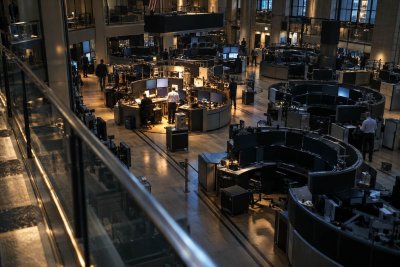
Wall Street's artificial intelligence rally hit a sharp speed bump on Friday, with semiconductor stocks tumbling and wiping out roughly $1.3 trillion in market value from U.S. chipmakers. The PHLX Semiconductor Index suffered its steepest one-day decline since March 2020, plunging 10.3%. The selloff was triggered by a combination of stronger-than-expected jobs data, which dampened hopes for near-term Federal Reserve rate cuts, and disappointing demand signals for custom AI chips from Broadcom.
The broader market felt the sting. The S&P 500 dropped 2.64% for the week, snapping a nine-week winning streak. The Nasdaq Composite fell 4.18% on Friday alone, marking its worst single-day slide since April 2025. The Dow Jones Industrial Average slipped 1.35%. For the week, the S&P 500 was down 2.6%, the Nasdaq slumped 4.7%, and the Dow edged 0.3% lower.
Jobs Data Fuels Rate Anxiety
The Labor Department reported that nonfarm payrolls increased by 172,000 in May, beating the Reuters forecast and keeping the unemployment rate steady at 4.3%. Revisions to March and April added another 93,000 jobs. Typically, a strong labor market is a positive for equities, but this time it reignited fears that the Federal Reserve will maintain its tight monetary policy stance, reducing the likelihood of rate cuts in the near term. The Fed's next policy decision is scheduled for June 17.
Tom Porcelli, chief economist at Wells Fargo, noted that while the labor market is not overheating, the numbers will empower hawkish voices at the Fed to hold their ground. The market's reaction was swift: Treasury yields rose, with the two-year note climbing to 4.16% and the 10-year yield reaching 4.54%. Higher yields pressure stocks by reducing the present value of future earnings.
Chip Stocks Lead the Rout
The semiconductor sector bore the brunt of the selloff. Broadcom dropped 7.9% on Friday, capping a two-day decline of nearly 20%, after reports indicated that demand for its custom AI chips fell short of expectations. Nvidia lost about 6%, Micron Technology fell 13%, and Advanced Micro Devices slipped almost 11%. The PHLX Semiconductor Index's 10.3% plunge was its worst since the onset of the pandemic in March 2020.
Ryan Detrick, chief market strategist at Carson Group, described the selloff as a dam breaking after a nine-week rally that had left stocks overextended. Ohsung Kwon, chief equity strategist at Wells Fargo, attributed the move to positioning rather than fundamentals, calling the pullback a reset rather than the end of the semiconductor bull run. He noted that the sector was "way overbought," leaving it vulnerable to a rapid selloff.
What’s Ahead: Key Events This Week
Investors face a busy week ahead. SpaceX is expected to price its IPO on June 11, with trading on the Nasdaq starting the following day. The company aims to raise $75 billion at a $1.75 trillion valuation, and investor demand has reportedly reached $150 billion, double the amount sought. The massive listing could draw capital away from other high-growth tech names.
Inflation data will be in focus: the Consumer Price Index is due Wednesday, followed by producer prices on Thursday. Earnings from Oracle and Adobe will provide additional insight into software and AI supply chain activity. Tech’s weight in the S&P 500 has climbed past 39%, a record high, making the sector's performance critical to the broader market.
Mark Hackett, chief market strategist at Nationwide, pointed to an "insatiable appetite for tech holdings," while Jason Pride of Glenmede warned that the SpaceX IPO could signal "market froth." Matt Wittmer of Allspring Global Investments called the listing an "important benchmark" for new growth stocks.
Market Outlook: Reset or Reversal?
Despite Friday's rout, major indices remain positive for the year. The S&P 500 is up 7.9% in 2026, the Dow has gained 5.8%, the Nasdaq is up 10.6%, and the Russell 2000 has jumped 14.2%. The question now is whether the pullback is a healthy correction or the beginning of a deeper decline.
If the upcoming CPI data shows that rising energy costs are filtering into other categories, or if the SpaceX IPO stumbles and bond yields push higher, investors may view Friday's selloff as more than just profit-taking. As Pride put it, the Fed is "watching this like a hawk." A soft inflation print could steady markets, but another hot number might turn a choppy week into a significant valuation test.