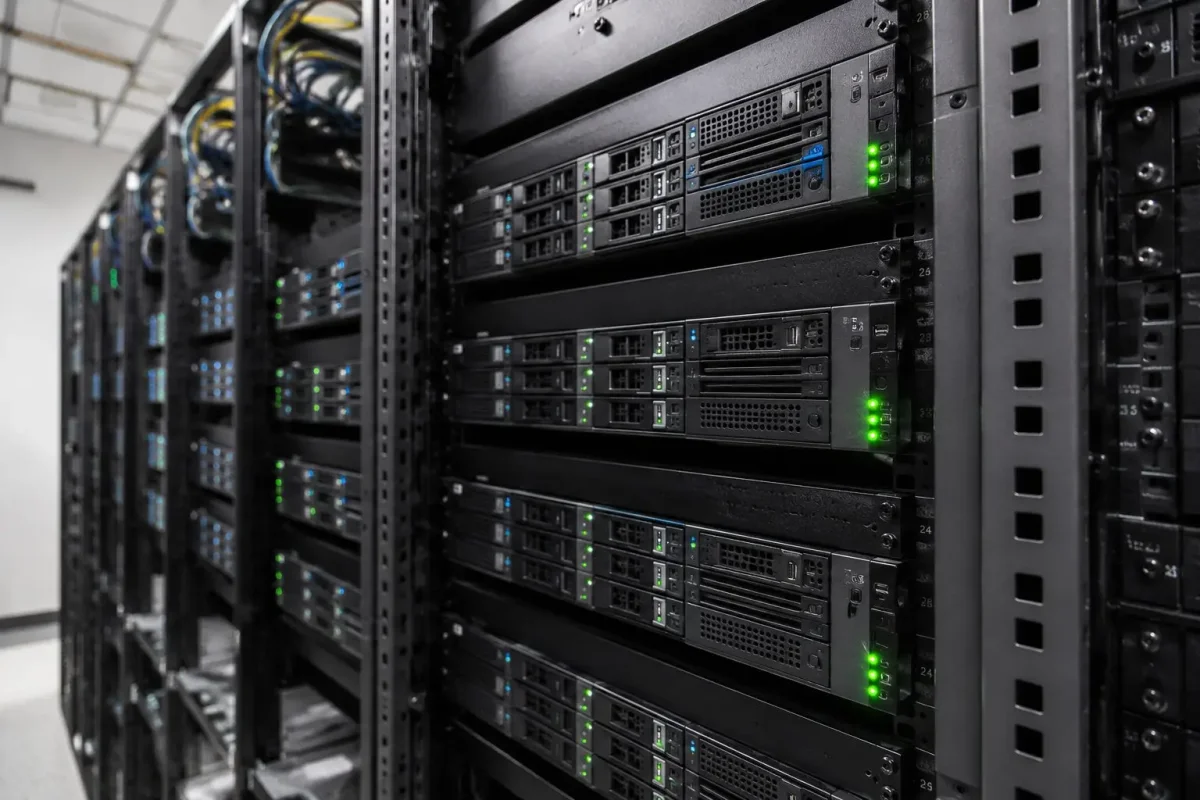
NEW YORK, July 21, 2026 – The debate over artificial intelligence's economic viability is entering a critical phase as the world's largest technology companies prepare to deploy a staggering $710 billion in capital expenditures this year. Amazon.com (NASDAQ:AMZN), Microsoft (NASDAQ:MSFT), Alphabet (NASDAQ:GOOGL), and Meta Platforms (NASDAQ:META) are collectively targeting between $695 billion and $725 billion for 2026, according to Reuters data. The scale of investment has intensified scrutiny on whether these hyperscale firms can translate massive compute outlays into sustainable profits.
Meta's Anthropic Lease Raises Questions
Meta's recent agreement to lease infrastructure from AI startup Anthropic has drawn particular attention. On an annualized basis, the deal could represent up to 3.7% of Meta's midpoint capex of $135 billion, before expenses. The two-year arrangement, potentially valued at $10 billion, equates to a maximum annual cost of $5 billion. While some market participants view this as a sign of oversupply in AI compute capacity, credible reports do not confirm such a condition across the system. Discussions remain in early stages, and both parties retain the option to withdraw.
Alphabet's Cloud Revenue Surge Expected
Alphabet is set to report quarterly results on Wednesday, with LSEG analysts forecasting a 64% increase in cloud revenue. The anticipated debut of its core Gemini 3.5 Pro model, originally slated for June, has been delayed, adding a fresh challenge. LSEG's consensus projects second-quarter revenue at $116.93 billion, a 21.3% year-over-year rise. These figures remain projections, not official outcomes.
Market Reaction and Valuation Concerns
U.S. markets showed mixed signals at 13:09 EDT. The S&P 500 rose 0.8%, while the Nasdaq advanced 1.3% by 11:30 a.m. Nvidia (NASDAQ:NVDA) gained 1.0% around 12:54 EDT, contrasting with declines of 0.7% to 0.9% for Amazon, Microsoft, and Alphabet. Meta edged up 0.3%. The divergence highlights investor uncertainty over the sector's direction. UBS Group (NYSE:UBS) projects hyperscaler capex will climb 76% this year to $673 billion, followed by 25% growth in 2027 and 6% in 2028.
The high valuations leave little room for delays. The Shiller CAPE ratio stands near 41, while its excess CAPE yield is at 1.4%, according to the Financial Times. Analysts anticipate S&P 500 earnings will rise 24% this year, with a further 17% increase projected for 2027. Goldman Sachs (NYSE:GS) Research estimates that AI-related companies have added roughly $27 trillion in market value since late 2022, with a baseline present value of prospective AI-driven capital revenue of $9 trillion. However, analysts Dominic Wilson and Vickie Chang caution against overestimating the persistence of supplier earnings, noting that AI was not the sole driver of gains.
Key Risks and Investor Focus
Potential upside risks include quicker business adoption driving higher utilization and supporting further investment. Conversely, delays in model rollouts, rising interest rates, or softer demand could negatively impact cash flow and orders from suppliers. For investors, the critical metric is not a fresh surge in chip stocks but the revenue generated per dollar of deployed compute. Meta's capex-to-equity ratio of 8.1% leads the group, followed by Amazon at 7.4%, signaling urgency without guaranteeing outcomes.
Alexis Bossard at Edmond de Rothschild noted that reduced spending would be a relief for hyperscalers but a negative signal for the semiconductor industry, underscoring the delicate balance between investment and returns. As the earnings season unfolds, the core challenge remains whether these four companies can turn their $710 billion annual outlay into profitable AI ventures.