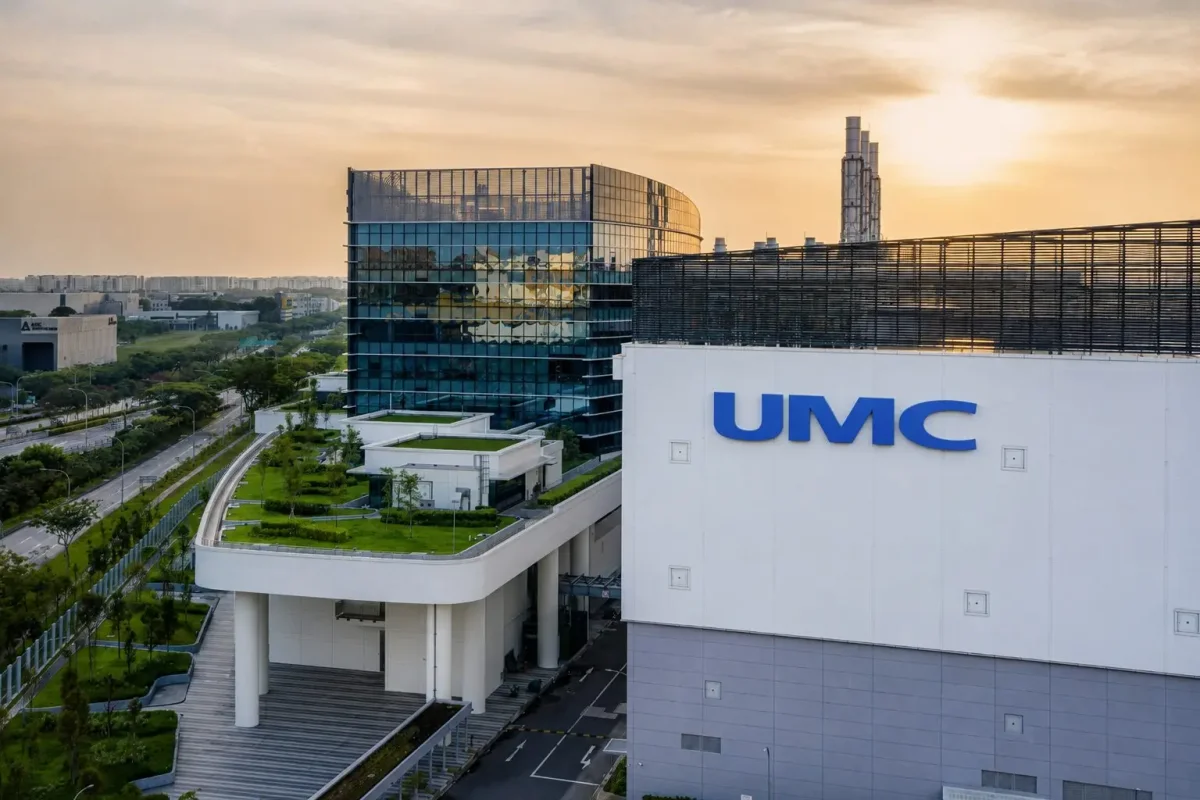
United Microelectronics Corp (UMC) has captured investor attention with a sharp rally in its Taiwan-listed shares, which climbed nearly 20% last week. The stock closed at NT$110 on Friday, reaching an intraday high of NT$118, as the company executed a significant share repurchase program and unveiled a new chip technology.
According to a U.S. filing, UMC bought back 3.78 million common shares on Friday for NT$406.6 million, at an average price of NT$107.57 each. This brought the total treasury shares held during the buyback period to 20.5 million, representing approximately 0.16% of all issued shares. The company's board has authorized the repurchase of up to 50 million shares between April 30 and June 29, with a price range of NT$52.50 to NT$109.50 per share, aimed at transferring to employees.
The rally was not solely driven by the buyback. On May 14, UMC announced the launch of a 14-nanometre embedded high-voltage FinFET platform designed for display driver chips. Steven Hsu, UMC's vice president of technology development, described the new platform as a "major step forward," noting it brings FinFET technology to display drivers "for the first time." The company claims the 14nm process can reduce power consumption by up to 40% and shrink chip area by 35% compared to its 22nm process. The process design kit is now available for customer designs and has been validated at Fab 12A.
Stronger revenue numbers also supported the stock. UMC reported April net sales of NT$22.66 billion, a 10.8% increase year-on-year. For the January-through-April period, sales rose 6.88% to NT$83.70 billion. In late April, the company posted first-quarter revenue of NT$61.04 billion, with a gross margin of 29.2% and net income attributable to shareholders of NT$16.17 billion. CEO Jason Wang noted that wafer shipments increased 2.7% from the previous quarter, pushing utilization up to 79%.
While UMC's gains were impressive, the broader Taiwan market faced headwinds. The TAIEX index fell 579.39 points to 41,172.36 on Friday, after hitting a record intraday high of 42,408.66 earlier in the session. UMC's ADR on the New York Stock Exchange ended Friday at $17.20, up slightly for the session, with about 16 million shares traded.
Looking ahead, UMC's pricing strategy is under scrutiny. CFO Chitung Liu indicated during the earnings call that the company will implement "a wafer price adjustment" in the second half of 2026. CEO Jason Wang described market demand as "resilient" but highlighted challenges including memory-chip shortages and geopolitical tensions in the Middle East.
UMC's focus remains on mature and specialty chipmaking nodes, distinguishing it from Taiwan Semiconductor Manufacturing Co (TSMC), which is targeting advanced 2-nanometre and 1-nanometre chips for AI applications. Analysts at Taishin Securities Investment Advisory suggest that Taiwan's stock market is entering "a phase of consolidation" after recent gains driven by AI and strong earnings. The path forward for UMC will depend on steady performance from major tech names and sustained trading volumes.
Upcoming events for UMC include its annual general meeting on May 27 at Hsinchu Science Park and the release of May sales numbers on June 5. Traders will be closely monitoring the buyback progress, sentiment in the Taiwan tech sector, and the performance of UMC's ADR.