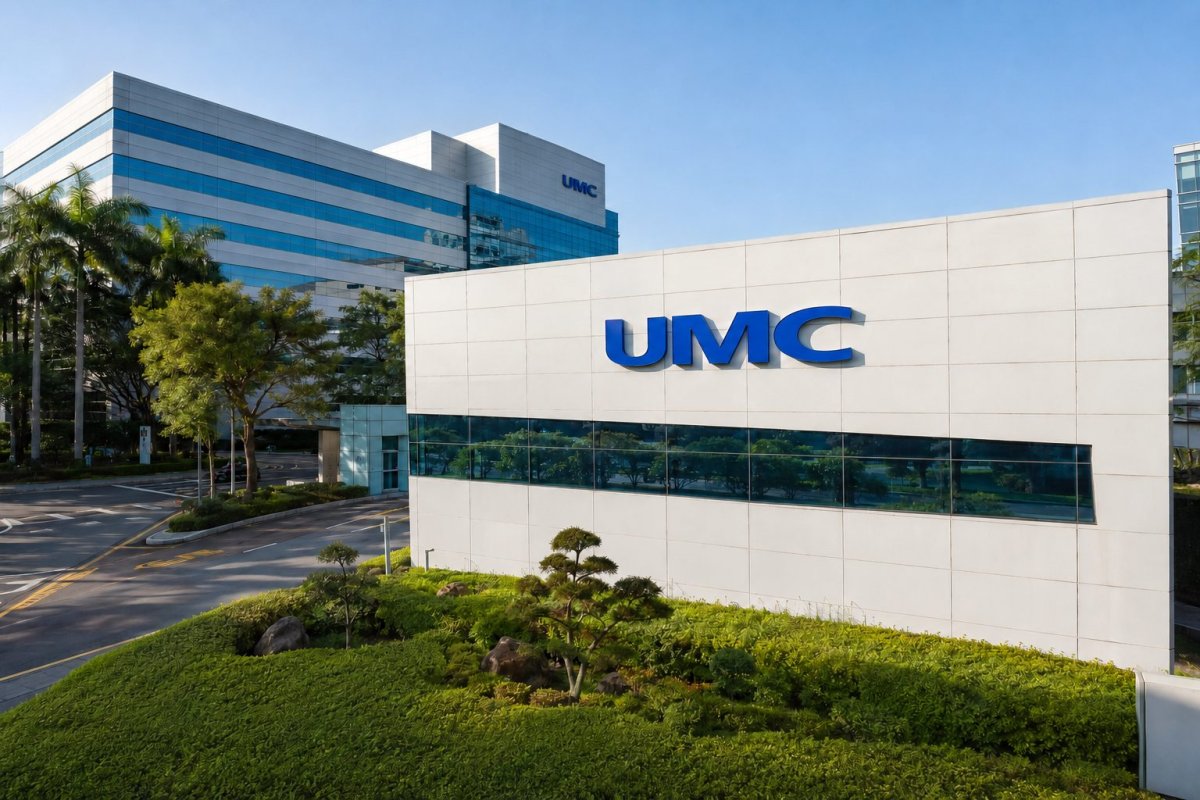
United Microelectronics Corp (NYSE: UMC) saw its shares climb 6% in premarket trading on Monday, bucking a broader semiconductor sector downturn as investors rallied behind the company's AI-focused foundry strategy. The Taiwan-based chipmaker's U.S.-listed shares advanced 6.2% to $19.48, adding approximately $2.85 billion to its market capitalization, based on Friday's close. The surge came even as the iShares Semiconductor ETF (NASDAQ: SOXX) slipped 2.1%, underscoring the stock-specific nature of the move.
The rally was not confined to U.S. trading. In Taiwan, UMC shares finished at NT$123.50, up 6.0%, while the benchmark Taiex index fell 1.0%. This 7.0-point divergence points to targeted buying in UMC rather than a broad market advance, suggesting investors are specifically betting on the company's AI infrastructure potential.
UMC's second-quarter results, released earlier, showed a robust operational rebound. Revenue rose 12.6% sequentially to NT$68.73 billion, while utilization improved to 85% from 79% in the first quarter. Gross margin expanded by 3.3 percentage points to 32.5%. Shipments, measured in 12-inch equivalents, increased to 1.129 million units from 1.021 million in Q1. These figures reflect strengthening demand for mature-node chips used in AI-related applications.
CEO Jason Wang emphasized the need to "prepare in advance" for AI opportunities, and management forecasts third-quarter shipments to grow by a high-single-digit percentage, with utilization expected to exceed 90%. Part of this preparation involves silicon photonics, a technology critical for high-speed data transmission in AI data centers. UMC began volume shipments of its photonics wafers from its Singapore facility in July, with its 1.6-terabit platform designed for cloud data connectivity, with broader customer availability slated for 2027.
The market's enthusiasm, however, stands in contrast to analyst sentiment. The average price target among four analysts polled by S&P Global is $18.49, 5.1% below Monday's ADR price. The consensus rating is Sell, with targets ranging from a floor of $10.80 to a ceiling of $33.76. Recent recommendations include Arete Research's Buy (issued Aug. 10), Bernstein SocGen's Sell at $13.60 (July 28), and BNP Paribas Exane's Hold (March 31).
Monday's surge also highlights the divergence between UMC and its larger peers. Taiwan Semiconductor Manufacturing Co. (NYSE: TSM) fell 1.0% to $414.77, while GlobalFoundries (NASDAQ: GFS) dropped 1.44% to $47.36. The SOXX ETF's decline was driven by a broader tech selloff ahead of Nvidia's earnings, with Nasdaq futures down 0.6%.
Despite the positive momentum, risks remain. Premarket gains may not hold once regular trading begins, and the mature-node market is still subject to cyclical supply-demand dynamics. Currency fluctuations could also impact ADR performance. Additionally, UMC's second-quarter net profit included a NT$30.05 billion gain from investments, which may not be repeatable.
Investors will be watching trading volume and management's third-quarter guidance to gauge the sustainability of the rally. If UMC can maintain its outperformance relative to peers, it would signal confidence in utilization and pricing power. Conversely, a pullback could indicate that the rotation is temporary, driven by short-term sentiment rather than fundamental strength.
As the semiconductor industry navigates a downturn, UMC's focus on AI and silicon photonics positions it as a potential beneficiary of the next growth wave. The company's ability to execute on these initiatives will be key to justifying the current market enthusiasm.