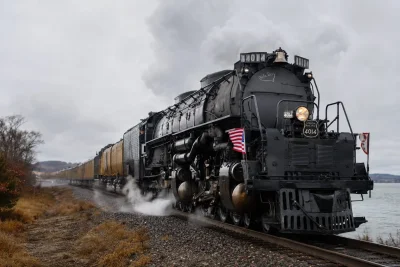
Union Pacific (UNP) has signaled it might abandon its proposed $85 billion acquisition of Norfolk Southern (NSC) if U.S. rail regulators impose sweeping conditions such as mandatory line sales, haulage rights, or trackage rights—which allow a railroad to operate its trains on a competitor's tracks. The warning comes as the Surface Transportation Board (STB) continues to evaluate whether the revised merger application is complete, with a May 8 deadline for public comments.
Regulatory Landscape
The STB has not yet determined if the updated application meets completeness standards, a threshold that must be cleared before a full review can begin. Comments on completeness are due by May 8, with replies expected by May 12. Only if the application is deemed complete will the agency proceed to a comprehensive assessment of the merger's competitive impact.
Union Pacific and Norfolk Southern resubmitted their application after the STB rejected their initial bid in January, citing insufficient information. The companies aim to create the first coast-to-coast U.S. freight railroad under single ownership, arguing that a unified network would reduce carrier handoffs and accelerate long-haul freight movement. To bolster their case, the revised filing includes systemwide traffic data from all six North American Class I carriers.
Union Pacific CEO Jim Vena asserts that the new analysis demonstrates the merger "enhances competition," while Norfolk Southern CEO Mark George notes that shippers generally prefer single-line service when available. The companies project $3.5 billion in annual savings for shippers, a shift of 2.1 million truckloads from highways to rail, and a net gain of 1,200 union jobs by the third year. Industry publication CDL Life highlighted the railroads' forecast that a combined 50,000-mile network could reduce cross-country transit times by one to two days.
Potential Walk-Away Clause
According to a securities filing, Union Pacific is not obligated to proceed if the STB imposes what it terms a "materially burdensome regulatory condition." In such a scenario, Union Pacific could walk away, though it might owe Norfolk Southern a $2.5 billion breakup fee. This clause was previously flagged by the STB in January, which noted that the original application omitted certain merger details, including Schedule 5.8—a provision outlining the regulatory trigger for Union Pacific's exit.
Mounting Opposition
Opposition to the deal continues to intensify. On Monday, CSX (CSX) launched a public resource to help shippers and local communities engage in the STB review, warning that the merger would reduce the number of transcontinental players to just one, leaving only four regional carriers and significantly limiting routing options. "Customers and the communities we serve have a stake in this review," said CSX CEO Steve Angel.
BNSF Railway and CPKC have aligned with shipper and labor groups to oppose the merger. BNSF CEO Katie Farmer argued that there is no real customer demand behind the deal and that it would "eliminate competition," as reported by CDL Life. The Stop the Rail Merger Coalition, formed last week, includes the American Chemistry Council, American Farm Bureau Federation, Teamsters Rail Conference, BNSF, CPKC, and others. The coalition contends that the merger would reduce competition, raise costs for manufacturers, farmers, and consumers, and introduce new supply-chain vulnerabilities.
Union Pacific and Norfolk Southern counter that a unified rail network would enhance rail's ability to compete with trucking, rather than simply creating a larger railroad. Travel and Tour World described the plan as an effort to stitch the nation together by rail under a single umbrella, while also noting antitrust concerns and unease about potential pricing power.
Next Steps
The immediate procedural hurdle is narrow: if the STB deems the application complete, the deal will enter an extended battle over competition, service, jobs, and potential remedies. If the board finds missing elements, the timeline will stretch, making Union Pacific's walk-away clause a practical consideration. The outcome will have significant implications for the U.S. freight rail industry and the broader transportation sector.