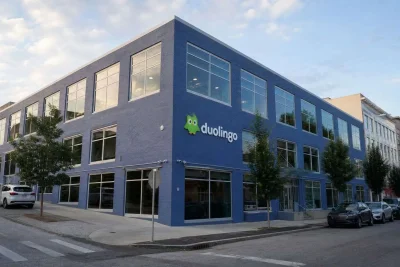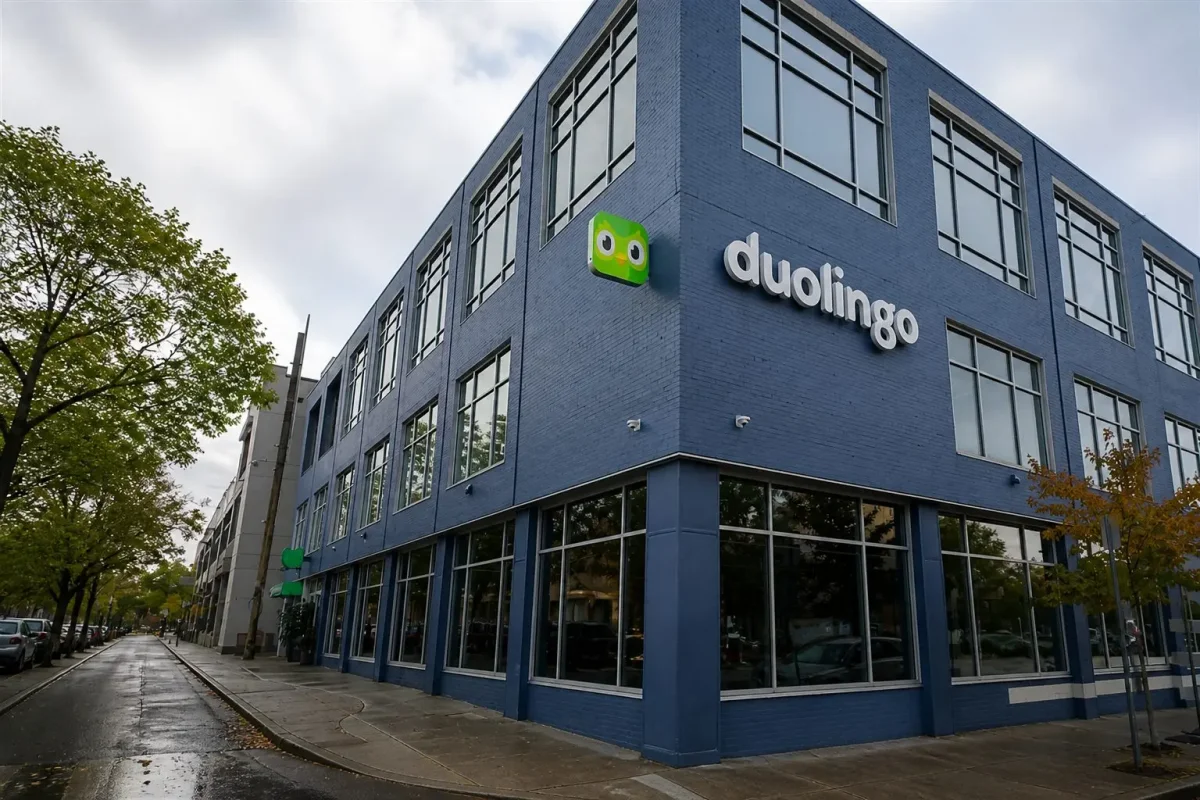
Pittsburgh-based Duolingo Inc. saw its shares tumble nearly 10% in after-hours trading Monday, despite posting a strong first-quarter earnings beat. The language-learning platform reported revenue of $292 million, a 27% year-over-year increase, and earnings per share of $0.89, surpassing the consensus estimate of $0.79. However, investor enthusiasm was tempered by the company's cautious outlook for 2026, which prioritizes long-term user engagement and AI investment over immediate monetization.
Q1 Highlights and Market Reaction
Duolingo's daily active users (DAUs) reached 56.5 million, up 21% from a year ago, while paid subscribers grew 21% to 12.5 million. Total bookings for the quarter hit $308.5 million, a 14% increase. Despite these strong metrics, the stock fell 9.96% to $99.25 in after-hours trading, following a regular session close at $110.23, down 0.9%. The sharp decline reflects Wall Street's unease with the company's strategic pivot.
2026 Growth Plan and Investor Concerns
Duolingo's management has outlined a 2026 plan that emphasizes slower revenue growth and higher costs as the company invests heavily in AI-powered features, such as speaking drills and video call capabilities. CFO Gillian Munson stated, "We are making long-term bets, and the returns on the investments we’re making are going to be 2027 and beyond." This message signals that profits may lag until at least 2027, causing some investors to question the near-term payoff.
The company projects 2026 bookings of $1.28 billion, a 10.5% increase, with second-quarter bookings expected at $283.5 million, up 5.8%. Full-year revenue is forecast at $1.205 billion, with growth decelerating in the second half. Gross margin is expected to decline to approximately 69% by Q4 as more users engage with AI features, adding to cost pressures.
Strategic Focus on Engagement and AI
CEO Luis von Ahn emphasized the company's commitment to long-term engagement and loyalty, noting progress on the strategy outlined last quarter. "Speaking is now a core part of the learning experience," he said. Duolingo is expanding access to Video Call, introducing new spoken-answer drills, flashcards, and the "Speaking Adventures" feature. The company has also rolled out content through Duolingo Score 129, equivalent to CEFR B2 level, for its nine most-learned languages, releasing 20,500 course units in the quarter.
Management has set a target of 100 million DAUs by 2028, intentionally prioritizing user growth and engagement over revenue per user. This strategy involves improving teaching quality, enhancing the free user experience, and introducing stickier features before ramping up monetization efforts.
Competitive Landscape and Risks
Duolingo faces intensifying competition from online and app-based language tools, traditional offline classes, and emerging areas like literacy, math, music, and chess. The company also flagged the threat of generative AI products rapidly scaling up and disrupting the market. In its latest annual filing, Duolingo cautioned about potential pitfalls, including user retention, competitive pressures, profit margins, and AI rollout challenges.
Financial Position and Share Buybacks
Duolingo ended the quarter with $1.1 billion in cash and cash equivalents. Net income came in at $43.5 million, while adjusted EBITDA reached $83.4 million. The company repurchased approximately $50.6 million worth of stock, or close to 514,000 shares, through May 1, under a buyback program initiated in February.
The key question for investors is whether the second quarter will mark a low point or signal a slowdown in Duolingo's growth trajectory. Executives were scheduled to hold a webcast with analysts at 5 p.m. ET Monday to discuss the results and outlook further.