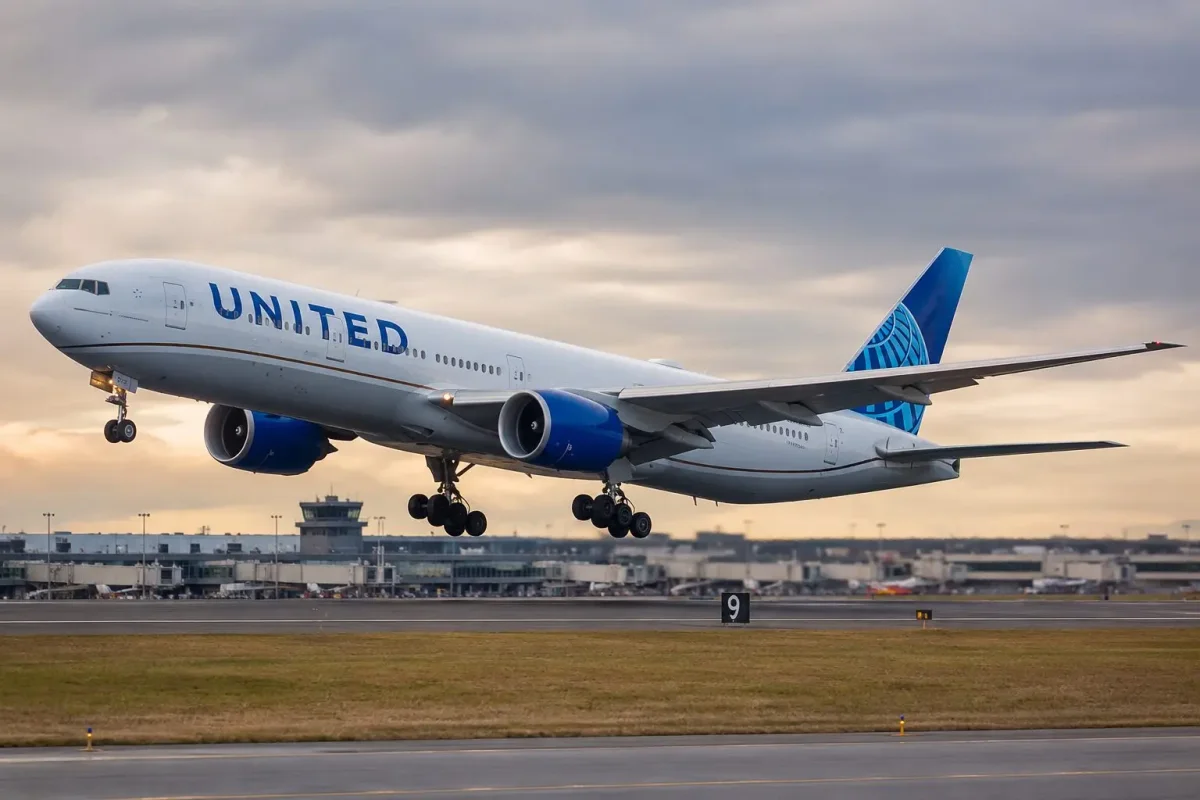
United Airlines Holdings (NASDAQ:UAL) is rolling out an innovative cabin configuration on its upcoming fleet of 50 Airbus A321XLR aircraft, effectively creating a new premium economy row by blocking off middle seats. The layout, announced Tuesday, will permanently convert one Economy Plus row per plane into a four-seat arrangement with a fixed table covering the two center seats. This leaves window and aisle passengers with significantly more personal space.
The financial math behind the move is clear: if the special row fills up and fares are comparable, each of the four seats must generate 1.5 times the revenue of a standard six-seat row. That translates to a 50% revenue premium per seat just to break even against a conventional configuration. The airline has not yet disclosed pricing for these upgraded seats, which will go on sale later this year. Domestic routes are expected to debut this fall, with international service slated for early 2027.
The announcement came just ahead of United's second-quarter earnings release, which revealed mixed results. Total operating revenue rose 16% year-over-year to $17.7 billion, while premium revenue also climbed 16%. Economy unit revenue increased 12%, and contracted business revenue surged 27%. CEO Scott Kirby attributed the performance to ongoing investments in customer experience across all cabins.
However, the gains were overshadowed by a sharp spike in fuel costs. United's fuel bill jumped $2.3 billion in the second quarter, an 84% increase compared to the same period last year. The company now expects approximately $6 billion in additional fuel expenses for 2026 versus earlier projections. Management indicated it recovered about half of the Q2 fuel cost increase and anticipates recovering 80% to 90% in the third quarter, with full recovery expected by the fourth quarter.
The new seat configuration is part of United's broader premium push. The A321XLR will offer 32 premium seats, double the number on the Boeing 757s it replaces. Chief Commercial Officer Andrew Nocella emphasized the strategy: "We're giving customers choice and value in every cabin." While the near-term financial impact of the 100 blocked middle seats across 50 aircraft is modest relative to United's $17.7 billion quarterly revenue, the potential for fleet-wide expansion could amplify earnings if the concept proves popular.
Despite the positive revenue trends, United shares fell approximately 2% in after-hours trading following the earnings report. The company guided for third-quarter adjusted earnings of $2.50 to $3.50 per share, with a midpoint of $3.00—below the analyst consensus of $3.60. On a brighter note, United raised its full-year 2026 earnings forecast to $9 to $11 per share, up from the previous range of $7 to $11.
Analysts caution that the success of the new row hinges on pricing. If the surcharge approaches the 50% breakeven point, it signals strong demand. However, overly aggressive pricing could deter bookings, and a fixed configuration may prove inflexible if route demand shifts. Additionally, further fuel price increases or a slowdown in business travel could erode the benefits of the four extra seats. The airline has not provided specific revenue targets or expected booking volumes for the new product.
United's experiment with blocked middle seats on the A321XLR reflects a broader industry trend of extracting more revenue from premium cabins. As fuel costs remain elevated and competition intensifies, airlines are increasingly seeking innovative ways to differentiate their offerings. The first real test will come when fares are announced, setting the tone for potential expansion across the fleet.