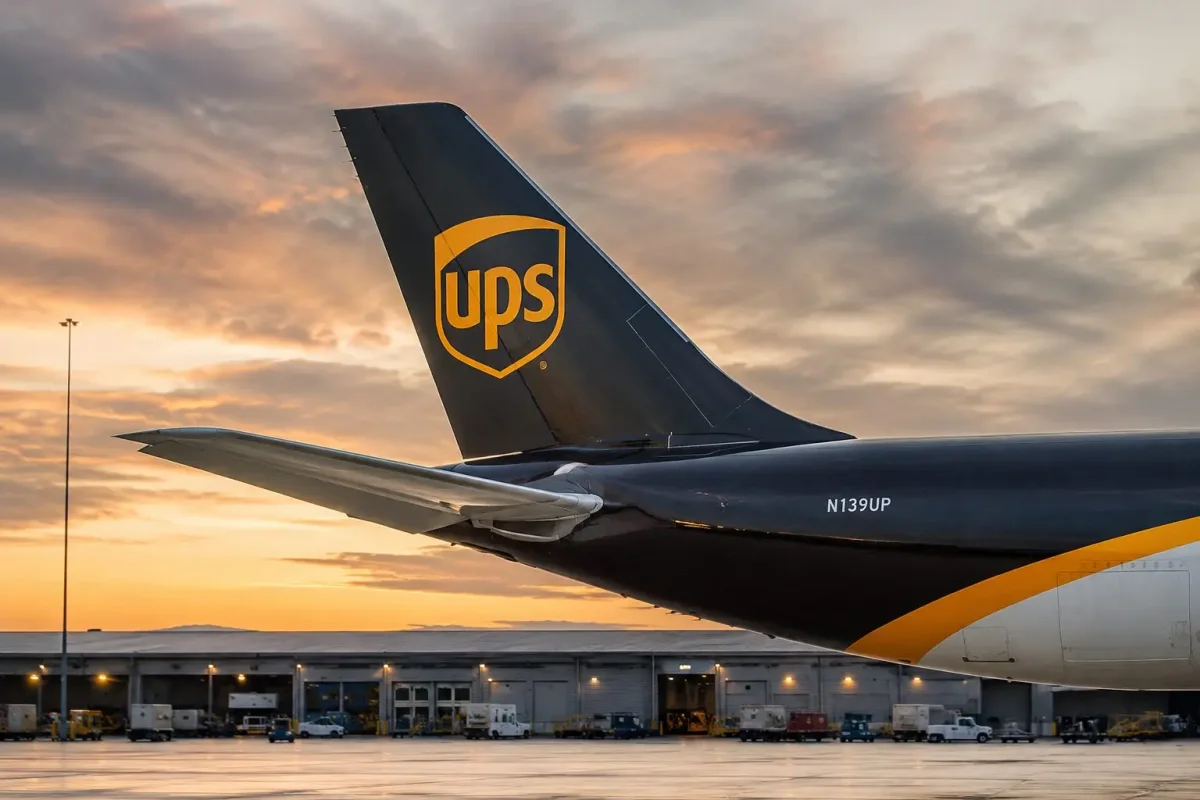
United Parcel Service, Inc. (NYSE:UPS) saw its stock decline 6.1% to approximately $106 in early trading on July 28, 2026, reversing premarket gains that followed better-than-expected quarterly results and an upward revision to its full-year revenue forecast. The market's reaction underscores growing investor scrutiny on earnings quality rather than top-line growth.
UPS updated its 2026 revenue outlook to $91.2 billion, up from the prior estimate of $89.7 billion, a gain of about 1.7%. However, the implied adjusted operating profit for the year was raised only modestly to $8.65 billion, reflecting an increase of roughly 0.5% from the previous $8.61 billion. This translates to an adjusted operating margin of approximately 9.5%, slightly below the earlier forecast of 9.6%.
The disparity between revenue and profit growth is largely attributable to higher fuel costs. CFO Brian Dykes noted during the earnings call that increased fuel expenses boosted both revenue and operating costs, resulting in a minimal net impact on consolidated operating profit dollars. This dynamic has led investors to question the sustainability of margin expansion, especially as the company navigates a challenging cost environment.
In the second quarter, UPS reported revenue of $22.83 billion, a 7.6% increase that surpassed the consensus estimate of $21.81 billion. Adjusted earnings per share came in at $1.76, beating expectations of $1.66. However, reported diluted earnings were only $0.71, after accounting for $891 million in after-tax transformation charges, primarily related to employee separation programs.
Domestic revenue rose 6%, with revenue per piece up 9.3%, and adjusted domestic margin improved to 8.0%, a gain of one percentage point. International revenue grew 12.5%, but margin contracted by 1.2 points due to fuel cost pressures. The company has also finalized its exit from Amazon.com, Inc. (NASDAQ:AMZN), eliminating roughly 2 million lower-margin packages per day and $4.5 billion in associated costs. Amazon now represents 9% of UPS revenue, down from a peak of over 13%.
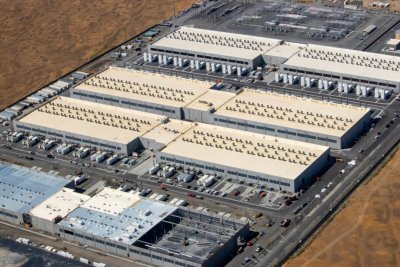
Network optimization efforts are gaining traction. UPS has eliminated nearly 30,000 operational jobs and closed 45 facilities in the first half of the year. Automated facilities now handle 68.5% of U.S. volume, with costs per piece approximately 28% lower than non-automated sites. These efficiency gains are critical as the company seeks to protect margins amid volume shifts.
The second-half outlook presents a significant challenge. Based on the annual guidance, UPS expects adjusted operating profit of approximately $5.23 billion on revenue of $47.17 billion in the latter six months, implying a margin of 11.1% compared to 7.8% in the first half. Dykes indicated that global momentum and easier year-over-year comparisons following the September 2025 de minimis policy update should provide support. However, domestic volume is projected to decline by a mid-single-digit percentage in the third quarter, and domestic margin guidance is around 7%.
Fourth-quarter volume is expected to surge roughly 24% above third-quarter levels, a seasonal boost that is crucial for achieving the full-year margin target. The pace of recovery in the peak season will be a key determinant of UPS's profitability. Investors will be closely monitoring execution, particularly given the headwinds from fuel costs and the Amazon volume loss.
Shares of FedEx Corp. (NYSE:FDX) fell about 0.7% in sympathy, while the S&P 500 declined approximately 0.3%. UPS's steeper decline reflects company-specific concerns about margin trajectory. Risks include higher diesel prices—currently above $5 per gallon—which could dampen U.S. shipment demand, and the difficulty of maintaining pricing power in a subdued volume environment. If peak season underperforms, pressure on the second-half margin target will intensify.