Newly released federal data has shifted the focus of investor concerns following the fatal crash of an Amazon-branded cargo plane in Miami. The initial fear of a temporary airport disruption has given way to deeper questions about Amazon's oversight of its third-party air carriers, contractual liability, and safety protocols. Investigators have documented repeated speed warnings and a late, abandoned attempt to abort the landing, raising the stakes for the e-commerce giant.
The widow of one of the victims has filed the first known wrongful-death lawsuit, naming Amazon, the aircraft operator 21 Air, and the two pilots. While these allegations remain unproven and the National Transportation Safety Board (NTSB) has not yet determined probable cause, the legal action underscores the potential for broader liability. For Amazon shareholders, the direct financial impact of a single claim appears manageable given the company's massive scale, but the larger risk lies in potential evidence of systemic contractor-management failures or operational restrictions across Amazon Air.
What the NTSB Data Reveals
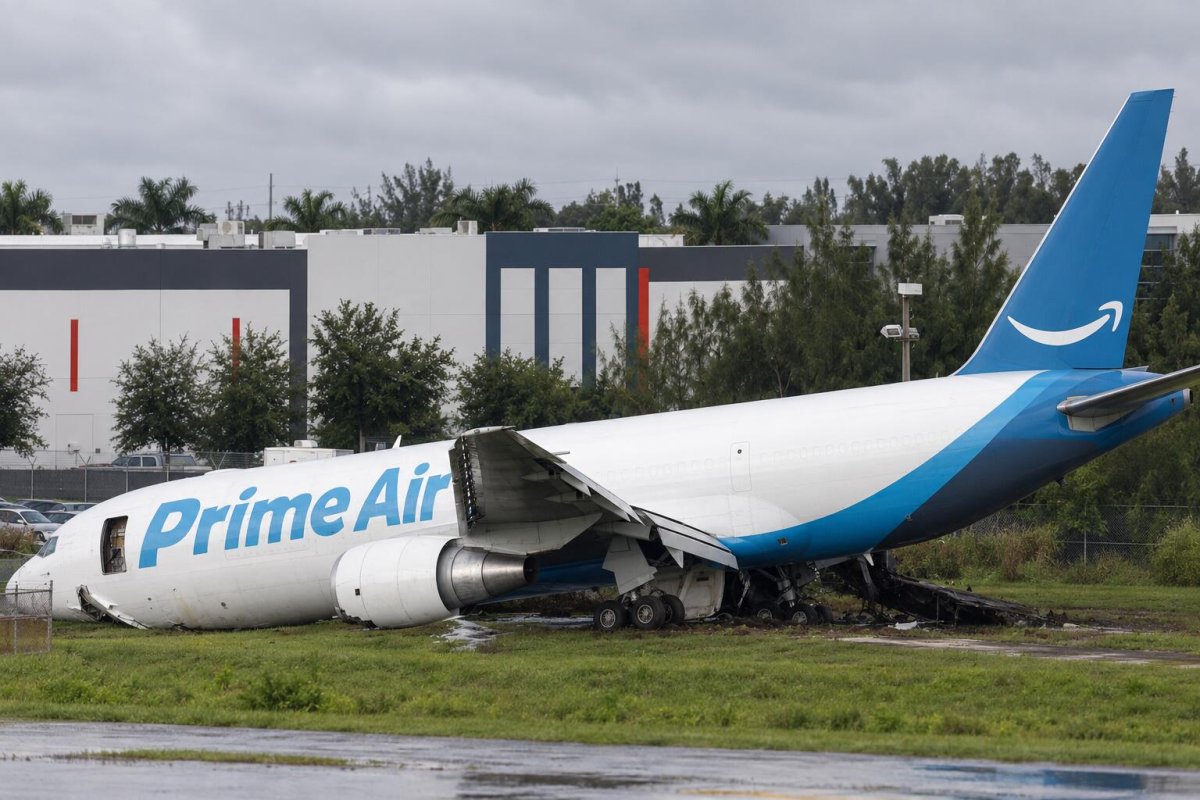
21 Air Flight 7598, a Boeing 767-33A carrying Amazon cargo from San Juan, overran Runway 30 at Miami International Airport on September 6. The aircraft struck vehicles on and near airport property, resulting in the deaths of five people in a cleaning crew's van and injuries to five others. The pilots survived the crash.
The NTSB's September 9 investigative update is preliminary, but its timeline is unusually detailed. In the final 1 minute and 42 seconds of the cockpit recorder, one pilot warned that the aircraft was too fast and continued commenting on excessive speed. The agency noted a lack of consistent verbal response to these warnings. Flight-recorder data shows the nose and right main gear touched down at 158 knots with 30 seconds remaining, while the left main gear did not touch down until 11 seconds later at 134 knots. The pilots released the brakes and advanced the throttles to a go-around thrust setting at 120 knots, but returned to idle four seconds later as brakes were reapplied. The NTSB found no deployment of speed brakes or thrust reversers, and the final recorded groundspeed was 65 knots.
These facts do not establish negligence or assign responsibility. Recorder times have not been precisely synchronized, weather and maintenance remain under review, and the investigation is ongoing. A full cockpit transcript and probable-cause finding will be released later.
Why Amazon Is Named Despite 21 Air Operating the Flight
The aircraft wore Prime Air colors and carried Amazon packages, but 21 Air operated the flight. This distinction is central to the legal proceedings. Amazon has long relied on outside airlines to fly parts of its network, and even when it announced purchases of Boeing 767 aircraft in 2021, the company stated it would continue using third-party carriers to operate them.
The lawsuit, as reported by the Associated Press, alleges multiple failures led to the crash and seeks at least $50,000—a jurisdictional pleading figure, not a credible estimate of eventual damages. The material questions will emerge through discovery: who owned and maintained the aircraft, what operating standards Amazon required, how the carrier was audited, what indemnities and insurance apply, and whether prior safety concerns were disclosed. Amazon has not been found responsible for the accident.
Market Reaction and Financial Exposure
Amazon shares closed Thursday at $251.89, down 51 cents, or 0.20%, on 25.4 million shares, according to market data recorded at the Nasdaq close. This was a smaller decline than the Nasdaq Composite's 0.7% loss. The muted response suggests investors do not currently expect the crash or first lawsuit to alter Amazon's near-term earnings, though a one-day price move is not proof that the risk is contained.
The scale comparison supports that initial view. Amazon generated $200.6 billion in second-quarter sales and $27.5 billion in operating income. Its June-quarter filing shows $27.9 billion of shipping costs, up from $23.4 billion a year earlier. A single aircraft loss and one civil claim are unlikely, by themselves, to move those totals materially.
However, scale does not eliminate tail risk. A finding that Amazon's carrier-selection or monitoring processes were deficient could lead to more claims, higher insurance and contract costs, fleet inspections, route disruptions, or tighter Federal Aviation Administration scrutiny. Reputational exposure also matters because the plane carried Amazon's branding even though a contractor flew it.
Key Evidence to Watch
Investors should monitor several developments:
- The preliminary accident report: Verified facts on weather, runway conditions, aircraft configuration, and maintenance are needed before drawing conclusions from the recorder sequence.
- FAA or NTSB action involving 21 Air: A flight restriction, fleet-wide inspection, or safety recommendation would turn a single-route event into a larger operational issue.
- Contract and insurance allocation: Court filings may clarify whether 21 Air or its insurers bear the primary economic burden and what obligations remain with Amazon.
- Evidence of repetition: Prior documented warnings, audit failures, or similar events would be more consequential to the AMZN thesis than the amount demanded in the first complaint.
The base case is still that this is a grave but financially containable event for a $2.7 trillion company. The countercase is not about one damaged jet; it is that Amazon's outsourced air network may expose the company to risks it cannot fully outsource. The NTSB's final findings and the contracting record—not the initial lawsuit's headline number—will decide which case investors should price.