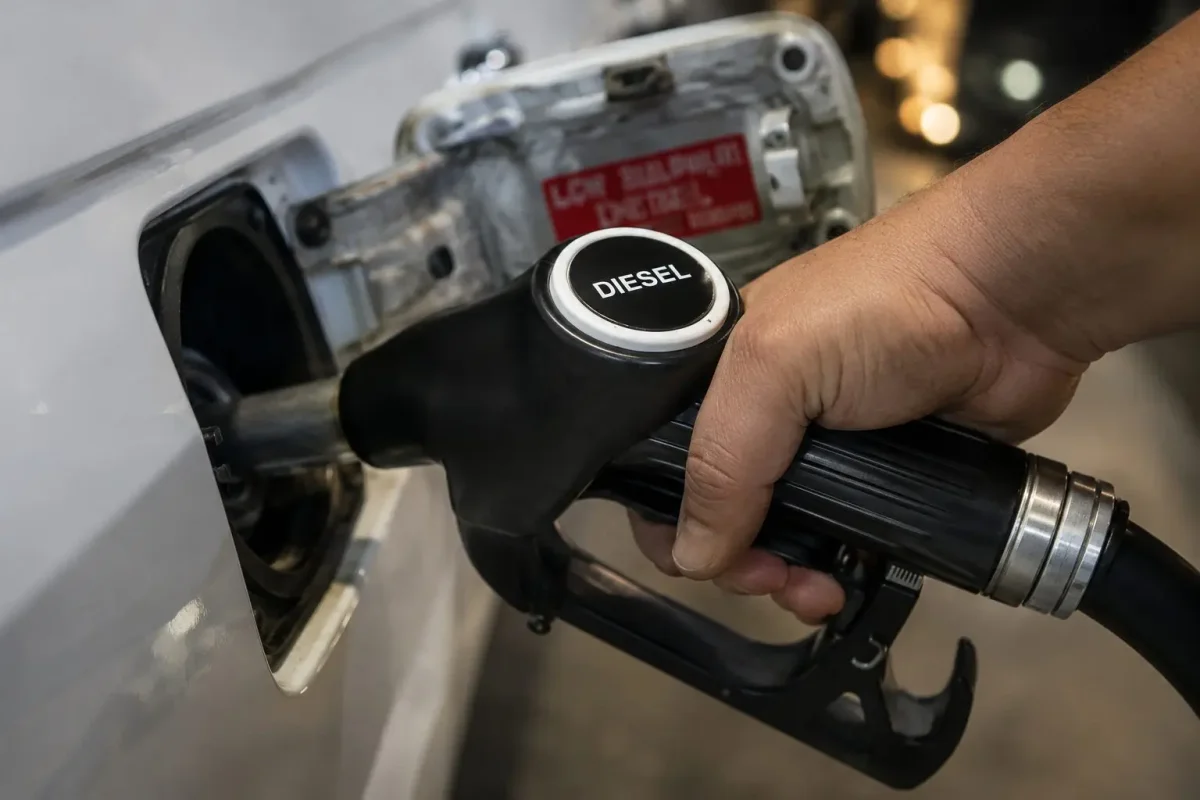
U.S. diesel prices surged to $5.088 per gallon on Saturday, July 18, 2026, as escalating tensions with Iran continued to roil energy markets. The price premium over regular gasoline expanded to $1.096, nearly double the difference recorded a year ago, according to AAA fuel price data. This sharp increase is not being driven by a pickup in domestic demand—four-week distillate consumption actually fell 2.1% compared with the same period last year—but rather by global supply constraints and heightened geopolitical risk.
Refiners are benefiting from a record-high diesel crack spread, which measures the profit margin for turning crude oil into diesel. The 3-2-1 crack spread, a key industry benchmark, ended Thursday at an all-time high of $69.66 per barrel, while the diesel crack alone surpassed $91. This has translated into strong gains for major refining companies: shares of Valero Energy Corp. (NYSE: VLO) rose 3.1% on Friday, Phillips 66 (NYSE: PSX) climbed 2.8%, and Marathon Petroleum Corp. (NYSE: MPC) was up 2.2%.
Despite the price rally, U.S. distillate inventories have increased significantly. Data from the Energy Information Administration (EIA) show that refineries were operating at 96.2% of capacity in the most recent week, while distillate stocks rose by 4.6 million barrels to 108.2 million barrels. However, inventories remain about 11% below the five-year seasonal average, underscoring the tightness in global supply chains.
A key factor behind the diesel price spike is the surge in U.S. exports. Average second-quarter distillate exports reached 1.56 million barrels per day, a 30% increase compared to the five-year average. This outflow of domestic barrels has helped push distillate and jet-fuel cracks to more than double their levels from a year earlier, benefiting U.S. refiners but also passing higher costs to shippers and consumers.
Shipping companies are feeling the pinch. FedEx Corp. (NYSE: FDX) is set to increase its ground fuel surcharge to 25.25% next week, up from the current 25.00%, with further adjustments possible as diesel prices remain elevated. United Parcel Service Inc. (NYSE: UPS) similarly updates its ground surcharges on a weekly basis, referencing EIA diesel figures. According to FedEx’s pricing table, a diesel price between $5.08 and $5.17 triggers a 25.75% surcharge, and AAA’s latest daily price of $5.088 falls within that range. While the surcharge formula provides some protection for parcel carriers, customers experience the impact after a lag, with food prices and delivery fees expected to be among the first to rise.
The broader crude oil market has also seen significant gains. Both Brent and West Texas Intermediate (WTI) crude climbed roughly 16% over the past week, closing Friday at $88.10 and $82.49 per barrel, respectively. The rally has been fueled by concerns over tanker movements through the Strait of Hormuz, a critical chokepoint for global oil shipments. Analyst Andrew Lipow warned that if additional tankers are attacked and sustain damage, further increases in oil prices are likely. The direction of flows through Hormuz will be key in determining whether the weekly rally persists.
Looking ahead, the market faces two-sided risks. A lasting truce in the region could bring oil flows back to normal and narrow crack spreads quickly. Conversely, an extended disruption could push surcharges even higher, potentially eroding freight demand over time. For investors, the expanding diesel-gasoline spread remains a clear indicator of the current dynamics: refiners benefit as global shortages persist, parcel carriers are able to transfer some of the cost, and merchants experience a delayed but inevitable impact on their bottom lines.