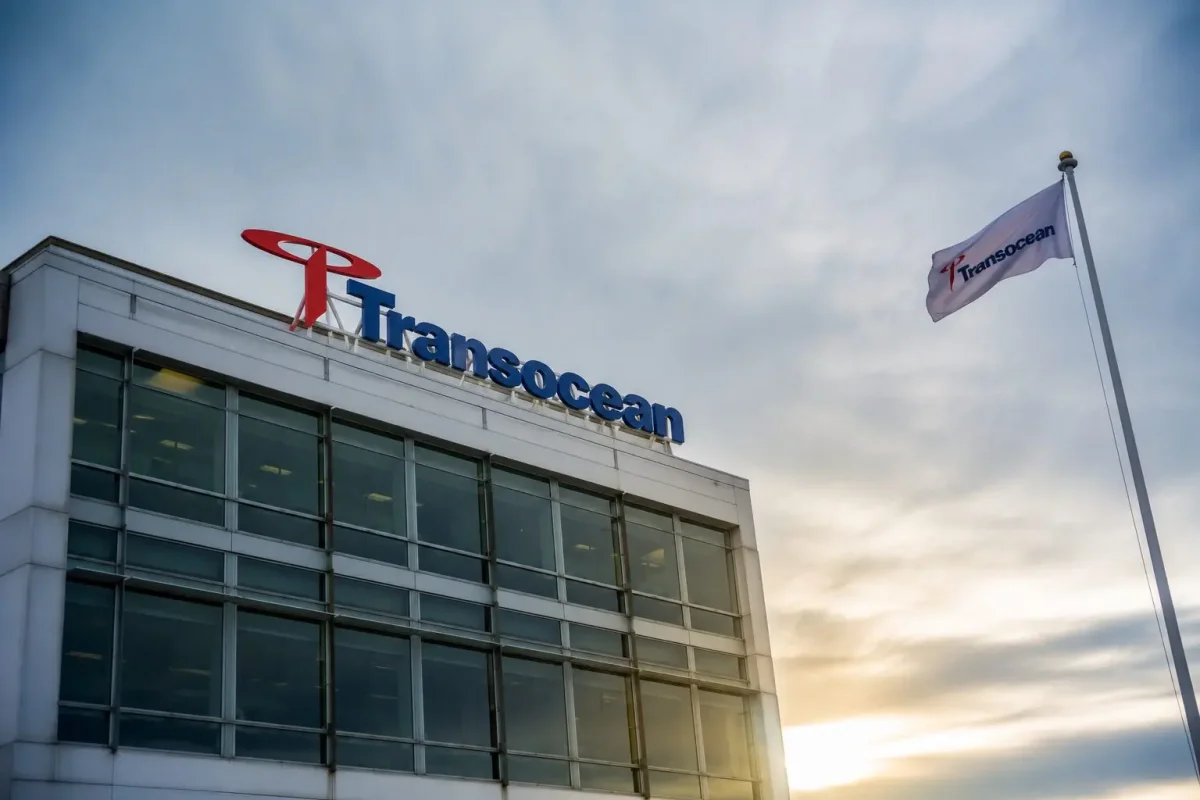
NEW YORK, July 17, 2026 – Transocean Ltd. (NYSE:RIG) shares ended the week at $5.14, down 1.2%, even as Brent crude surged 15.9% to $88.10 per barrel. The disconnect highlights the dominant influence of the company's pending merger with Valaris Ltd. (NYSE:VAL) over short-term oil price moves.
The merger spread, which measures the gap between Valaris's market price and the implied value of the fixed-share exchange, remained close to 2.3%. Valaris closed Friday at $76.54, while the exchange ratio of 15.235 Transocean shares per Valaris share implies a value of $78.31. The $1.77 gap equates to roughly 2.3% of implied value, up slightly from 2.1% a week earlier.
The spread's stability suggests the market sees low near-term deal risk, but the marginal widening indicates some incremental caution. Typical merger dynamics—including hedging costs, stock borrowing fees, and timing uncertainties—continue to influence the spread more than the probability of deal completion.
Meanwhile, other offshore drillers benefited from the oil rally. Noble Corp. (NYSE:NE) advanced 3.8% for the week to $41.50, and Seadrill Ltd. (NYSE:SDRL) gained 6.4% to $43.10. The contrasting performance underscores how merger-specific factors are weighing on Transocean and Valaris shares.
Regulatory timing remains the primary bottleneck. The Committee on Foreign Investment in the United States (CFIUS) approved the deal on June 29, but the U.S. Department of Justice's second request is still pending. The companies have agreed not to certify substantial compliance before July 31, meaning the closing can proceed only 60 days after both certifications are made. Shareholder votes have not yet been scheduled.
Transocean CEO Keelan Adamson has described the merger as a critical step to reduce the company's debt burden. "We know that our debt level negatively impacts our equity value. This transaction addresses that," he said in February. As of March 31, Transocean reported $5.137 billion in principal debt, with free cash flow of $136 million in the first quarter and a backlog of $7.1 billion.
Recent contract awards have added $185 million to the firm backlog, including a conditional deal with Equinor ASA (NYSE:EQNR) valued at over $1 billion across seven rig-years. Most of that activity is scheduled to start in 2027 or 2028, meaning near-term cash conversion is limited.
The oil market itself remains volatile. Friday's surge followed renewed U.S.-Iran strikes and increased threats to key shipping lanes. "If additional tankers are attacked and suffer damage, oil prices will keep rising," said Andrew Lipow of Lipow Oil Associates. However, any ceasefire could quickly erase that premium, and operational risks—such as rig downtime or project delays—could further impact Transocean's cash flow.
Looking ahead, Transocean is set to report earnings on August 5 after the NYSE close, with a conference call on August 6. The merger spread will remain a key barometer: a wider gap would signal higher execution risk, while a narrower spread would suggest growing confidence in the deal's completion.