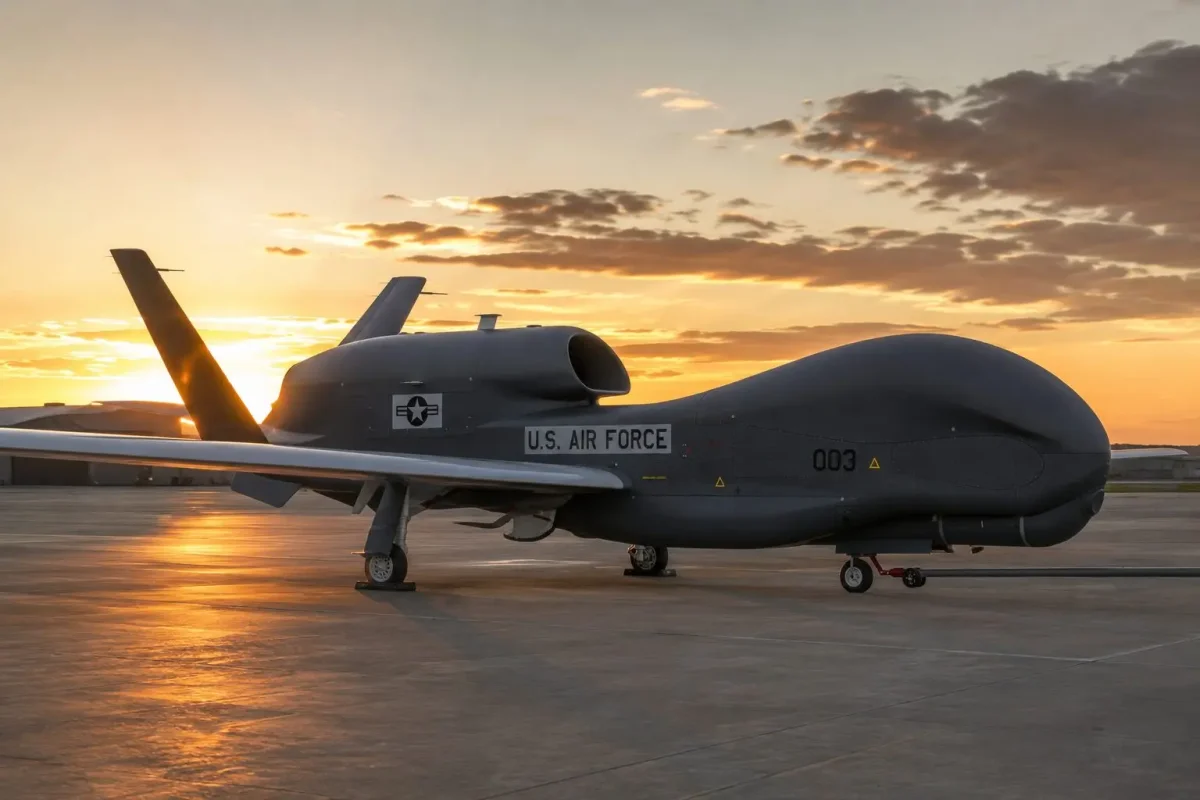
The United States Air Force has solidified its surveillance capabilities in the Pacific by permanently stationing three RQ-4B Global Hawk drones at Yokota Air Base near Tokyo. This move transitions what was previously a seasonal deployment into a year-round reconnaissance mission, significantly enhancing intelligence, surveillance, and reconnaissance (ISR) operations for both the US and Japan.
Strategic Shift in the Pacific
The decision, announced on June 21, 2026, marks a strategic shift from Andersen Air Force Base in Guam to Yokota. The 4th Reconnaissance Squadron began the process in late May, with the first Global Hawk arriving on May 27. This permanent basing ensures a steadier ISR platform near contested Pacific air and sea lanes, responding to increased military activity in the region.
Japan's Defense and Foreign ministries have highlighted the growing importance of ISR as security conditions near Japan deteriorate and regional military activities intensify. The permanent deployment is seen as a critical step in bolstering joint US-Japan intelligence gathering capabilities.
Operational Advantages
US Pacific Air Forces noted practical benefits to the relocation. Basing the aircraft at Yokota provides better weather conditions in Japan's Kanto region, particularly during typhoon season, ensuring uninterrupted theater-wide operations. Lieutenant Colonel Adam Otten, commander of the 4th Reconnaissance Squadron, stated that Yokota is "the right location to support current and future RQ-4 operations" and that his unit will "thrive alongside Team Yokota."
The Global Hawk is an unarmed, high-altitude surveillance aircraft designed for long endurance missions. It operates at around 60,000 feet and can stay airborne for over 34 hours, providing continuous monitoring of ships, aircraft, and ground movements across vast areas. Its all-weather, day-and-night sensors make it a versatile asset for persistent surveillance.
Broader Context
This deployment is part of a wider US effort to increase unmanned surveillance in East Asia. Recent actions include the deployment of Air Force MQ-9 Reaper drones in South Korea and Marine MQ-9As in the Philippines, both used for reconnaissance in or near disputed zones. According to defense intelligence group Janes, the US aircraft will likely operate alongside Japan's own Global Hawk fleet, which the Japan Air Self-Defense Force operates out of Misawa in northeast Japan. Janes also pointed to increased Chinese military activity in the region as a key driver.
Northrop Grumman, the Global Hawk's primary contractor, emphasizes the drone's ability to collect high-resolution images in almost any weather, day or night, and cover large areas quickly. Global Hawks have previously been deployed in Iraq, Afghanistan, North Africa, and the Asia-Pacific region.
Local and Operational Risks
The permanent basing is not without challenges. Local resistance remains a key risk, despite the drones being unarmed. Tokyo's metropolitan government has requested stronger safety measures and quicker disclosure from US and Japanese officials. Japan's Defense Ministry has pledged to continue urging US forces to adhere to noise-abatement measures and minimize the impact on nearby residents.
The move involves approximately 150 staff, with about 100 already connected to previous temporary deployments. While there are no plans to expand Yokota's land or build new facilities, existing buildings will be upgraded to support the permanent mission.
The core trade-off remains: enhanced ongoing surveillance benefits for the alliance versus increased US air traffic over Yokota communities. For now, both Washington and Tokyo are betting that the ISR boost outweighs the drawbacks.