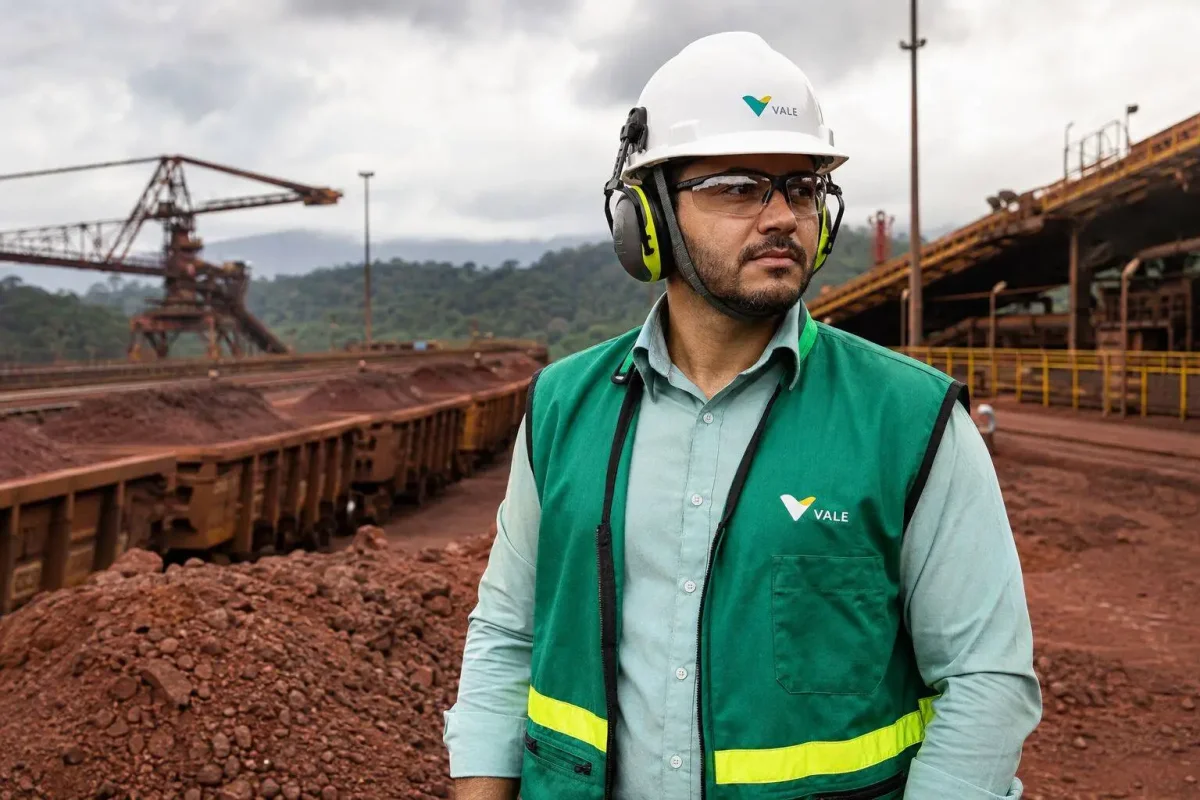
Vale S.A. (NYSE: VALE) saw its shares surge 4% on Wednesday after the Brazilian mining giant unveiled a 2026 iron ore production target that may necessitate a significant ramp-up in output. The company's American Depositary Receipts (ADRs) closed at $15.73, up 4.03% from the previous session's $15.12, marking a notable single-day gain.
Production Goal and Implications
To meet the full-year guidance of 335 million to 345 million tonnes, Vale would need to produce an average of 90.5 million to 95.5 million tonnes per quarter in the second half of 2026. This represents an increase of up to 13.4% compared to the most recent quarter, a challenging yet potentially rewarding target for the company. The first half of 2026 saw production of 153.9 million tonnes, underscoring the scale of the required acceleration.
The production goal is particularly significant as iron ore remains Vale's primary cash flow driver. The company's second-quarter results revealed a healthy margin, with realized iron ore fines prices of $95.00 per tonne against all-in costs of $61.60 per tonne, leaving a $33.40 per tonne buffer. This margin, however, is subject to fluctuations in global demand and cost pressures.
Market Performance and Peer Comparison
Vale's stock performance on Wednesday outpaced its major international rivals. BHP Group Limited (NYSE: BHP) rose 0.66%, while Rio Tinto plc (NYSE: RIO) advanced 0.87%. Trading volume for Vale's ADRs reached 28.0 million, approximately 19% higher than the stock's three-month average, indicating heightened investor interest.
The company's second-quarter production totaled 84.3 million tonnes, up 0.8% year-over-year, with sales increasing 3.1% to 79.7 million tonnes. Notably, output at the S11D mine reached a record 23.4 million tonnes for the quarter, showcasing operational strength.
Strategic Initiatives and CEO Commentary
CEO Gustavo Pimenta highlighted "solid year-on-year results across all businesses" during the earnings call. The company recently launched the Serra Sul +20 project in July, expected to add 20 million tonnes of annual capacity, along with a related crusher initiative. These investments are part of Vale's strategy to meet its ambitious production targets.
Financial Overview and Cost Concerns
Vale's financial momentum showed a mixed picture. Revenue climbed 19% year-over-year to $10.50 billion, and free cash flow advanced 49% to $1.51 billion. However, attributable income declined 35% to $1.38 billion. Adjusted EBITDA increased 9% to $3.68 billion.
Cost pressures remain a key concern. The C1 cash cost rose 9% year-over-year to $24.10 per tonne, while all-in costs increased 18%. Vale has revised its 2026 all-in cost guidance upward to $58–$62 per tonne, from a previous range of $52–$56, reflecting higher expenses.
Shareholder Returns and Market Outlook
To compensate investors, Vale authorized $1.70 billion in dividends and interest on capital in September, along with a new share repurchase program allowing up to 100 million shares to be bought back over 18 months. Commercial head Rogerio Nogueira noted that global pig-iron output was "broadly stable," with China appearing more balanced than local signals suggested.
However, risks remain. Softer steel demand in China could pressure realizations, while a strengthening Brazilian real, higher fuel prices, and increased freight rates may escalate costs. Disruptions at mines or project setbacks could also widen the variance from guidance.
Vale's stock surge reflects some operational confidence, but sustaining it will depend on both output and profitability. The company's performance in the second half will determine whether the $33-per-tonne buffer translates into shareholder value.