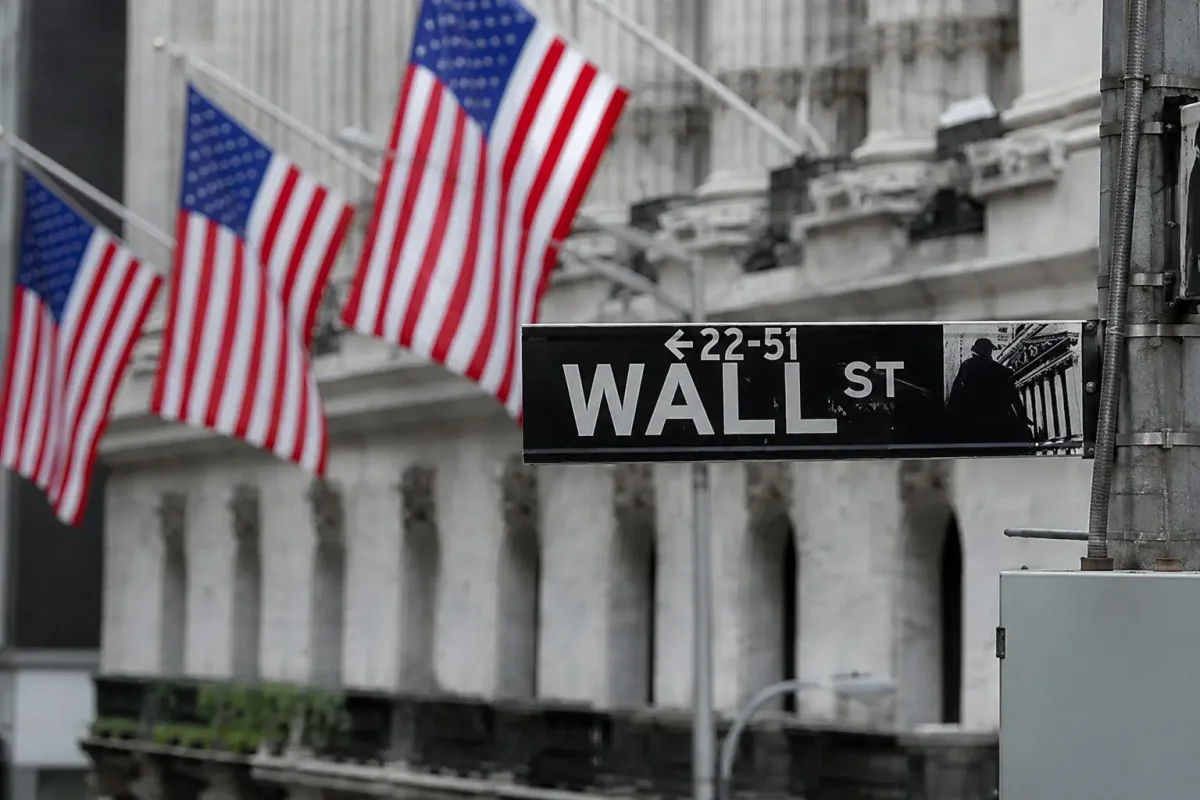
Wall Street powered to new highs on Monday, with the Dow Jones Industrial Average setting an intraday record as a breakthrough U.S.-Iran framework deal sent crude prices tumbling more than 5%. The broad-based rally lifted airlines, cruise operators, and technology shares, while energy stocks slumped under the weight of cheaper oil.
The Dow surged 648.99 points, or 1.27%, to 51,851.25, according to LSEG data cited by Reuters. The S&P 500 climbed 1.50% to 7,543.05, and the Nasdaq Composite led the charge with a 2.35% jump to 26,496.47. Gains were broad, extending well beyond the mega-cap tech names that have dominated recent advances.
Oil Plunge Sparks Sector Rotation
Brent crude futures dropped 5.45% to $82.57 per barrel after the U.S. and Iran agreed to a framework deal that could end their prolonged conflict and reopen the strategic Strait of Hormuz. The sharp decline in oil prices provided an immediate tailwind for airlines and cruise lines, whose fuel costs are a major expense.
United Airlines (UAL) soared 6.4%, Delta Air Lines (DAL) gained 4.1%, and American Airlines (AAL) added 5.2%. Cruise operators also rode the wave, with Norwegian Cruise Line (NCLH) and Carnival (CCL) each rising 5.2%. On the flip side, oil producers bore the brunt of the sell-off. Exxon Mobil (XOM) and Chevron (CVX) each fell about 5% as crude prices slumped.
The energy sector's drag was more than offset by strength in technology and semiconductors. Micron Technology (MU) jumped 9% after analysts raised price targets on the memory chip maker. Nvidia (NVDA), Intel (INTC), and Marvell Technology (MRVL) also posted solid gains. The Philadelphia Semiconductor Index advanced 4.8%, reflecting the outsized influence of chip stocks on both the Nasdaq and S&P 500.
Fed Meeting Looms as Next Catalyst
With the Iran deal injecting a fresh wave of optimism, investors are now turning their attention to the Federal Reserve's policy meeting on June 16-17. The central bank is widely expected to hold its benchmark rate steady at 3.50%-3.75%, according to market pricing. However, the key question is how Chair Kevin Warsh will interpret the sharp drop in oil prices.
Lower oil prices could ease inflationary pressures, potentially giving the Fed cover to pause further rate hikes. Conversely, if the Fed signals that stubborn core inflation still warrants a tightening bias, stocks could quickly reverse course. The market's sensitivity to rate expectations was evident in recent weeks, with equities slipping on hawkish comments and bouncing when fears of a hike receded.
Robert Pavlik, senior portfolio manager at Dakota Wealth, told Reuters: "This is a much better environment for equities going forward." His view reflects the bullish case that cheaper oil, robust artificial-intelligence demand, and rising earnings estimates could propel stocks higher.
Earnings Growth Accelerates, Valuations Stretched
FactSet's latest Earnings Insight report underscores the improving fundamental backdrop. Second-quarter S&P 500 earnings growth is now projected at 21.9%, while full-year 2026 earnings growth is estimated at 23.2%. These figures support the bull case that corporate profits remain strong despite elevated interest rates.
Nevertheless, valuation concerns linger. The S&P 500's forward 12-month price-to-earnings ratio stands at 20.1, above both its five-year and 10-year averages, according to FactSet. That leaves the broader market looking fairly valued rather than cheap. Investors may find better opportunities in sectors directly benefiting from lower fuel costs or companies with upward earnings revisions, rather than chasing the index at record highs.
Risks Remain Despite Rally
The rally's sustainability hinges on several risk factors. The Iran deal is only a framework agreement; if it collapses, oil prices could snap back sharply, reigniting inflation fears. Additionally, the Fed could surprise with a more hawkish stance than markets currently anticipate. Any of these scenarios could trigger a swift reversal.
For now, the market is enjoying a Goldilocks moment: lower oil, strong tech demand, and a Fed likely on hold. But as history shows, such favorable conditions can change quickly. The next few weeks will test whether this rally has legs or is simply a reaction to a single headline.