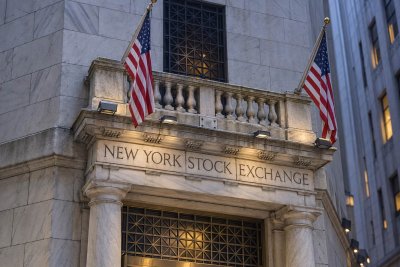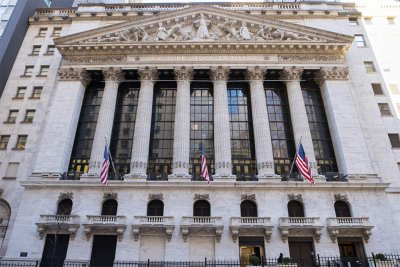
U.S. stock index futures edged slightly higher in pre-market trading on Friday, March 20, 2026, offering a fragile respite after a sharp sell-off. Contracts tied to the S&P 500 and Nasdaq 100 both advanced approximately 0.1%. The tentative gains coincided with a notable retreat in global oil benchmarks, with Brent crude futures declining 1.6% and West Texas Intermediate crude falling nearly 2%.
Market Recovers from Technical Breakdown
The positive tilt in futures follows a difficult session for Wall Street. On Thursday, the Dow Jones Industrial Average plunged 203.72 points to close at 46,021.43. The S&P 500 dropped 18.21 points to 6,606.49, a decline that pushed the broad-market index below its 200-day moving average for the first time since May 9 of the previous year. The technology-heavy Nasdaq Composite lost 61.73 points, finishing at 22,090.69. The Russell 2000 index of small-cap stocks briefly traded more than 10% below its record closing high from January 22.
Michael Arone, Chief Investment Strategist at State Street Investment Management, characterized the market environment as "fairly binary." He noted that risk assets face selling pressure when oil prices and inflation expectations surge, but tend to recover when crude markets calm.
Geopolitical Tensions and Inflation Fears
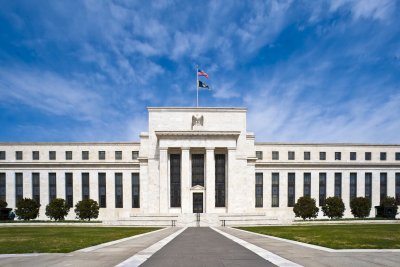
The recent volatility underscores a shift in how traders perceive the ongoing conflict in the Middle East. The war is increasingly viewed not just as a distant geopolitical event, but as a direct source of inflation risk that could keep borrowing costs elevated just as equity markets show signs of fatigue. This concern was echoed by the Federal Reserve, which held its benchmark interest rate steady in a range of 3.50% to 3.75% at its March 18 meeting. The central bank cited uncertainty stemming from Middle East developments in its policy statement.
Fresh economic projections from the Fed show policymakers' median estimate for the policy rate at the end of 2026 is 3.4%, roughly a quarter-point below the current midpoint. Fed Chair Jerome Powell specifically warned that rising energy costs would feed into near-term inflation, even if the longer-term impact on economic growth remains unclear.
Oil's Retreat and Stagflation Chatter
The dip in oil prices Friday was attributed to pledges from European nations and Japan to help keep shipping lanes open at the critical Strait of Hormuz. The United States is also considering additional releases from its emergency stockpiles and potential leniency for Iranian crude stranded on tankers. Priyanka Sachdeva, an analyst at Phillip Nova, observed that the "war premium" embedded in oil prices was fading, though she cautioned that any new disruptions to tanker routes or export facilities could trigger another sharp price rally.
The interplay between growth and inflation has reignited fears of stagflation—a combination of sluggish economic expansion and persistent price pressures. Charu Chanana, Chief Investment Strategist at Saxo, described the Middle East conflict as a blow to "the plumbing of the global energy system." Analysts at Goldman Sachs warned that upside risks for crude prices are tilted higher not only in the short term but through 2027. The International Monetary Fund also cautioned that a sustained jump in energy costs threatens to push global inflation higher and pressure economic growth.
Bond Market Reaction and Sector Moves
The bond market reacted swiftly to the shifting landscape. The yield on the two-year Treasury note, which closely tracks expectations for Federal Reserve policy, spiked more than 20 basis points at one point during Thursday's session. By Friday, money markets viewed the Fed as the only major central bank not expected to raise interest rates this year, despite a sharp reduction in bets for U.S. rate cuts.
Technology and chip stocks faced renewed pressure. Shares of Micron Technology, a leading supplier of high-bandwidth memory for artificial intelligence applications, tumbled 3.8% after the company unveiled plans to increase its capital expenditures for 2026 by $5 billion. Other U.S. memory chip players, including Western Digital, also traded lower. The risk-off sentiment bled into the broader tech sector, with Nvidia slipping 1% and Tesla declining 3.2%.
Corporate Highlights and Investor Sentiment
Not all corporate news was negative. FedEx shares surged 9% in after-hours trading after the logistics giant raised its full-year profit outlook. CEO Raj Subramaniam noted that demand for the first half of March was tracking in line with expectations, despite the geopolitical backdrop. Evercore ISI analyst Jonathan Chappell described the company's quarterly performance as "a very surprising beat."
Despite the volatility, some investors are using the pullback as a buying opportunity. Data from Bank of America showed $62.2 billion flowed into global equity funds over the latest week. U.S. equity funds alone absorbed $47.1 billion, marking the strongest weekly inflow since December. Investors also parked $23.5 billion in cash, suggesting a cautious but engaged stance, ready to purchase on dips.
Friday's relative calm may prove fleeting. Any renewed military strikes on key export routes or energy processing plants could quickly erase the market's tentative gains and return Wall Street to a state of high anxiety, with inflation and Federal Reserve policy remaining central to the investment narrative.