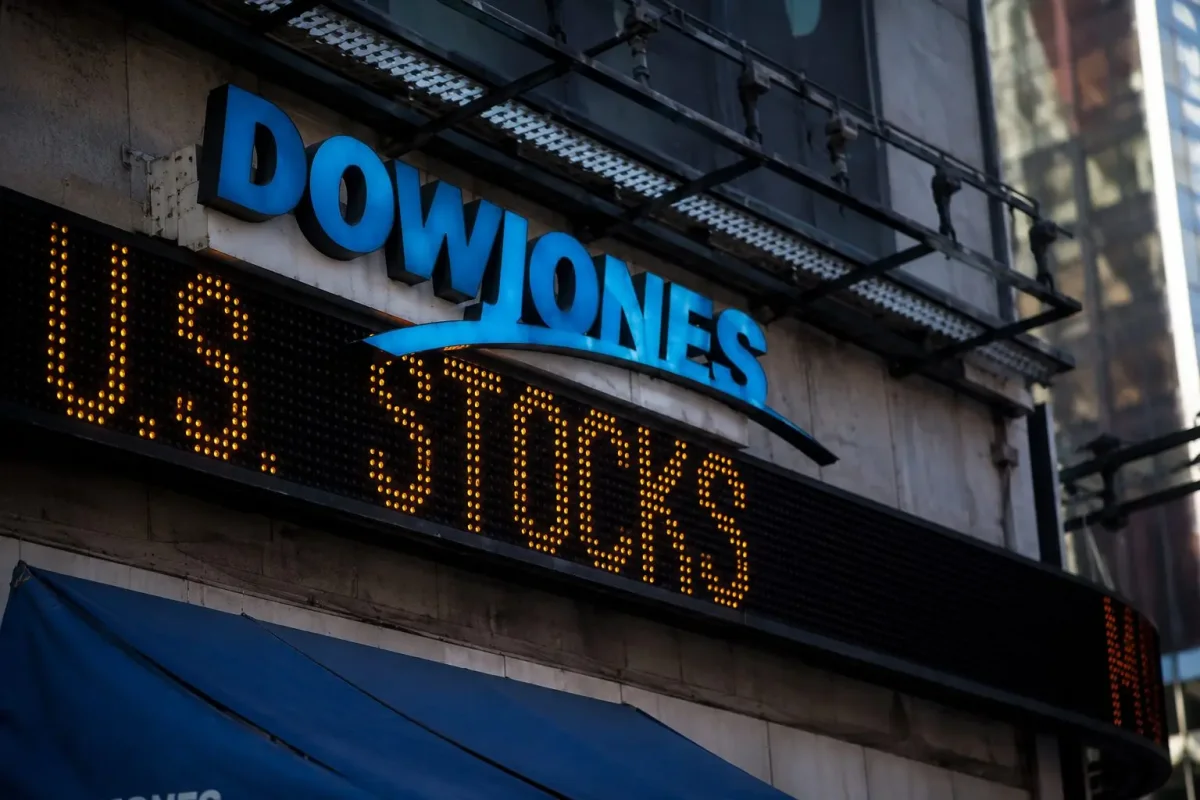
Wall Street experienced a mixed session on Monday, with the Dow Jones Industrial Average retreating from last week's record close as a sharp spike in oil prices and fresh inflation worries weighed on investor sentiment. The blue-chip index fell 111.70 points, or 0.22%, to 50,920.76, while the S&P 500 remained nearly flat and the Nasdaq Composite edged up just 0.01%.
The pullback comes after all three major U.S. indexes closed at record highs on Friday, capping a strong May. The S&P 500 posted its ninth consecutive weekly gain, the longest such streak since December 2023, fueled by optimism around artificial intelligence and resilient corporate earnings. However, Monday's trading suggested that the rally may be losing steam as new headwinds emerge.
A key catalyst for the day's cautious tone was a surge in crude oil prices. Brent crude jumped 6.11% to $96.69 per barrel, raising concerns that higher energy costs could feed into broader inflation and complicate the Federal Reserve's policy decisions. The rise in oil prices comes amid ongoing geopolitical tensions and supply disruptions, adding to the list of factors that could keep inflation elevated.
Adding to inflation fears, the Institute for Supply Management (ISM) reported that its manufacturing Purchasing Managers' Index (PMI) rose to 54.0 in May, up from 52.7 in April and above economists' expectations of 53.0. This marks the highest level of factory activity in four years. The prices-paid component of the index also climbed to 82.1, indicating that input costs continue to rise for most companies. The strong manufacturing data suggests that the economy remains robust, but it also gives the Fed little reason to ease its monetary policy stance.
Despite the broader market's struggles, the technology sector found support from Nvidia (NVDA), which surged 4% after unveiling its new RTX Spark chip, designed to bring artificial intelligence capabilities to laptops and desktops. The chip, developed in partnership with Microsoft (MSFT), was hailed by CEO Jensen Huang as a product that will 'reinvent the PC' for the AI era. Microsoft shares also rose 2.5%, helping the S&P 500 technology sector gain 1.5%. However, rival chipmakers faced pressure: Qualcomm (QCOM) fell 6%, Advanced Micro Devices (AMD) dropped 3.1%, and Intel (INTC) slid 4.4%.
Most S&P 500 sectors traded lower, with nine of the 11 major groups declining. Consumer discretionary stocks led the losses, falling 2%, as higher oil prices and rising bond yields weighed on spending-sensitive names. The yield on the 10-year U.S. Treasury note hovered around 4.453%, reflecting ongoing concerns about interest rates.
Investors are now looking ahead to key economic data and corporate earnings later this week. The May payrolls report, due Friday, is expected to show the addition of 85,000 jobs and an unemployment rate of 4.3%, according to a Reuters poll. A weaker-than-expected jobs number could ease fears of further Fed tightening, as noted by Liz Ann Sonders, chief investment strategist at the Schwab Center for Financial Research. Additionally, results from Broadcom (AVGO) are due on Wednesday and will be closely watched for insights into the semiconductor and AI demand landscape.
Market strategists warn that the combination of strong jobs data, persistent inflation, higher oil prices, and rising bond yields could pose a significant risk to equities. Chuck Carlson, CEO at Horizon Investment Services, noted that a prolonged spike in interest rates would be the most concerning factor for investors, as it would increase borrowing costs and make bonds more attractive relative to stocks.
Despite the Dow's retreat, the pullback is seen more as a test of last week's gains rather than a reversal of the broader uptrend. Money continues to flow into big-cap technology names on AI optimism, but the Dow's exposure to old-economy sectors leaves it more vulnerable to energy price spikes and rate worries. The coming days will be crucial in determining whether the market can sustain its momentum or if a deeper correction is on the horizon.