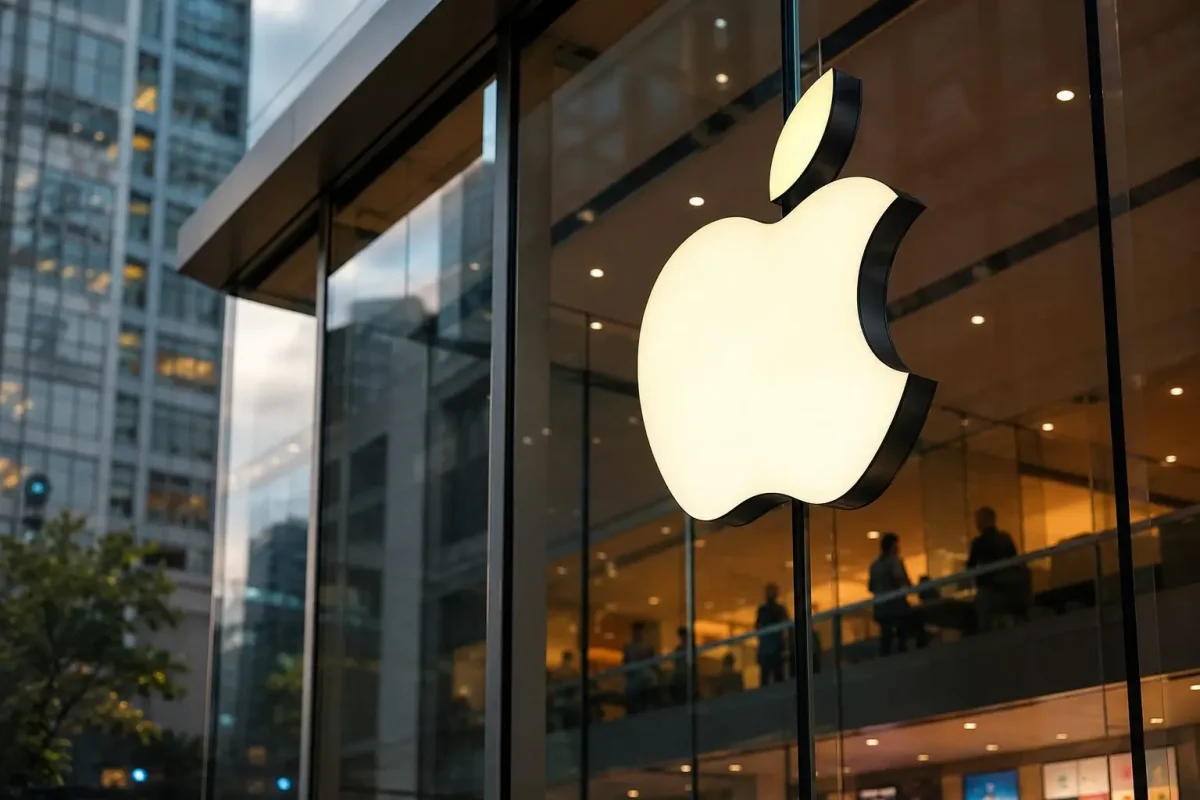
Apple Inc. (NASDAQ: AAPL) witnessed a remarkable surge in its market capitalization, adding approximately $254 billion following regulatory approval for its artificial intelligence products in China. The stock climbed 1.4% to $332.13 in Thursday afternoon trading, building on a 4% gain the previous day, resulting in a two-session rally of 5.5%.
China's cyberspace regulator registered Apple Intelligence for domestic iPhones on Wednesday, though no specific launch date has been announced. This approval marks a significant milestone for Apple, as it opens the door for the company to compete more effectively in the world's largest smartphone market.
The valuation increase is nearly four times Apple's fiscal 2025 Greater China sales, a ratio that signals investor expectations for a sustained, multiyear boost to the company's ecosystem rather than just a single strong quarter. The stock's trailing price-to-earnings multiple now stands at 40.2x, significantly higher than peers such as Alphabet (28.3x) and Microsoft (24.0x).
In related developments, Alibaba Group Holding (NYSE: BABA) announced that its Qwen AI model will integrate with Apple Intelligence, while Baidu (NASDAQ: BIDU) confirmed it is working on local features for the Chinese market. These partnerships could enhance Apple's AI capabilities and localize its offerings.
Even before the AI rollout, Apple's China shipment volumes showed strength, rising 24.4% in the June quarter according to IDC data, while the broader market declined 4.3%. Analysts attribute this growth partly to pricing strategy. IDC analyst Arthur Guo noted, "Huawei and Apple kept their prices steady while competitors raised theirs." Apple held an 18.1% shipment share, trailing Huawei's 22.6%.
Morgan Stanley analyst Erik Woodring characterized the approval as a catalyst that "should level the AI playing field in China," maintaining an Overweight rating and $360 price target. However, a more cautious view emerged from KeyBanc analyst Brandon Nispel, who downgraded Apple to Underweight with a $250 target, citing slower iPhone sales and upgrade cycles.
Investors now look ahead to Apple's July 30 earnings report, which will provide key insights into China revenue, AI rollout timing, and margin details. The premium valuation leaves little room for error, as a weak rollout or margin miss could compress Apple's stock multiple.
The broader market showed divergence, with the Invesco QQQ Trust (NASDAQ: QQQ) declining 1.5% despite Apple's gains. Apple's market cap now stands at approximately $4.89 trillion, compared to Microsoft's $3.00 trillion and Alphabet's $4.50 trillion.