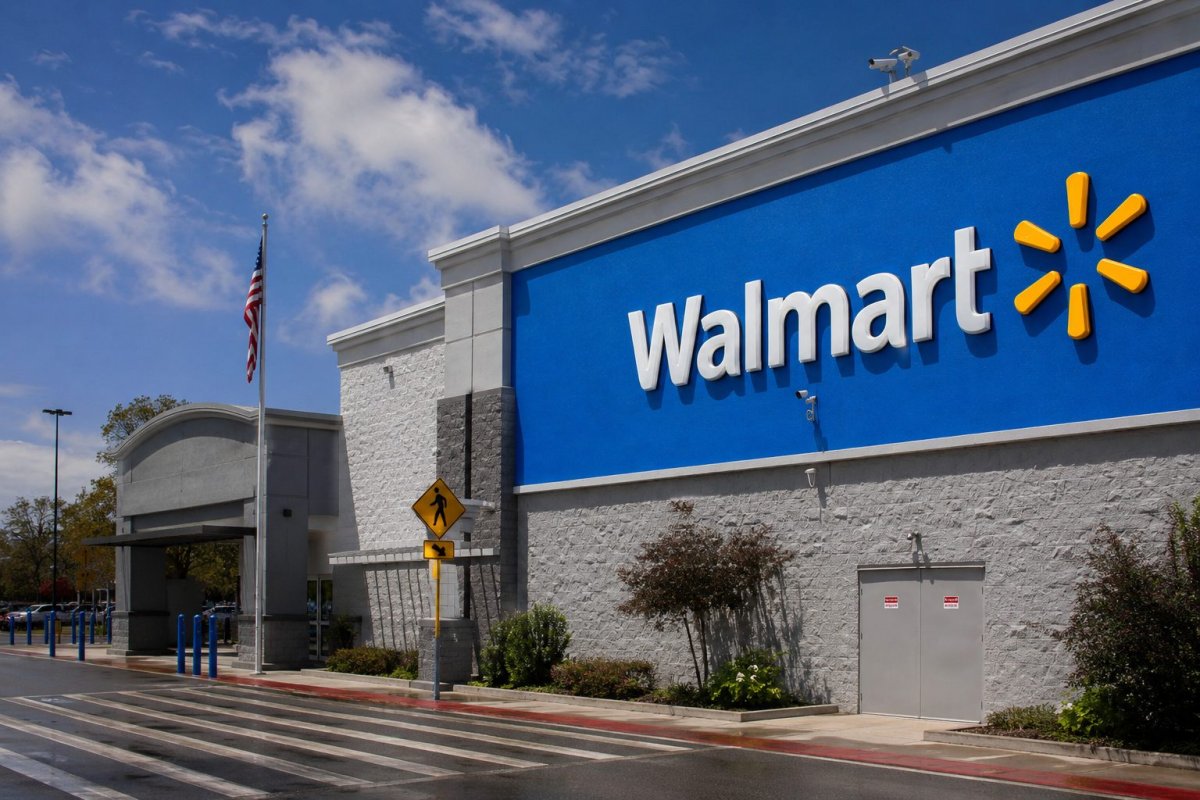
Walmart Inc. (NASDAQ:WMT) experienced a significant selloff on Wednesday, with shares dropping 4.7% to $107.99 in midday trading. This decline erased roughly $42 billion in market capitalization compared to Tuesday's close, marking one of the steepest single-day losses for the retail giant.
Market Context and Comparison
The stock underperformed its major peers, trailing Costco Wholesale Corp. (NASDAQ:COST), Target Corp. (NYSE:TGT), Amazon.com Inc. (NASDAQ:AMZN), and the Invesco QQQ Trust (NASDAQ:QQQ). While Costco fell 0.9% and Target slipped 1.0%, Amazon managed a 1.3% gain. The QQQ lost 0.9%. Walmart's decline was the most severe among these names, highlighting investor concerns about its current valuation and strategic direction.
Walmart's trailing price-to-earnings ratio stood at 37.9, significantly higher than Target's 17.1 and Amazon's 28.9. This premium valuation, once justified by the company's pivot toward technology and higher-margin advertising revenue, is now under scrutiny as the stock trades roughly 20% below its 52-week high of $135.16.
Ad-Media Strategy Under the Microscope
The selloff comes on the heels of Walmart's recent acquisition of Vibe.co, a self-serve connected-TV advertising firm, for approximately $1.2 billion in cash. This deal, announced on June 23, is Walmart's largest foray into connected TV advertising since it acquired Vizio for $2.3 billion in 2024. Combined, these two acquisitions total $3.5 billion—a fraction of the $42 billion in market value lost on Wednesday alone.
Industry experts have weighed in on the Vibe.co acquisition. Martin Kristiseter, CEO of Digital Remedy, noted that it "lowers the barrier to entry for CTV," while Jesse Math of Keen Decision Systems suggested the deal could provide advertisers with a "more complete picture of omnichannel ROI." However, the market's reaction suggests skepticism about the near-term financial impact of these moves.
Financial Performance and Outlook
Walmart's core retail business continues to face headwinds. In its fiscal first quarter, revenue grew 7.3% year-over-year, and global e-commerce surged 26%. U.S. comparable-store sales rose 4.1%. However, operating income declined as fuel costs for distribution and fulfillment cut 250 basis points from margins.
CEO John Furner emphasized the company's focus on expanding "broader assortment, and faster delivery" to build more profitable commerce areas. For the second quarter, Walmart expects net sales to rise 4% to 5% and adjusted operating income to climb 7% to 10%, both on a constant currency basis. The company reaffirmed its fiscal 2027 outlook.
Analyst Sentiment and Market Impact
Despite the sharp decline, analyst targets remain significantly above current trading levels. MarketWatch reports 45 ratings on Walmart, with an average price target of $140.46 and a median of $140—roughly 30% above Wednesday's closing price. The Dow Jones Industrial Average fell 184 points, with Walmart and Caterpillar Inc. (NYSE:CAT) acting as major drags. Caterpillar dropped 4.3%, but its higher stock price gave it more weight in the price-weighted Dow.
Walmart's transition to a Nasdaq listing in December 2025 and its inclusion in the Nasdaq-100 on January 20, 2026, have increased index fund exposure to the stock, amplifying the impact of the selloff.
U.S. markets are scheduled to close on Friday, July 3, for the Independence Day holiday, adding a layer of caution to trading this week.