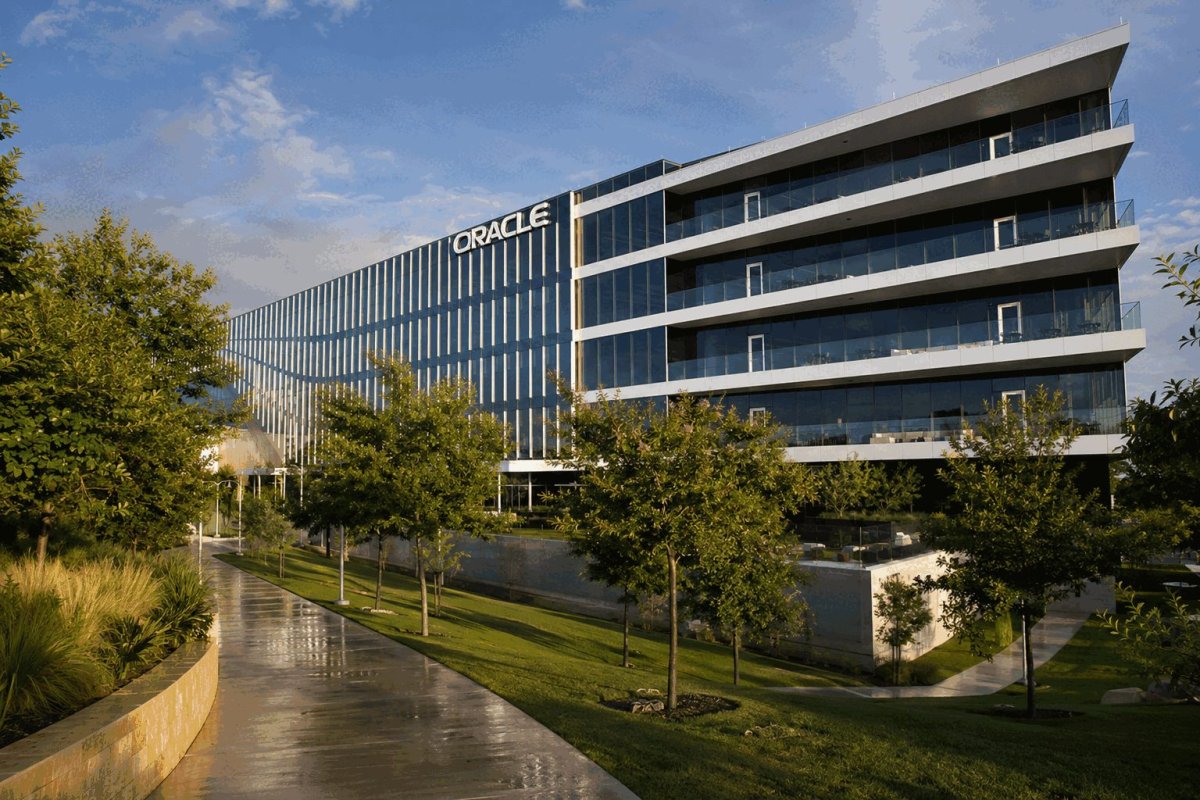
Oracle Corporation (NYSE: ORCL) experienced a notable decline on Friday, with shares falling 3.8% to close at $150.52. This drop outpaced losses among other major cloud providers, as investors grappled with the company's ambitious but capital-intensive AI infrastructure strategy.
The company's fiscal 2026 results showcased robust growth, with total revenue climbing 17% to $67.4 billion and cloud infrastructure revenue surging 77% to $18.1 billion. However, the shine was dimmed by a staggering negative free cash flow of $23.7 billion, driven by $55.7 billion in capital investments that far exceeded the $32.0 billion generated from operations.
To fund its expansion, Oracle plans to raise approximately $40 billion through a combination of debt and equity in fiscal 2027, including a previously announced $20 billion at-the-market share program. Capital expenditures are projected to reach up to $95 billion, partially offset by as much as $25 billion in customer reimbursements. This funding strategy has raised concerns among analysts and investors about the company's leverage and financial flexibility.
The market's reaction underscores a fundamental shift in Oracle's financial profile. Once a conventional high-margin software vendor, Oracle now increasingly resembles a leveraged infrastructure operator with long-lived obligations. S&P Global Ratings downgraded Oracle to BBB- in July, just one notch above speculative grade, citing elevated leverage. Reported debt stands at $129.5 billion, or roughly 4.3 times EBITDA, while data-center lease obligations add another $260 billion, with some commencing next year.
S&P analyst Andrew Chang warned, "We could downgrade Oracle if Oracle sustains leverage exceeding 4.5 times." Moody's has similarly noted that leverage could temporarily approach five times. These credit metrics place execution speed at the center of the investment thesis.
The company's backlog, however, provides a counterweight to these concerns. Oracle's remaining performance obligations (RPO) reached $638 billion, a 363% year-over-year increase. Of this, $75 billion in large AI contracts includes GPUs that are prepaid or supplied by customers, reducing Oracle's own capital requirements. Yet, Reuters reported that nearly half of the RPO is tied to OpenAI, highlighting customer concentration risk.
Management is also taking steps to control costs. Oracle's workforce shrank by 21,000 employees, or 13%, during fiscal 2026. Business Insider reported potential further reductions before September 1, including double-digit cuts in some teams, though Oracle declined to comment.
Analyst targets vary widely, reflecting the debate between bulls and bears. MarketBeat's consensus is a Moderate Buy with a target of $263.97, implying a 75% upside. Piper Sandler has an Overweight rating with a $225 target, while Guggenheim is more aggressive with a Buy and $400 target. On the other hand, Rothschild & Co Redburn has a Sell rating. Bulls point to the 77% infrastructure growth and massive backlog, while bears focus on dilution, execution risk, and financing costs before revenue converts to cash.
Key risks include delayed data centers, weaker AI demand, or customer concentration slowing backlog conversion. Conversely, faster prepayments, lower capital costs, or stronger cloud margins could improve cash flow sooner than expected. As Oracle navigates this high-stakes expansion, its ability to manage leverage and convert its backlog into cash will be critical for shareholder value.