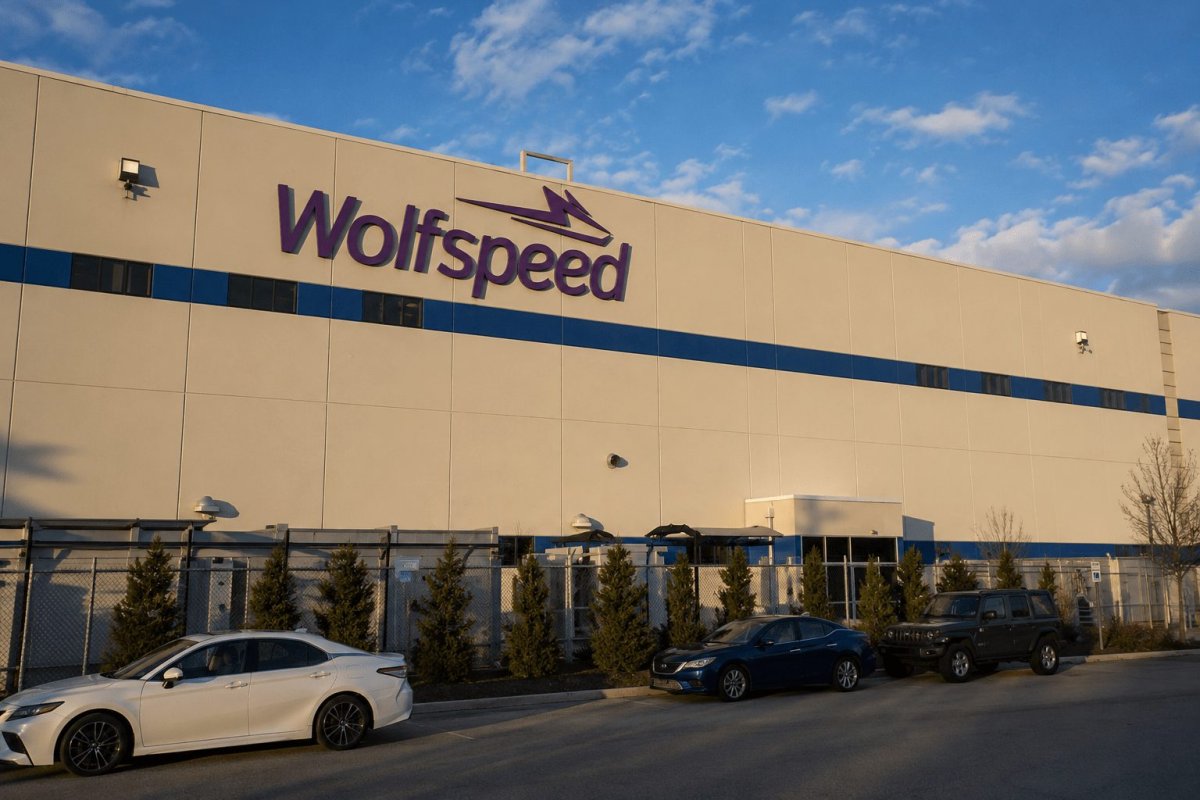
Wolfspeed (WOLF) shares closed Tuesday at $53.72, up 6.8%, and surged further in premarket trading to $77.00—a 43.3% jump—as market participants bet on a balance-sheet turnaround amid elevated short interest. The rally reflects growing optimism about the company's ability to manage its debt load, even as its core business continues to struggle with negative gross margins and declining revenue.
The stock's recent gains are driven by a combination of factors. On Tuesday, Wolfspeed reported fiscal third-quarter results that showed a 19% drop in revenue to $150.2 million, with gross margins remaining in negative territory. However, the net loss narrowed sharply to $119.9 million from $285.5 million a year earlier, while interest expense fell 39%. CFO Gregor van Issum highlighted that the company now holds $1.2 billion in liquidity after cutting its highest-cost first-lien debt by 43%.
Short interest in Wolfspeed stood at 16.1 million shares as of April 30, representing roughly one-third of the public float. This high level of short interest adds a potential squeeze dynamic to the rally, as short sellers may be forced to cover their positions if the stock continues to climb. The premarket quote of $77.00, though based on thin liquidity, underscores the volatility that such setups can create.
Analysts note that Wolfspeed's turnaround story is now more about financial restructuring than operating performance. The company's focus on debt reduction and liquidity has reassured some investors, but the underlying business challenges remain. Revenue from materials fell 35.7% year-over-year, and power products declined 6.9%, driven by softer end-market activity, sluggish auto sales, and pricing pressure. Additionally, underutilization charges at its plants continue to weigh on margins.
On the positive side, Wolfspeed's position as a pure-play on silicon carbide—a key material for power chips in electric vehicles, industrial gear, and AI data-center infrastructure—offers long-term potential. Management reported that AI data-center applications grew about 30% sequentially, with CEO Robert Feurle citing traction in power supplies, battery backup, cooling, and solid-state transformers. This has kept the AI narrative alive for the stock.
The bear case, however, remains compelling. Wolfspeed's revenue forecast for the fiscal fourth quarter is between $140 million and $160 million, with gross margins still expected to be negative. The company's Mohawk Valley 200mm fab now accounts for about 90% of power revenue, but the focus is on whether it can ramp volume enough to escape negative margins. Without a clear path to profitability, the rally could be short-lived.
Broader market conditions also play a role. With Polymarket showing a 68% probability that the Federal Reserve will not cut rates in 2026, and a 27% chance of at least one hike, borrowing costs remain a concern for heavily indebted companies like Wolfspeed. While the company has made progress on debt reduction, future refinancing could become more expensive if rates stay elevated.
In summary, Wolfspeed's stock is caught between a balance-sheet fix and persistent operating losses. The rally reflects optimism about the company's financial restructuring and the potential for a short squeeze, but the underlying business fundamentals have yet to improve. Investors are watching closely to see if the company can turn its liquidity and AI demand into real margins. Until then, this remains a battleground stock.