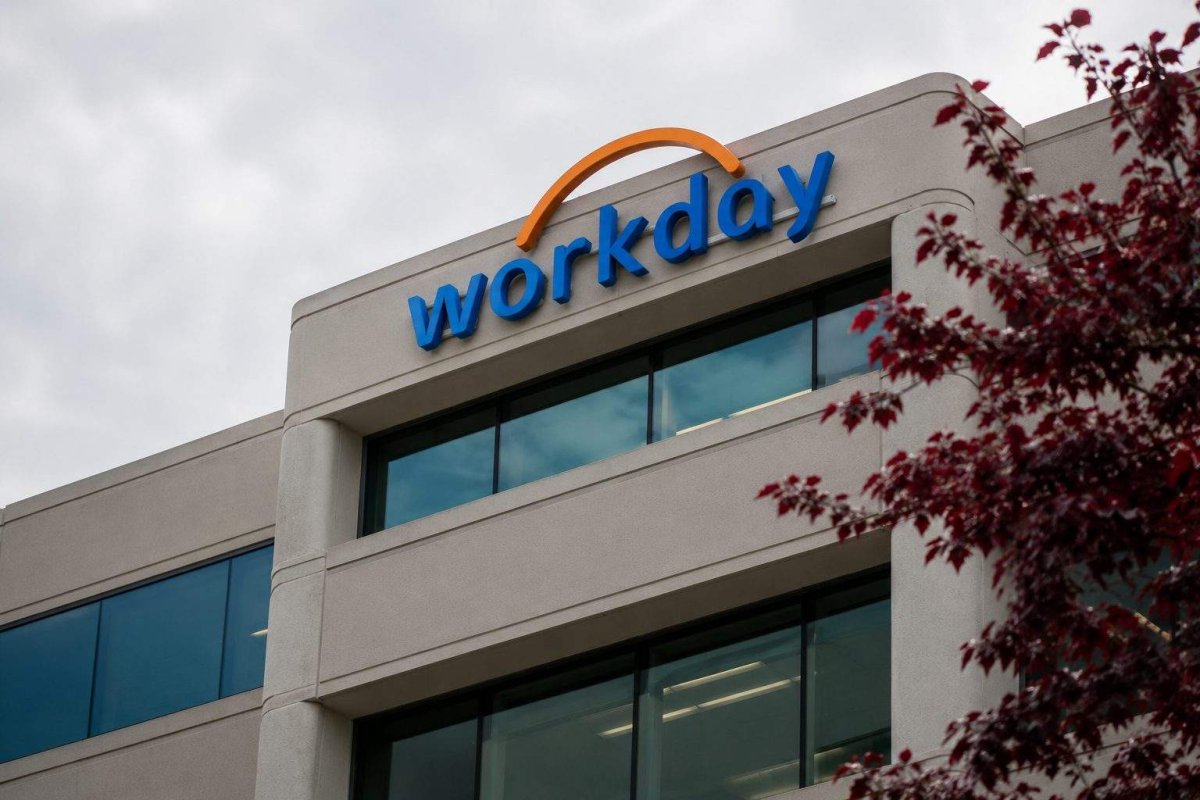
Workday (WDAY) saw its shares climb 7% in after-hours trading on Thursday, following a first-quarter earnings report that surpassed Wall Street expectations. The human resources and finance software company reported revenue of $2.542 billion for the period ending April 30, a 13.5% year-over-year increase, and adjusted earnings of $2.66 per share, topping the consensus estimate of $2.51. Subscription revenue rose 14.3% to $2.354 billion, also exceeding analyst forecasts of $2.34 billion, according to LSEG data cited by Reuters.
The strong results come at a critical time for Workday, as investors assess whether artificial intelligence will provide a boost to established software companies or disrupt their traditional seat-based subscription models. The company has undergone a founder-led transformation since co-founder Aneel Bhusri returned as CEO in February, and Thursday's report suggests the strategy is gaining traction.
Bhusri emphasized that Workday is "ready for this AI moment," highlighting that over 4,000 customers now use at least one of the company's in-house AI agents—more than double the count from the previous quarter. The Recruiting Agent alone processed 14 million hiring processes in the latest quarter. CFO Zane Rowe noted that Workday remains focused on "executing on our agentic AI roadmap," referring to software that can take autonomous actions rather than just providing answers.
Workday also expanded its AI capabilities beyond HR and finance with the launch of Sana for IT Service Management and a Travel Agent tool. These new offerings can manage onboarding, access requests, IT help desk tickets, travel bookings, and expenses, all while adhering to Workday's existing controls and approval processes. This move positions Workday more directly against ServiceNow in the IT service management space, while its core business continues to compete with Oracle and SAP.
Looking ahead, Workday maintained its full-year subscription revenue guidance at $9.925 billion to $9.950 billion, implying 12% to 13% growth. The company raised its non-GAAP operating margin forecast for the year to 30.5%, reflecting improved operational efficiency. For the current quarter, Workday expects subscription revenue of $2.455 billion.
Workday also highlighted its capital allocation strategy, having repurchased approximately 12 million Class A shares for $1.6 billion during the quarter. Operating cash flow improved to $696 million from $457 million a year ago, while free cash flow rose to $616 million from $421 million.
Despite the positive quarterly report, Workday acknowledged ongoing risks including pricing pressures, new competitors, technological changes, and potential IT spending cuts. These concerns have been central to investor debates about enterprise software throughout the year. The stock remains down 36% year-to-date in 2026, according to Investor's Business Daily, and Thursday's after-hours rally only partially offsets those losses.
Bob Evans, founder of Cloud Wars, noted that "customers want AI spending to deliver more value from the systems they already rely on," underscoring the challenge Workday faces in converting AI interest into sustained subscription growth. The company's ability to drive adoption of its AI features without cannibalizing existing license renewals or delaying new projects will be key to its long-term performance.