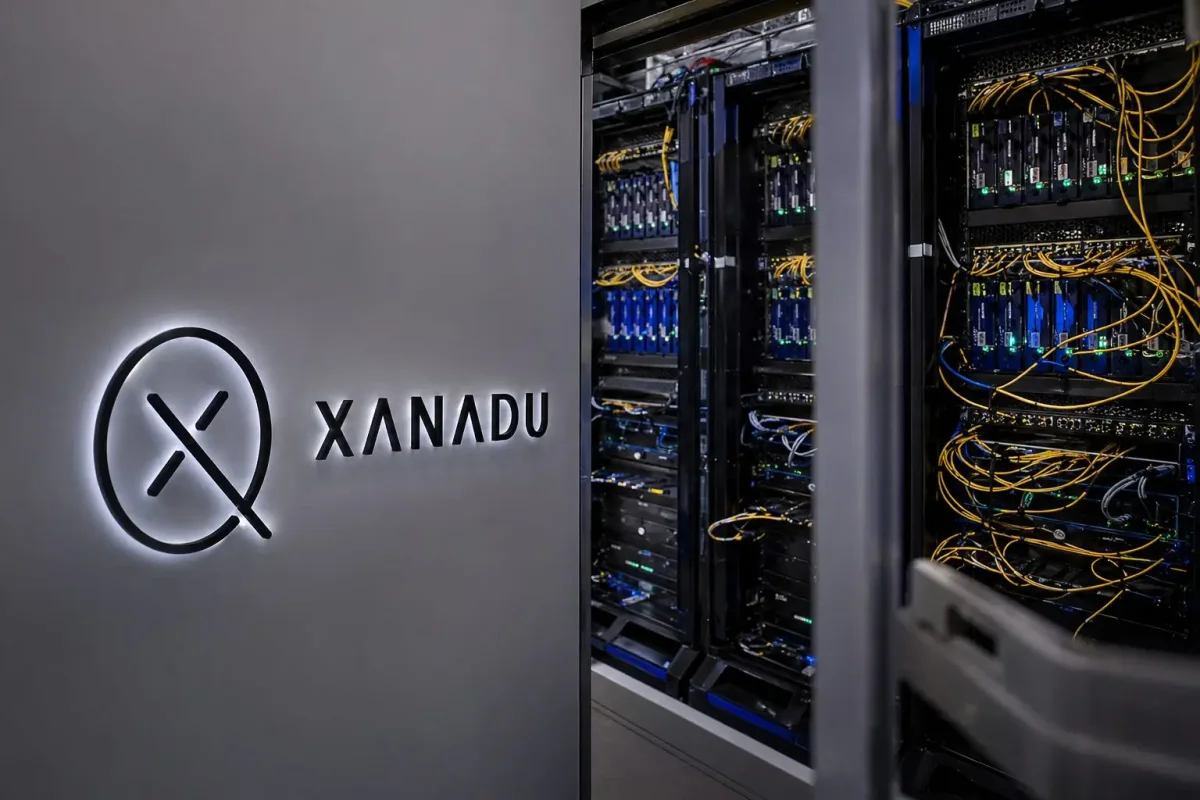
Shares of Xanadu Quantum Technologies Limited (XNDU) closed Friday at $30.95, marking a 7.28% gain, as the market digested a new U.S. registration statement that could allow selling securityholders to gradually resell up to 293.7 million Class B subordinate voting shares. The filing, dated April 23, has not yet been declared effective, meaning no sales can occur until regulatory approval is granted.
The Toronto-based quantum computing company, which went public less than a month ago via a merger with special purpose acquisition company Crane Harbor Acquisition Corp., is now trading on both the Nasdaq and Toronto Stock Exchange. The SPAC deal brought in approximately $302 million in gross proceeds, including a $275 million PIPE (private investment in public equity).
Investor attention is focused not on a new capital raise but on the potential dilution risk from additional shares entering the market. Xanadu clarified in its F-1 filing that it will not receive any proceeds from the resale of shares by securityholders, except possibly from the exercise of warrants tied to up to 157,960 Class B shares.
Xanadu positions itself as the first pure-play photonic quantum computing company to go public. Its technology relies on photons—particles of light—to process quantum information, and its PennyLane software platform enables developers to build quantum applications compatible with various hardware systems.
Founder and CEO Christian Weedbrook described the listing and anticipated funds as "capital needed to continue our rapid pace of development." CFO Michael Trzupek added that the proceeds "position us to scale our quantum computers." Despite the optimism, the company remains in its early stages, reporting 2025 revenue of $4.6 million—nearly triple the prior year's $1.6 million—but a net loss of $70.7 million, up from $46.0 million. Research and development spending totaled $55.2 million, while cash and equivalents stood at $16.2 million as of December 31.
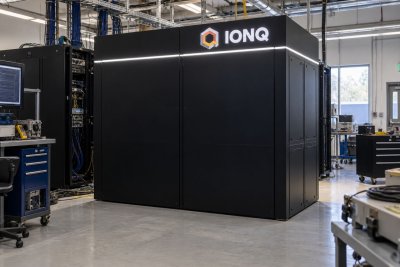
Northland Capital Markets analyst Nehal Chokshi initiated coverage on Xanadu with an outperform rating and a $43 price target, while naming IonQ as his top pick among quantum stocks and assigning market perform ratings to Rigetti Computing and D-Wave Quantum.
The company acknowledges significant risks in its filing, noting that its technology is not yet mature and that it has not built a commercially scalable, fault-tolerant quantum computer. Additional funding may be required, and the filing warns that quantum computers—including Xanadu's—may never achieve widespread commercial adoption.
Xanadu's stock now trades between two narratives: the momentum of a newly listed quantum stock and the long-term challenge of proving that photonic quantum computing can move beyond the lab. The resale filing leaves that question unanswered, but it does open the door for existing holders to sell, provided buyers remain in the market.